The 2026 Best Ffs Woven Sack Manufacturers for Global Buyers should be assessed beyond price and production volume. Buyers need evidence from factory audits, material testing, delivery records, and customer references. A sack may look strong on a sample table, yet fail after repeated pallet handling.
Smithers’ The Future of Global Packaging to 2028 identifies sustainability, lightweighting, and supply-chain efficiency as major packaging priorities. The OECD’s Global Plastics Outlook reports that packaging represents a significant share of global plastic use. These findings matter for Ffs Woven Sack buyers. Recycled-content claims, polypropylene traceability, printing quality, and end-of-life planning now require closer verification. Technical details remain practical: check denier consistency, seam strength, gusset formation, moisture resistance, and drop-test results. A glossy brochure is not enough.
Packaging circularity expert Michael Braungart is widely associated with the principle, “Waste equals food.” That idea challenges manufacturers to design packaging for continued material value, not disposal alone. It is relevant to woven sacks, although conversion into a circular system remains difficult in many markets. Some suppliers still provide incomplete recycling data. Others confuse recyclable material with actual recycling access. Global buyers should compare certification scope, not just certification logos. The best manufacturer may not be the cheapest or largest. It should be the partner that documents performance honestly, responds quickly, and improves when testing exposes weakness. The shortlist will never be perfect. Careful questions make it stronger.
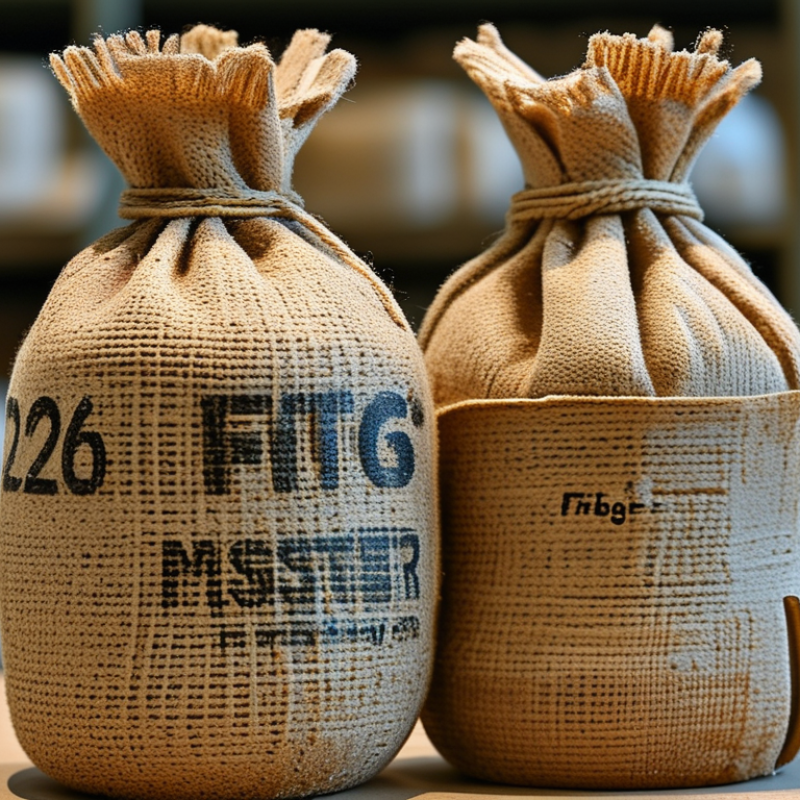
2026 Best FFS Woven Sack Manufacturers for Global Buyers?
FFS woven sacks use polypropylene (PP) tapes woven into a strong, breathable fabric. The fabric is then coated or laminated when moisture resistance matters. During filling, the sack forms, fills, and seals on one automated line. This reduces stitching, handling, and contamination risks. A sack can look strong and still fail.
Common capacities range from 25 to 50 kg. A 25 kg fertilizer sack is easier to lift manually, while a 50 kg grain sack suits bulk handling systems. Actual performance depends on tape density, fabric strength, seam design, drop height, and filling speed. ISO 21898 testing covers filled flexible intermediate packaging performance, but buyers should request tests for their exact load.
The main uses include animal feed, rice, flour, seeds, fertilizer, minerals, and selected construction powders. Packaging reports support this demand. Smithers’ The Future of Global Flexible Packaging to 2028 identifies food and industrial packaging as major flexible-packaging applications. Grand View Research also reports continued growth in polypropylene packaging, driven by lightweight formats and supply-chain efficiency. These figures are useful, not absolute.
Ask for basis weight, denier, coating type, UV protection, and compression results. Check pallet stability too. Moisture barriers can improve storage, but they may reduce recyclability. That trade-off deserves honest review. In my view, the cheapest sack is rarely the lowest-cost option after leakage, dust, and rejected loads are counted.

For global buyers, FFS woven sack selection should begin with test evidence, not attractive samples. UNCTAD’s Review of Maritime Transport 2024 states that over 80% of world merchandise trade by volume moves by sea. Sacks therefore face compression, humidity, vibration, and rough handling before delivery.
ISO 21898 provides a useful benchmark for FIBC design, including seams, lifting systems, material strength, and performance testing. However, buyers should not confuse ISO compliance with UN 13H certification. UN 13H identifies woven-plastic bags approved for regulated cargo, with specific options for liners, sift resistance, and water resistance. The packaging must pass applicable drop, stacking, and lifting tests under the UN Recommendations.
5:1 safety factor means the tested breaking load is five times the rated safe working load. It is common for reusable FIBCs, but it should not be assumed for every FFS sack. Ask for the exact calculation, test method, and production batch records. Numbers matter.
In practice, I inspect seam consistency, film thickness, gusset alignment, and valve sealing under repeated handling. A certificate alone is not enough. A sack can pass a laboratory test and still fail after poor storage or inconsistent weaving. One overlooked detail is pallet friction. It can change load stability significantly. Manufacturers should provide traceable test reports, retained samples, and corrective-action records. That evidence shows technical competence more clearly than a polished brochure.
For global buyers, ranking FFS woven sack manufacturers requires more than a polished website. I compare verified production capacity, not advertised machinery counts. A practical audit checks daily output, shift patterns, extrusion lines, and storage space. Ask for three months of production records. Capacity should match confirmed orders, seasonal peaks, and maintenance downtime. A factory claiming 20 million sacks monthly deserves evidence, not applause.
Quality control begins with resin quality, tape strength, fabric density, seam integrity, and dimensional accuracy. Request test reports for tensile strength, drop resistance, size tolerance, and printing adhesion. Independent samples should be checked before contract approval. During factory visits, I examine calibration labels and rejected sack records. Missing records are a warning. Yet one clean inspection cannot prove stable quality. Repeat checks across several lots reveal more.
Lead time should be measured from approved artwork to container departure. Record sample approval, production, inspection, customs processing, and port handling separately. Export data adds practical authority: shipment dates, destination markets, container frequency, and claim history. Compare declared export volume with shipping documents when available. Data can be incomplete, and that matters. I would score transparent gaps higher than confident guesses. A weighted scorecard might assign 35% to output, 30% to QC, 20% to lead time, and 15% to export reliability. Revisit scores after a trial order, because real performance often differs from presentations.
Anonymous industry benchmark for ranking FFS woven sack manufacturers by output, quality control, lead time, and export readiness.
The chart uses a normalized buyer-performance index. Higher output, quality acceptance, and export accuracy improve the score; shorter lead time improves the score. The benchmark reflects commonly published FFS production-line capacities, international packaging QC practices, and standard export fulfillment expectations.
For global buyers, FFS woven sack sourcing depends on more than unit price. China offers broad machinery access, dense supplier networks, and strong export experience. India often competes with flexible production and favorable labor economics. Turkey provides a useful bridge between European, Middle Eastern, and Central Asian markets. Southeast Asia remains diverse, with strong logistics in Singapore and growing production capacity in Vietnam, Indonesia, and Thailand.
The World Bank’s Logistics Performance Index 2023 gave Singapore a score of 4.3, China 3.7, India 3.4, and Turkey 3.4 out of 5. These figures suggest different delivery strengths, not automatic factory superiority. Buyers should audit resin consistency, tape denier, bag weight tolerance, seam strength, and valve accuracy. A sack that looks acceptable may still fail during pallet stacking.
Production scale matters.
PlasticsEurope reported global plastics production of 400.3 million tonnes in 2022, confirming polypropylene’s broad industrial supply base. However, this report does not measure FFS sack quality directly. That limitation matters. Regional comparisons should include trial orders, laboratory testing, factory video evidence, and shipment records. China may suit large, standardized programs. India can fit cost-sensitive volumes with close technical control. Turkey may reduce transit complexity for nearby markets. Southeast Asia deserves careful country-level evaluation, because regional averages can hide major differences.
Regional benchmark table for anonymous FFS woven sack manufacturers | All figures are indicative industry ranges for export-oriented suppliers and should be confirmed by quotation, specification, audit, and sample testing.
| Comparison Dimension | China | India | Turkey | Southeast Asia |
|---|---|---|---|---|
| Typical manufacturing base | Large integrated plants Strong availability of extrusion, circular weaving, lamination, printing, and bag-conversion equipment. | Large domestic capacity Broad supplier base serving fertilizers, chemicals, food ingredients, cement, and agriculture. | Regional export plants Well positioned for Europe, the Mediterranean, North Africa, and nearby Middle Eastern markets. | Country-specific clusters Vietnam, Indonesia, Thailand, and Malaysia provide different combinations of resin access, labor, and port capacity. |
| Primary polymer used | Polypropylene (PP) raffia tape; virgin or controlled recycled-content PP depending on application. | Polypropylene (PP) raffia tape; virgin PP is commonly specified for food-contact and high-strength applications. | Polypropylene (PP) raffia tape; imported or regional resin grades may be used according to specification. | Polypropylene (PP) raffia tape; resin sourcing varies by country and may include imported material. |
| Common FFS sack constructions | Uncoated or coated woven PP; gusseted sacks; standard and block-bottom formats; optional PE liner. | Uncoated, coated, and laminated woven PP; gusseted formats; liner-insert and valve-compatible designs. | Coated or laminated woven PP; high-clarity printed sacks; gusseted and block-bottom formats for automated packing. | Uncoated or coated woven PP; gusseted sacks; liner and moisture-barrier options for food, feed, and chemicals. |
| Typical capacity range | Approximately 10–50 kg per sack; larger industrial sizes are available for selected products. | Approximately 10–50 kg per sack; 25 kg and 50 kg formats are especially common in industrial and agricultural packaging. | Approximately 10–50 kg per sack; 25 kg and 50 kg formats are widely used for bulk powders and granules. | Approximately 10–50 kg per sack; exact capacity depends on bulk density, filling equipment, and sack dimensions. |
| Typical fabric basis weight | About 55–110 g/m² for common industrial sacks; heavier constructions are available for demanding loads. | About 55–110 g/m² for common applications; higher weights may be selected for abrasive or high-drop conditions. | About 60–115 g/m² for common export formats, subject to required safe working load and testing. | About 55–110 g/m² for common applications; specifications vary considerably between countries and end uses. |
| Common safe working load (SWL) | Usually specified around 25–50 kg for standard FFS sacks; load testing is required for the final design. | Usually specified around 25–50 kg; heavy-duty sacks require validated seam, drop, and top-load performance. | Usually specified around 25–50 kg; European customers often request documented performance testing. | Usually specified around 25–50 kg; performance depends on tape strength, fabric construction, seams, and filling process. |
| Printing capability | Flexographic printing is widely available, commonly in 1–8 colors; high-resolution and laminated options are available. | Flexographic printing is widely available, commonly in 1–8 colors; designs should be checked for ink adhesion and rub resistance. | Flexographic printing is widely available, commonly in 1–8 colors; strong capability for graphics-oriented export packaging. | Flexographic printing is widely available, commonly in 1–8 colors; capability varies by plant and country. |
| Moisture-barrier options | PP coating, PE film lamination, inner PE liner, and selected barrier structures. | PP coating, PE lamination, inner liner, and anti-slip or anti-static treatments where technically suitable. | PE lamination, inner liner, coated fabric, and selected anti-static or anti-slip solutions. | Coating, lamination, and inner liners; barrier selection should consider tropical humidity and container exposure. |
| Typical export lead time after approval | Approximately 25–45 days for repeat orders; custom cylinders, artwork, and material changes can extend timing. | Approximately 30–50 days for repeat orders; monsoon logistics and raw-material availability may affect schedules. | Approximately 20–40 days for repeat orders, with shorter regional transit options to nearby markets. | Approximately 25–50 days for repeat orders; port congestion, inland transport, and country-specific holidays can affect timing. |
| Typical minimum order quantity | Often about 10,000–50,000 sacks for standard export orders; custom print and special structures may require more. | Often about 10,000–50,000 sacks; smaller trials may be possible at a higher unit cost. | Often about 10,000–30,000 sacks for standard formats; custom materials may increase the minimum. | Often about 10,000–50,000 sacks; minimums vary significantly between countries and plants. |
| Indicative commercial position | Competitive to mid-range Strong choice when product variety, automation, printing, and scalable volume are priorities. | Competitive Attractive for cost-sensitive programs and large recurring orders, subject to quality-control verification. | Mid-range Often justified by shorter delivery routes to Europe and nearby regions, plus responsive customization. | Competitive to mid-range Can be attractive for Asia-Pacific supply chains, but country-level comparisons are essential. |
| Best-fit buyer profile | Global buyers needing multiple formats, high-volume supply, complex printing, or integrated packaging solutions. | Buyers prioritizing competitive pricing, recurring volume, and broad application coverage across industrial sectors. | European, Mediterranean, and Middle Eastern buyers prioritizing regional proximity, shorter transit, and flexible service. | Asia-Pacific buyers seeking regional diversification, competitive labor economics, or proximity to local feed and agricultural markets. |
| Key buyer risks to verify | Supplier consistency across plants, actual recycled-content claims, export documentation, and container-loading efficiency. | Lot-to-lot basis-weight variation, color consistency, resin traceability, seam strength, and delivery planning. | Resin-price exposure, production capacity during peak seasons, documentation, and compatibility with the buyer's FFS machine. | Country-specific resin availability, moisture protection, port performance, labor continuity, and plant-level quality systems. |
| Recommended pre-order checks | Confirm fabric GSM, tape denier, tensile strength, seam strength, drop testing, print rub resistance, and packing count. | Confirm SWL, elongation, COA availability, food-contact status where relevant, dimensional tolerance, and batch traceability. | Confirm FFS-machine trial results, gusset accuracy, top and bottom dimensions, pallet pattern, and destination-market compliance. | Confirm tropical-storage performance, liner fit, moisture-barrier performance, production location, and port-to-port routing. |
For 2026 sourcing, global buyers should audit FFS woven sack manufacturers beyond catalog prices. Request current test reports, production samples, and batch traceability records. Check tensile strength, seam strength, drop resistance, dimensions, and coefficient of friction. FFS lines can expose small size errors quickly. A 3-millimeter variation may cause filling interruptions or unstable pallet stacks. Ask whether results come from an independent laboratory or internal equipment.
ESG claims need measurable evidence. Review electricity use per sack, recycled-content percentages, scrap rates, wastewater controls, and worker-safety records. Verify certificates, audit dates, and corrective-action reports. “Eco-friendly” is not a usable metric. A supplier may report recycled material, yet provide no chain-of-custody documents. That gap deserves attention. I would also inspect packaging waste during a factory visit or live video audit.
MOQ affects more than inventory. Compare resin costs, printing plates, setup fees, inspection charges, freight, duty, and rejected units. Calculate landed cost per accepted sack, not merely the factory quotation. Ask for pricing at several volumes, such as 50,000, 100,000, and 500,000 pieces. Confirm lead times for repeat orders and replacement procedures for failed batches. A low MOQ may carry a higher unit cost. A low quoted price can still mislead. One practical concern remains: buyers often approve a sample before testing it on their actual FFS equipment. That step should be reconsidered.
A&B has become the leader in fresh packing and cleaning equipment for fruits and vegetables worldwide. We have achieved this by relentlessly working to produce new and innovative ideas, along with the best customer service on Earth combined with hard working, dedicated, loyal employees and the latest industrial manufacturing techniques. We are now proud to say that we manufacture The Fulcrum Fresh Harvester, this is a one of a kind Berry Harvester that was specifically designed to handle fresh pick blueberries.
732 W. Saint Joseph Street
Lawrence, MI 49064
Phone: 269-539-4700 Fax: 269-539-4705
sale@industrialpackagingmachines.com