Choosing the right Freeze Dried Cod supplier in 2026 requires more than comparing prices. Global buyers need consistent fish quality, reliable documentation, and practical shipping experience. A strong supplier should identify the cod species, catching area, processing date, drying method, and batch number. These details matter when every carton travels thousands of miles.
Seafood researcher Dr. Audun Iversen has emphasized, “Trust is built through documented quality, not attractive claims.” That principle fits this market closely. Buyers should request certificates of analysis, microbiological results, moisture levels, protein data, allergen statements, and traceability records. Packaging also deserves attention. A well-sealed pouch, oxygen control, and clear storage instructions can protect the product from moisture and oxidation.
Look for evidence, not promises.
The best suppliers may offer different cuts, particle sizes, and private-label options. They should explain rehydration performance and show how the cod behaves after soaking. A sample may look excellent yet soften poorly in real kitchens. That weakness is easy to miss during a quick inspection.
This guide compares leading Freeze Dried Cod suppliers for international buyers. It considers product consistency, processing expertise, export readiness, packaging, certifications, minimum order quantities, and communication quality. Some companies may appear highly competitive but provide limited batch records. Others may cost more while reducing supply risks. The final choice still requires careful sampling, independent verification, and honest discussion about delivery limits. Even a well-researched supplier list cannot replace inspection.
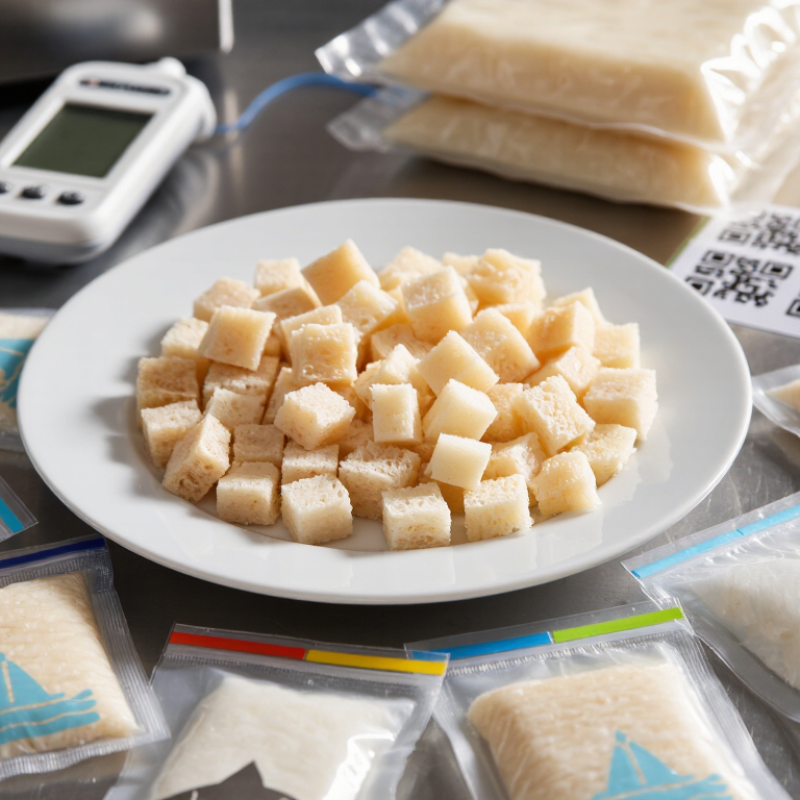
2026 Best Freeze-Dried Cod Suppliers for Global Buyers?
What Freeze-Dried Cod Is and Why Global Buyers Choose It
Freeze-dried cod is fresh cod processed under low temperature and vacuum. Ice changes directly into vapor, leaving a porous, lightweight fillet. This structure supports quick rehydration and preserves much of the original shape, aroma, and protein quality. It is not simply dried fish. Moisture control is more precise.
The FAO State of World Fisheries and Aquaculture 2024 reported 185.4 million tonnes of global fisheries and aquaculture production in 2022. It also recorded 20.7 kilograms of aquatic-food consumption per person. These figures show why stable seafood formats matter. Freeze-dried cod can reduce shipping weight and simplify emergency meals, outdoor food, and ingredient supply. Buyers still need clear evidence. A long shelf-life claim means little without water-activity data, oxygen-barrier packaging, and storage instructions.
Check the details.
Reliable suppliers should provide species identification, harvest area, processing dates, batch traceability, microbiological results, and contaminant testing. Codex food hygiene principles and importing-country rules should guide verification. A practical inspection includes opening one pouch, checking for brittle pieces, unusual odor, or uneven color. Rehydration should produce firm flakes, not a soft, powdery mass. Freeze-drying does not remove every risk. It may preserve quality, but poor handling before processing remains a serious weakness. Some supplier documents look professional yet lack current laboratory results. That deserves reflection.

Nutrient density comparison per 100 g: raw Atlantic cod versus a calculated freeze-dried equivalent
Freeze-dried cod is fresh cod with most of its water removed under low-temperature vacuum conditions. This concentrates nutrients, reduces shipping weight, and supports longer ambient storage when properly packaged. The freeze-dried values shown here are calculated from USDA FoodData Central raw Atlantic cod data, assuming approximately 82.13% water removal and no nutrient loss; actual supplier specifications may vary by species, cut, processing yield, and packaging.
Reference: USDA FoodData Central, Atlantic cod, raw. Values are presented for product comparison and are not a substitute for a certified product specification.
When evaluating freeze-dried cod suppliers in 2026, buyers should examine more than price and appearance. The product should have stable moisture and water activity results, supported by recent laboratory reports. Protein content, salt levels, microbiological limits, and allergen controls also deserve attention. Ask for batch-specific certificates of analysis, not generic documents reused across shipments.
Traceability should connect each carton to the processing date, raw material source, and production lot. A reliable supplier can explain how cod was handled before drying, including temperature control and sanitation records.
Packaging matters too. Moisture-barrier bags, oxygen protection, and clear storage instructions help preserve texture and flavor during long transport. Check whether the supplier tests packaging integrity before dispatch.
Independent audits can strengthen confidence, especially when they cover food safety, worker hygiene, and record management. However, a polished certificate is not enough. Buyers should compare audit dates, laboratory methods, and corrective-action records. Small details reveal practical reliability. Does the supplier answer technical questions clearly? Can it provide consistent samples from different lots?
A sample may look excellent but fail after rehydration. Test aroma, firmness, color, and cooking performance. Also review shelf-life evidence under realistic storage conditions. No supplier is perfect, and documentation can contain gaps. That is a reason to ask sharper questions, not to reject every candidate. In some cases, slower communication signals future problems, although it is not conclusive alone. A careful evaluation combines verified data, physical samples, facility evidence, and transparent communication.
In 2026, global buyers will find freeze-dried cod suppliers across several practical categories. Human-food suppliers usually offer skinless fillets, portion cuts, flakes, and lightweight meal packs. Ingredient suppliers provide cod powder or small granules for soups, nutrition blends, and specialty food production. Pet-food suppliers often sell plain freeze-dried pieces with limited additives. These categories require different specifications, packaging, and testing.
Experienced buyers should check raw material origin, catch or farming records, moisture levels, and freeze-drying conditions. A reliable supplier should provide recent laboratory reports for microbiological safety, heavy metals, allergens, and oxidation. Batch codes must match shipping documents. I would also request a production sample before signing a large contract. Product appearance can be misleading. Pale color does not always prove better quality.
Tips: Compare two or three samples under the same storage conditions. Check rehydration time, odor, texture, and weight loss. Confirm whether the quoted price includes insulated packaging and export paperwork. Ask about minimum order quantities and temperature exposure during transit. Small details matter. Some suppliers describe cod powder as “premium” without defining particle size or protein content. That weakness deserves a written clarification. Buyers should also review destination-country import rules, labeling requirements, and permitted additives before payment. Suppliers with clear answers are usually easier to audit, though no communication process is perfect.
Comparing freeze-dried cod suppliers requires more than checking the lowest quotation. Start with measurable quality. Ask for moisture and water activity results, protein content, microbiological tests, and recent batch records. Properly freeze-dried cod should feel light, brittle, and clean, without oily odors or darkened edges. Request the fishing area, processing date, lot code, and traceability documents. FAO’s SOFIA 2024 report recorded about 185 million tonnes of global fisheries and aquaculture production in 2022, showing the scale of seafood supply, but volume does not guarantee consistent quality.
Pricing needs a landed-cost view. Compare product price, packaging, cold storage, freight, insurance, testing, and expected breakage. A cheaper kilogram may contain more powder or suffer greater weight loss during handling. FAO GLOBEFISH market reports also show that seafood prices change with species, origin, season, and supply conditions. Get quotations for the same cut size, package weight, Incoterm, and payment terms. Otherwise, comparisons become misleading.
Production capacity should be verified, not simply claimed. Request monthly output, drying-chamber capacity, minimum order quantity, lead time, and backup power arrangements. Audit whether the supplier can separate raw and finished materials. Check recall procedures and calibration records. A trial order is useful. It may still hide seasonal weaknesses. That part deserves caution. Compare three batches, not one, and record color, aroma, rehydration time, and final yield before signing a long-term agreement.
Global buyers should evaluate freeze dried cod suppliers through import readiness, not price alone. FAO’s The State of World Fisheries and Aquaculture 2024 reported 185.4 million tonnes of global fisheries and aquaculture production in 2022. That scale increases scrutiny of traceability, origin, and species documentation. Request harvest records, processing dates, lot codes, certificates of analysis, and evidence of an audited food-safety system. A supplier may look experienced, yet incomplete paperwork can delay a shipment for weeks.
Packaging needs engineering, not attractive printing. Freeze dried cod absorbs moisture quickly, so use high-barrier, food-contact packaging with reliable heat seals and suitable oxygen control. Confirm net weight after drying, carton compression strength, pallet dimensions, and storage conditions. Labels should show the species, country of origin, lot number, ingredients, allergen declaration, net quantity, production date, and best-before date. Codex food-labelling standards provide a useful international baseline, but destination rules still control final wording.
Compliance varies by market. For the United States, importers generally need seafood HACCP documentation, facility details, prior-notice procedures, and Foreign Supplier Verification Program controls. European shipments require alignment with official control rules, hygiene requirements, and contaminant limits under applicable regulations. Keep records accessible.
Do not assume low moisture means zero risk. Validate water activity, microbiological testing, foreign-material controls, and transport temperature. FAO and Codex guidance support risk-based controls, but supplier documents are not always equally reliable. I would approve a supplier only after reviewing recent test reports and checking whether packaging survives a real transit simulation. Perfect compliance is difficult. That is why documented corrective actions matter.
A&B has become the leader in fresh packing and cleaning equipment for fruits and vegetables worldwide. We have achieved this by relentlessly working to produce new and innovative ideas, along with the best customer service on Earth combined with hard working, dedicated, loyal employees and the latest industrial manufacturing techniques. We are now proud to say that we manufacture The Fulcrum Fresh Harvester, this is a one of a kind Berry Harvester that was specifically designed to handle fresh pick blueberries.
732 W. Saint Joseph Street
Lawrence, MI 49064
Phone: 269-539-4700 Fax: 269-539-4705
sale@industrialpackagingmachines.com