Choosing the best Pop Up Electrical Socket in 2026 requires more than comparing finishes, USB ports, or retail prices. Buyers are selecting a small power system that must perform safely inside desks, kitchen islands, conference tables, and compact workspaces. The International Energy Agency’s Electricity 2024 report highlights continuing growth in global electricity demand, while Grand View Research identifies connected devices, flexible controls, and smart-building integration as major market trends. These developments make retractable sockets increasingly relevant, but they also raise expectations for protection, compatibility, and durability.
This guide examines the main socket types available to buyers. Options include manual pop-up units, motorized retractable models, desktop power modules, countertop sockets, floor boxes, and versions with USB-C Power Delivery. Each design suits a different installation. A kitchen unit may need moisture resistance and a sealed cover. A conference-table model may prioritize cable management and quiet movement. Buyers should check rated current, mounting depth, plug configuration, grounding, child protection, and regional certification. IEC 60884-1 and applicable national standards provide useful safety benchmarks, although requirements differ between markets.
Looks can mislead.
A brushed-metal panel may hide weak hinges, limited heat management, or an unsuitable plug layout. Product pages also sometimes blur the difference between surge protection and simple overload protection. That distinction matters. This overview uses manufacturer specifications, recognized safety guidance, and practical installation considerations to compare leading types for 2026. It is not a perfect category; terminology remains inconsistent across suppliers. Careful buyers should verify test reports, warranty terms, replacement access, and electrician recommendations before purchasing. The most attractive socket is not always the safest or most useful choice.
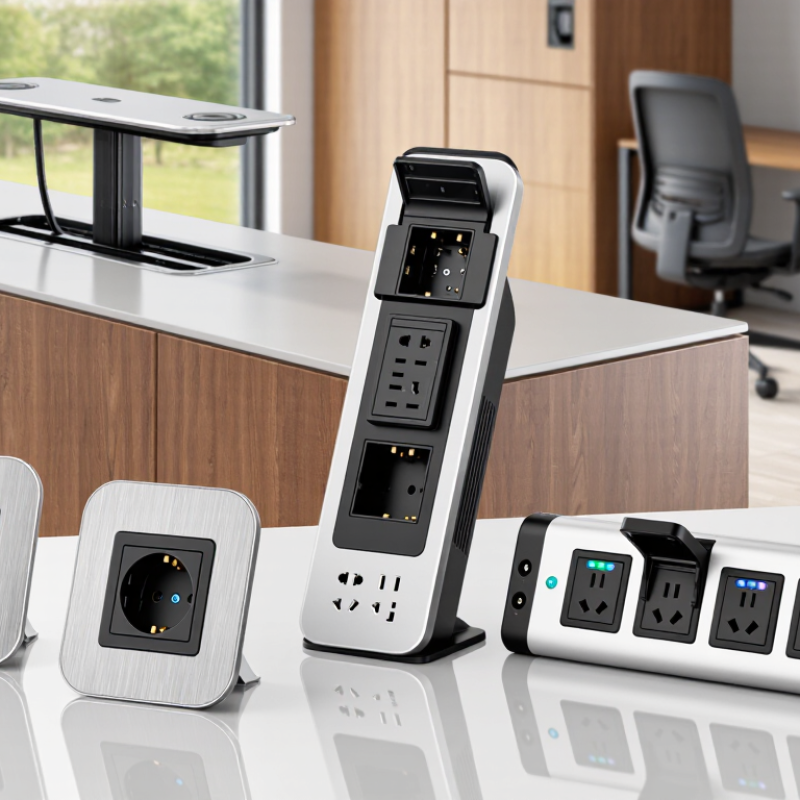
A pop-up electrical socket is a retractable power module installed inside a desk, countertop, or kitchen island. When pressed, its spring-loaded or motorized body rises through a cutout. Users then access power outlets, USB ports, or data connections. Pushing the housing down hides the unit again. Some models use a rotating lid, while others lift vertically with a soft-start mechanism. The enclosure, seals, and cable routing determine its practical safety. IEC 60884-1 covers important requirements for household plugs and socket-outlets, including construction and performance testing.
Installation details matter more than appearance. The installer should verify the countertop thickness, cavity depth, load rating, grounding path, and moisture exposure. NFPA’s Home Structure Fires report found that electrical distribution and lighting equipment contributed to an average of 32,590 home fires annually from 2016 to 2020. That figure makes loose connections and overloaded circuits worth treating seriously. Reports from the International Energy Agency also show buildings remain major electricity consumers worldwide, increasing the value of accessible, organized power points. A pop-up socket cannot repair poor wiring. It only provides a convenient interface. I would not place a standard indoor unit beside a sink, even when its lid feels tight. That judgment can be unpopular. It is still sensible. Buyers should compare concealed, rotating, waterproof-rated, and motorized types against the actual installation environment, not photographs alone.

What Is a Pop-Up Electrical Socket and How Does It Work?
Pop-up electrical sockets serve different spaces, so selection must begin with the application. Kitchen islands often need retractable countertop units with splash resistance and child-safe shutters. Conference tables benefit from compact modules with power, USB-C charging, and data ports. Floor boxes suit offices, showrooms, and training rooms where cables cross open areas. They should include load ratings, grounding protection, and covers that remain stable under foot traffic.
The International Energy Agency reported that buildings consumed about 30% of global energy in 2022. Efficient socket design can support smarter equipment layouts and reduce unnecessary extension-cable use.
For damp areas, verify the enclosure rating and sealing method. For commercial furniture, check the mounting depth before cutting the surface. A two-millimeter error can spoil an expensive tabletop.
The Global E-waste Monitor 2024 recorded 62 million tonnes of electronic waste in 2022, while only 22.3% was formally collected and recycled. Buyers should therefore prefer replaceable modules, recyclable metals, and repairable internal parts.
IEC 60884-1 provides a useful reference for household socket safety, but local installation rules still control final approval. Test samples under repeated opening cycles, not only during visual inspection. That detail is easy to miss.
A socket may look elegant yet loosen after months of daily use. Some specifications also appear complete, but omit heat resistance, warranty conditions, or replacement access. That deserves a second review.
2026 Best Pop Up Electrical Socket Types for Buyers
How to Compare Safety, Power, and Installation Features
A pop-up electrical socket should match the room, not just the furniture. Compare the housing material, outlet cover, and resistance to moisture or heat. A metal frame may feel stronger, while a reinforced polymer body can reduce weight and corrosion. Check whether the socket closes fully when unused. Small gaps can collect dust and spilled liquids.
Power capacity needs careful attention. Read the rated voltage, current, and total load limits on the product label. Do not judge performance by the number of outlets alone. A unit with USB charging may share power across ports, causing slower charging. Look for overload protection, grounding, child-safety shutters, and thermal protection. These details matter near kitchens, offices, and workshop benches. More features are not always better.
Installation can decide whether the socket remains safe. Measure the cutout depth before ordering, especially under thick countertops. Confirm cable access, mounting clearance, and the direction of the pop-up mechanism. Local electrical rules may require a qualified electrician for connection and testing. A neat installation still needs secure terminals and proper grounding. I would avoid choosing by appearance alone. A sleek socket can fit badly, rattle during use, or block a drawer. Test the movement several times before final fixing. Builders should also leave service access, although this is often overlooked.
2026 Best Pop Up Electrical Socket Types for Buyers
Choosing a pop-up electrical socket starts with the environment, not appearance. A home office usually suits a compact aluminum or flame-retardant polymer unit. Aluminum feels solid and resists daily scratches. Polymer can reduce cost and weight. I prefer designs with covered USB ports and separate power switches. Cable openings should remain smooth and wide enough for thicker charging leads. Small details matter.
Kitchens need materials that tolerate moisture, heat, and frequent cleaning. Stainless steel offers better corrosion resistance around sinks and food preparation areas. A sealed retractable design helps prevent spills from reaching internal components. However, no socket is waterproof by appearance alone. Check its tested protection rating and installation instructions. A flush-mounted model also reduces snagging when people move pans or appliances.
Meeting rooms and hospitality counters often benefit from a brushed metal finish and a spring-assisted mechanism. It looks professional and hides cables when unused. Outdoor installations require much stricter selection. Use only a socket specifically rated for outdoor exposure, with suitable covers, drainage, and grounding. A standard indoor pop-up unit can fail quickly outside. I have seen buyers focus on matching surfaces while overlooking load capacity and installation depth. That mistake is expensive to correct. A qualified electrician should verify the circuit, protection devices, and countertop thickness before installation. No material is perfect. The right design depends on real use, cleaning habits, moisture, and maintenance access.
| Pop-Up Socket Type | Typical Housing and Surface Materials | Best-Suited Environment | Recommended Installation Position | Common Features | Typical Protection Considerations | Main Advantages | Limitations and Buyer Cautions |
|---|---|---|---|---|---|---|---|
| Manual Desktop Pop-Up Socket | Aluminum alloy, ABS or polycarbonate body; stainless-steel or brushed-metal lid | Home offices, meeting rooms, study areas and general workstations | Flush-mounted in a desk or countertop | AC outlets, USB charging ports, cable pass-through and manual lift mechanism | Choose a model with protected internal components and a lid that closes securely when not in use. Confirm the local electrical certification and wiring method. | Simple operation, moderate cost, easy access to power and data connections | Not intended for direct exposure to water. Check the cut-out size and available space below the desk. |
| Motorized Retractable Pop-Up Socket | Aluminum alloy or steel frame with a tempered-glass, aluminum or engineered-plastic top panel | Premium offices, boardrooms, executive desks and conference tables | Flush-mounted in furniture or a conference surface | Motorized opening, AC outlets, USB charging, data ports and soft-close or touch controls | Use only where the motorized unit can remain dry and ventilation is adequate. Confirm the standby power specification and maintenance access. | Clean appearance, convenient operation and strong integration with modern furniture | Higher purchase cost and more components that may require service than a manual design. |
| Flip-Up Countertop Socket | Aluminum alloy, stainless steel or flame-retardant polycarbonate with a hinged cover | Kitchens, pantry counters, hospitality counters and residential worktops | Horizontal countertop or work surface | Hinged lid, AC outlets, USB charging ports and optional data connections | Select a design with a gasketed or covered face when installed near occasional splashes. Keep the unit away from sinks and areas subject to standing water. | Convenient access while preserving a relatively low-profile countertop appearance | A splash-resistant cover does not make the socket suitable for immersion or outdoor rain exposure. |
| Water-Resistant Kitchen Pop-Up Socket | Stainless steel or anodized aluminum exterior with sealed polymer components and a gasketed lid | Kitchen islands, food-preparation areas and utility counters with occasional splashes | Countertop, positioned away from the sink and cooktop | Covered AC outlets, USB charging, moisture-resistant seals and easy-clean surfaces | Verify the exact IP rating, installation instructions and local code requirements. The rating may apply only when the cover is closed. | Better resistance to occasional splashes and easier cleaning than open desktop designs | Should not be used where water can pool, spray continuously or enter while the outlets are in use. |
| Floor Pop-Up Power Box | Stainless steel, galvanized steel or heavy-duty aluminum enclosure with a recessed cover | Offices, training rooms, retail spaces and commercial floors with movable furniture | Flush-mounted in a finished floor or raised-floor system | AC outlets, data ports, cable outlets and recessed cable-management space | Use a floor-rated enclosure designed for expected foot traffic and cleaning methods. Check load-bearing capability, moisture protection and cable routing. | Provides power where wall outlets are inconvenient and supports flexible room layouts | Requires careful coordination with flooring, structural depth and accessibility requirements. |
| Heavy-Duty Floor Socket with Hinged Cover | Stainless steel or galvanized steel body with a robust hinged lid and durable cable seals | Commercial interiors, workshops, event venues and areas with frequent equipment movement | Floor or platform installation in a protected interior location | Reinforced cover, cable exit, multiple power outlets and optional data or audio connections | Confirm the cover load rating, ingress protection, impact resistance and suitability for wheeled traffic before purchase. | More resistant to impact and repeated use than lightweight desktop units | Usually more expensive and requires a deeper, more carefully prepared floor opening. |
| Outdoor Pop-Up Power Box | Marine-grade stainless steel, UV-stabilized polycarbonate or corrosion-resistant coated metal | Covered patios, terraces, outdoor kitchens and protected garden work areas | Outdoor countertop, deck or protected floor area | Weather-sealed cover, corrosion-resistant hardware, AC outlets and optional USB charging | Look for a clearly stated outdoor IP rating, UV resistance, drainage provisions and compatibility with residual-current protection. The required rating depends on exposure. | Supports temporary outdoor power access and resists humidity and corrosion when correctly specified | Do not assume suitability for exposed rain, hose cleaning, flooding or submerged locations unless specifically certified. |
| Data and AV Conference Pop-Up Module | Aluminum alloy, steel or flame-retardant engineered plastic with a durable decorative panel | Conference rooms, classrooms, collaboration areas and presentation tables | Conference table or shared work surface | AC power, USB charging, Ethernet, HDMI or other low-voltage connections, depending on configuration | Separate mains-voltage and low-voltage wiring as required. Verify connector compatibility, heat management and service access. | Reduces cable clutter and centralizes power and presentation connections | Ports and signal standards vary; confirm the required data speed, video resolution and cable length before ordering. |
| Cable-Management Pop-Up Grommet | ABS, polycarbonate, aluminum alloy or stainless steel trim | Home offices, hot desks and furniture with low power requirements | Desk or tabletop grommet opening | Power pass-through, USB charging and organized cable routing | Check whether the product contains certified mains outlets or is only a cable-management accessory. Avoid overloading connected power equipment. | Compact, economical and useful for keeping cables organized | Usually offers less space and fewer functions than a full retractable power module. |
| Child-Safer Concealed Pop-Up Socket | Flame-retardant polycarbonate or ABS body with aluminum or steel trim | Family homes, education spaces and shared work areas | Desk, countertop or furniture surface | Recessed outlets, protective shutters or covers, USB charging and concealed storage when closed | A concealed design is not a substitute for compliant child-protection shutters, supervision or correct installation. Verify the product’s safety certification. | Helps reduce exposed sockets and improves visual organization when retracted | The socket can still become accessible when raised; installation height and user behavior remain important. |
Buyer note: Electrical ratings, outlet configurations, ingress-protection levels, load limits and certifications vary by model and country. Always confirm the product label, installation manual and applicable local electrical regulations before purchase or installation.
Choosing the best pop-up electrical socket in 2026 starts with the surface beneath it. Kitchen counters need heat-resistant, easy-to-clean housings. Office desks may benefit from compact units with USB-C charging. Floor-mounted models require stronger covers and protection against dust, moisture, and accidental impact.
Check the socket’s retraction mechanism before comparing extra features. A smooth lift should not wobble or catch. Look for child-safe shutters, overload protection, grounding, and a recognized safety certification for your region. Confirm the power rating matches your appliances, especially kettles, monitors, and small kitchen equipment.
A qualified electrician should verify the cutout size, cable route, and installation depth. Small errors can leave the unit loose.
Think about daily reach, not just appearance. A socket placed behind a coffee machine may become frustrating quickly. Choose separate power and data ports when possible, because charging standards can change faster than furniture. Wireless charging is convenient, but heat and alignment still affect performance. I would also inspect the cover after repeated use, not only during installation. Some attractive finishes show fingerprints or scratches sooner than expected. That detail is easy to miss. For wet areas, select a design with suitable moisture resistance and keep exposed connections away from splashes. A lower-profile socket may look less impressive, yet it can offer better clearance beneath cabinets and reduce accidental knocks. Always review the installation instructions and local electrical requirements before purchase.
A&B has become the leader in fresh packing and cleaning equipment for fruits and vegetables worldwide. We have achieved this by relentlessly working to produce new and innovative ideas, along with the best customer service on Earth combined with hard working, dedicated, loyal employees and the latest industrial manufacturing techniques. We are now proud to say that we manufacture The Fulcrum Fresh Harvester, this is a one of a kind Berry Harvester that was specifically designed to handle fresh pick blueberries.
732 W. Saint Joseph Street
Lawrence, MI 49064
Phone: 269-539-4700 Fax: 269-539-4705
sale@industrialpackagingmachines.com