Powder Apple Cider Vinegar is moving from niche wellness shelves into everyday supplement routines. Grand View Research valued the global apple cider vinegar market at approximately $1.02 billion in 2022. Its report also projected strong growth through 2030. That momentum creates opportunity, but it can also create confusion.
A powder is not automatically equal to liquid vinegar. Processing may affect acidity, acetic acid content, flavor, moisture, and stability. Research and Markets has identified capsules and powdered formats as important developments within the broader vinegar supplement sector. Still, market growth does not prove every product works equally well. The label matters more than the bright pouch.
Registered dietitian Beth Czerwony, writing for Cleveland Clinic, offers a useful warning: “Apple cider vinegar is not a magic bullet.” That sentence deserves attention. A careful buyer should check the ingredient panel, serving size, acetic acid disclosure, added sugars, allergens, and third-party testing. Look for a current certificate of analysis when available. Also inspect the packaging for clumps, damaged seals, or unclear expiration dates.
These seven buying tips focus on practical evidence, not dramatic promises. They explain how to compare sourcing, testing, concentration, additives, taste, price, and responsible usage guidance. One detail may be overlooked: powder can be convenient, yet convenience can hide uncertainty. I have not found a universal standard defining equivalent potency between every powder and liquid product. That gap deserves honest reflection before purchase. A sensible choice begins with verified information, realistic expectations, and a willingness to leave questionable products on the shelf.
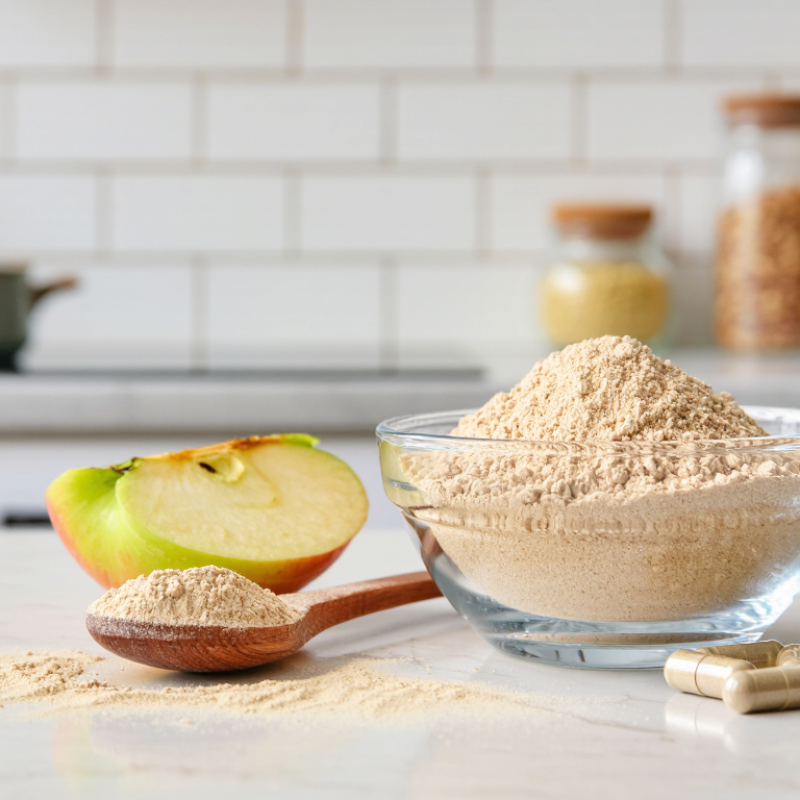
Powdered apple cider vinegar is a dehydrated form of apple cider vinegar. It usually dissolves in water, smoothies, dressings, or seasoning blends. The flavor is often milder than liquid vinegar, but the acidity and nutritional profile can vary. Check the ingredient panel carefully. Some powders contain added sweeteners, carriers, or flavoring agents.
Tip 1: Choose a powder with clear serving information and a short ingredient list. Look for testing details, moisture-resistant packaging, and instructions that explain the intended use. I once assumed a stronger sour taste meant better quality. That shortcut was careless. Flavor depends on processing, concentration, and added ingredients.
Tip 2: Start with a small amount in a cool drink or vinaigrette. Stir thoroughly, because dry powder can settle at the bottom. It also works in marinades, roasted vegetable seasoning, and homemade drink mixes. Avoid inhaling the powder while measuring. It can irritate the nose and throat. Do not use it as a replacement for prescribed treatment. People with digestive conditions, tooth sensitivity, or medication concerns should ask a qualified healthcare professional before regular use. Careful labels matter.

7 Tips for Buying Powder Apple Cider Vinegar
A practical check starts with the ingredient panel. The first ingredient should clearly identify apple cider vinegar powder, not only a vague fruit blend. Look for the source of the powder and its acetic acid content. “Made from apples” sounds useful, but it does not explain the actual vinegar concentration. I still find some labels easy to misread.
Check whether carriers or fillers appear near the top. Maltodextrin, rice flour, or soluble fibers may improve texture and flow. They are not automatically harmful, but they reduce the proportion of vinegar powder. Anti-caking agents, natural flavors, sweeteners, and coloring deserve the same careful look. A short ingredient list is helpful. It is not proof of purity.
Choose packaging that protects the powder from moisture and heat. Clumps, a damp smell, or a darkened color can suggest poor storage. A reputable manufacturer should provide batch testing or a certificate of analysis when requested. Testing may cover identity, heavy metals, microbes, and moisture levels. Third-party verification adds useful evidence, although it cannot replace reading the label. Avoid products making dramatic weight-loss or disease-treatment promises. Powdered vinegar also behaves differently from liquid vinegar, so serving comparisons can be imperfect. That detail is easy to overlook.
Compare acidity on the same basis. Some labels show acetic acid percentage, while others list liquid vinegar equivalence. These figures are not always interchangeable. A powder may contain carriers that reduce acidity per gram. Check whether the stated strength refers to the powder itself or the reconstituted serving. This detail matters.
Review the serving size carefully. One scoop can weigh two grams, while another weighs five. Use a kitchen scale if the scoop feels vague. Small differences add up. Look for clear directions, ingredient quantities, and batch information. A transparent label is more useful than impressive wording. Also check how much liquid the powder requires for mixing. I once assumed a larger scoop meant a stronger product. That assumption was too simple.
Pay attention to solubility and taste during a practical test. Stir one serving into the recommended water and watch for heavy clumps, sediment, or an unusually harsh flavor. Acidity and product strength can affect the drinking experience, but they do not prove quality alone. Consider third-party testing, allergen statements, storage instructions, and a recent expiration date. Reliable manufacturers should explain their testing methods without making exaggerated health promises. Do not compare products by serving size alone; compare acetic acid content, total powder weight, and preparation volume together. I would also question labels that hide the carrier ingredients. A stronger formula may simply be more concentrated, not more suitable for every person.
Buying powder apple cider vinegar requires more than checking the vinegar percentage. Solubility is my first practical test. Mix one measured serving with 250 milliliters of room-temperature water. Stir for 60 seconds. Look for floating particles, sediment, or a stubborn film. Carrier ingredients can change the result. A clear drink is not always a better one.
Flavor needs a controlled comparison. Taste the powder in water, then in a lightly sweetened sample. Strong acidity may hide weak apple notes. Ask for titratable acidity data, not only “vinegar flavor” wording. Packaging deserves equal attention. ASTM F1249 measures water vapor transmission through films, while moisture-sensitive powders need a genuine moisture barrier. A resealable pouch is helpful, but poor sealing still invites clumping. Tiny detail, big effect.
Shelf life should be supported by lot-specific testing. FDA Food Code 2022 uses pH 4.6 as an important control point for acidified foods, but reconstituted powder should not be assumed safe from acidity alone. Check the certificate of analysis, production date, recommended storage temperature, and water activity. An aw near or below 0.60 generally limits microbial growth, according to established food science guidance. Still, it does not prove product quality. My kitchen test is useful, not conclusive. A powder can dissolve well today and cake after humid storage. Codex CXS 1-1985 also emphasizes accurate labeling, so inspect serving size, carrier ingredients, allergens, and net quantity carefully.
7 Tips for Buying Powder Apple Cider Vinegar
Choosing a reliable brand starts with the label, not the front-page promise. Tip 1: Check the ingredient list for simple, clearly named ingredients. Tip 2: Look for a batch number, expiry date, and storage instructions. Tip 3: Prefer sellers that explain their testing process and provide responsive customer support. Third-party testing is useful, but it should be described clearly. Vague claims deserve caution.
Budget matters, especially when serving sizes differ. Tip 4: Compare the cost per serving, not only the package price. A larger pouch may seem cheaper but expire before regular use. Tip 5: Check the recommended serving size and included scoop. I once bought a low-priced powder with an oversized serving suggestion. The bargain faded quickly. Tip 6: Avoid paying extra for dramatic wellness promises without credible evidence.
Taste and routine also affect value. Tip 7: Read reviews for practical details, such as clumping, acidity, mixing, and packaging quality. Recent reviews can reveal storage problems. Powder should arrive dry, sealed, and easy to measure. Keep it away from steam and direct sunlight. Check whether the seller lists a physical contact method and return policy. These details are boring, but reliability often looks boring. Before regular use, consider your dietary needs and ask a qualified healthcare professional if you have a medical condition or take medication. My own buying habits still need improvement; convenience sometimes beats careful comparison.
Use this checklist to compare products consistently. The priority score reflects the number of practical checks involved in each buying decision, not any company or brand rating.
How to use it: Check the ingredient list, serving size, acetic acid information, added ingredients, quality testing, cost per serving, and storage or return details before purchasing. Comparing cost per serving is more useful than comparing package prices alone.
A&B has become the leader in fresh packing and cleaning equipment for fruits and vegetables worldwide. We have achieved this by relentlessly working to produce new and innovative ideas, along with the best customer service on Earth combined with hard working, dedicated, loyal employees and the latest industrial manufacturing techniques. We are now proud to say that we manufacture The Fulcrum Fresh Harvester, this is a one of a kind Berry Harvester that was specifically designed to handle fresh pick blueberries.
732 W. Saint Joseph Street
Lawrence, MI 49064
Phone: 269-539-4700 Fax: 269-539-4705
sale@industrialpackagingmachines.com