Choosing a reliable China supplier for Ss Strip Coil 304 Stainless Steel Coil requires more than comparing online prices. Buyers need evidence of stable production, accurate specifications, and consistent delivery performance. A professional supplier should explain coil thickness, strip width, tolerance, surface finish, hardness, and edge condition clearly. These details affect stamping, forming, welding, and final product appearance.
Practical experience matters here. A dependable manufacturer can provide mill test certificates, heat numbers, chemical analysis, and mechanical test results for each batch. PMI testing and traceable inspection records add confidence, especially for food equipment, architectural parts, and industrial components. Common finishes such as 2B, BA, and No. 4 should match the buyer’s processing requirements. Packaging also deserves attention. Strong wooden cases, moisture protection, and stable coil fixing help prevent scratches and deformation during transport.
Still, no supplier is perfect.
Small tolerance variations may appear between production batches. That risk should be discussed honestly before purchase. Factory audits, sample approval, and third-party inspection can reduce uncertainty. Buyers should also confirm applicable ASTM, EN, or GB standards instead of accepting vague compliance statements. An experienced supplier will welcome technical questions and explain limitations without hiding behind marketing language. Price matters, but it should not replace verification. The better decision usually comes from balancing material quality, inspection transparency, production capacity, communication, and after-sales responsibility. This approach helps international buyers identify a China stainless steel supplier that is capable, accountable, and suitable for long-term cooperation.
What Is 304 Stainless Steel Strip Coil?
304 stainless steel strip coil is a continuous, narrow strip wound into a roll. It is an austenitic stainless steel, usually containing about 18% chromium and 8% nickel. Chromium forms a thin protective film on the surface. Nickel improves toughness and supports stable performance during forming.
Manufacturers produce the strip through rolling, annealing, pickling, and slitting. Cold rolling can create a smooth surface and controlled thickness. Common finishes include bright, brushed, and matte appearances. Width and thickness may vary greatly, so the correct specification depends on the final component. A small difference can affect bending results.
It suits kitchen equipment, medical instruments, architectural trim, heat exchangers, and industrial fittings. It resists moisture, oxidation, and many everyday chemicals. However, 304 is not immune to corrosion. Salt spray, stagnant water, and chloride-rich environments may cause pitting, especially near damaged edges. That detail is often underestimated.
Experienced buyers check the material certificate, actual thickness, surface condition, and edge quality. They should also confirm tensile strength, elongation, hardness, and dimensional tolerance. Slitting marks may appear harmless, but they can complicate later forming. In my view, visual inspection alone is insufficient. Laboratory testing adds confidence, although it increases cost and time. The best choice balances performance, processing needs, and service conditions rather than relying only on the lowest price.
304 stainless steel strip coil is widely selected for its balance of corrosion resistance, formability, and cost. ASTM A240 requires 304 plate, sheet, and strip to achieve at least 515 MPa tensile strength and 205 MPa yield strength. Its typical chemistry includes 18–20% chromium and 8–10.5% nickel. These elements support a stable passive surface in humid and mildly corrosive environments.
The International Stainless Steel Forum reported global crude stainless steel production of about 58.4 million tonnes in 2023. That scale reflects strong demand across processing, construction, transport, and consumer equipment. In practical applications, 304 strip coil becomes kitchen panels, food-processing guards, tube components, cable clamps, and decorative trims. It also performs well during stamping and bending. However, it is not flawless. Chloride-rich water can cause pitting, especially around scratches, tight bends, and poorly cleaned weld areas.
Tips: Confirm thickness tolerance, edge condition, temper, and surface finish before purchasing. A bright surface does not prove superior corrosion resistance. Ask for a mill test certificate, heat number, chemical analysis, and mechanical results. For repeated forming, test a sample first. Small variations in hardness may affect cracking, springback, and tool wear. ASTM A666 is also useful when verifying annealed or cold-worked mechanical conditions. Supplier quality checks should include coil flatness and burr control, not only appearance.
304 stainless steel strip coil typically contains 18–20 wt.% chromium and 8–10.5 wt.% nickel, which support corrosion resistance, formability, and weldability. The remaining elements are controlled within maximum limits. Typical applications include kitchen equipment, food-processing components, architectural trim, heat exchangers, and precision stamped parts. Limits may vary slightly by applicable material standard.
How to Evaluate Chinese 304 Stainless Steel Suppliers
China remains a major stainless steel production center. The International Stainless Steel Forum reported global crude stainless steel production of about 60.8 million tonnes in 2023. This scale creates choices, but also makes supplier screening essential. A reliable supplier should provide 304 chemistry data, heat numbers, mill test certificates, and traceable production records. Check chromium and nickel results against ASTM A240/A240M or EN 10088 requirements. Do not accept “304” as sufficient evidence.
Request samples before placing a large order. Inspect the 2B or BA surface under direct light. Measure thickness, width, coil weight, and edge condition at several points. Small variations can affect stamping and slitting performance. Independent PMI testing adds useful protection. A supplier resisting third-party inspection deserves caution. The World Stainless Association’s market statistics show strong global demand, yet demand alone does not prove quality.
Review packaging, export experience, complaint procedures, and replacement terms. Ask for recent production photos, but treat photos as supporting evidence only. A polished certificate can still hide weak traceability. I would compare at least three factories using the same technical checklist. Price should be evaluated with yield loss, testing costs, and delivery risk included. No checklist is perfect. That uncomfortable gap deserves attention.
Choosing the best Chinese supplier for 304 stainless steel strip coil requires more than comparing prices. Ask for compliance with ASTM A240, EN 10088, or an agreed equivalent. The material should show stable chromium and nickel content, clean edges, and consistent thickness. Production usually includes melting, hot rolling, annealing, pickling, cold rolling, and precision slitting. Each stage affects surface brightness, flatness, and springback. A reliable supplier should provide heat numbers, mill test certificates, and traceable inspection records.
Quality checks should include chemical analysis, tensile strength, elongation, hardness, thickness, width, and surface inspection. For demanding applications, request PMI testing and sample approval before mass production. ISO 9001 certification can indicate controlled procedures, but it does not prove every coil is perfect. Certificate scope, validity, and issuing body deserve careful review. Small details matter. A 0.02 mm thickness variation may affect forming performance.
Tips: Compare actual test reports, not only brochures. Confirm tolerances in writing. Check whether edge condition matches your slitting equipment. Ask for production photos, packing details, and a recent inspection sample. No supplier is flawless; even an experienced mill may have occasional coil camber or packaging damage. The important issue is whether its corrective process is documented, prompt, and honest. Independent inspection is useful when order value or application risk is high.
| Evaluation Dimension | Recommended Requirement for 304 Stainless Steel Strip Coil | Reference Standard or Verification Method | Why It Matters When Selecting a Supplier |
|---|---|---|---|
| Material Grade | 304 austenitic stainless steel; UNS S30400. The low-carbon variant is 304L, UNS S30403, and should be specified separately. | ASTM A240, ASTM A666, EN 10088-2, or an equivalent purchase specification. | Confirms that the supplied strip is suitable for general corrosion-resistant, forming, food-processing, architectural, and industrial applications. |
| Typical Chemical Composition | For 304: Chromium approximately 18.0–20.0%, nickel approximately 8.0–10.5%, carbon maximum 0.07%, manganese maximum 2.00%, silicon maximum 1.00%, phosphorus maximum 0.045%, and sulfur maximum 0.030%. | Heat analysis and product analysis reported on the material test certificate; limits may vary slightly by the selected standard. | Composition controls corrosion resistance, weldability, forming behavior, and consistency between production batches. |
| Strip Width | Manufactured to the buyer’s specified width, commonly as narrow strip or slit coil. Width tolerance must be agreed before production. | Purchase drawing, agreed dimensional tolerance, and sampling inspection with calibrated measuring equipment. | Accurate width reduces trimming waste and supports reliable feeding into stamping, roll-forming, and slitting equipment. |
| Thickness Range | Specified according to the application and rolling capability. Cold-rolled strip is generally ordered with a defined nominal thickness and tolerance rather than a generic range. | ASTM, EN, or customer-defined thickness tolerances; verified with calibrated micrometers across the coil width and length. | Stable thickness is essential for dimensional control, springback prediction, welding, and downstream forming. |
| Material Condition | Common conditions include annealed and pickled, cold rolled, skin passed, or hardened and tempered. The required temper should be stated using the applicable standard. | ASTM A666, EN 10088-2, or a customer-specific temper designation and hardness requirement. | Condition affects strength, ductility, flatness, surface appearance, and forming performance. |
| Mechanical Properties | Typical minimum values for annealed 304 under ASTM A240 include tensile strength of 515 MPa, yield strength of 205 MPa, and elongation of 40% in 50 mm; the applicable product standard governs. | Tensile testing in accordance with the relevant ASTM or EN test method, with results recorded by heat or batch. | Verifies that the strip can meet the intended forming, load-bearing, and fabrication requirements. |
| Hardness | For annealed 304, a commonly referenced ASTM A240 limit is maximum 201 HBW or 92 HRBW. Hardened-and-tempered strip requires a separately agreed hardness range. | Rockwell or Brinell hardness testing using calibrated equipment and the specified standard. | Hardness provides a practical check on temper, work hardening, and suitability for stamping or spring-like applications. |
| Surface Finish | Typical finishes include 2B, BA, No. 1, and brushed finishes. Surface must be free from harmful scale, cracks, laminations, and unacceptable dents or scratches. | ASTM A480/A480M, EN 10088-2, approved reference samples, and visual inspection under defined lighting. | Surface quality directly affects appearance, cleanability, corrosion performance, and further polishing or coating operations. |
| Edge Condition | Available as slit edge or mill edge. Slit edges should be free from excessive burrs, edge cracking, and unacceptable camber. | Customer drawing, agreed burr height, edge-quality criteria, and visual or dimensional inspection. | Controlled edges improve operator safety and prevent feeding, assembly, and die-damage problems. |
| Flatness and Coil Shape | Coil should meet the agreed flatness, edge wave, center buckle, telescoping, and camber limits. | Inspection against ASTM, EN, or purchaser-defined tolerances using a flatness table or suitable measuring system. | Good coil shape supports uninterrupted processing and reduces the risk of jams or uneven forming. |
| Production Process | Typical route: steelmaking and casting, hot rolling, annealing and pickling, cold rolling, intermediate annealing when required, final rolling or tempering, surface treatment, slitting, inspection, and recoiling. | Process flow records, heat traceability, production inspection plans, and documented nonconformance controls. | A controlled process route improves consistency and allows defects to be traced back to a specific heat or operation. |
| Slitting and Recoiling | Slitting knives should be selected for the required thickness and grade. Coil winding should be tight, stable, and free from excessive telescoping or loose wraps. | Slitting setup records, width and burr inspection, coil-weight verification, and visual checks during recoiling. | Reliable slitting reduces burrs, edge cracks, width variation, and production interruptions at the customer’s facility. |
| Welded Coil Traceability | Any coil weld or strip joint should be identified and documented, including location, welding method, and acceptance status. | Coil map, weld log, non-destructive inspection where specified, and clear marking on packaging documents. | Traceability allows the buyer to remove or manage joined sections during automated processing. |
| Testing and Inspection | Recommended checks include chemical analysis, tensile testing, hardness, thickness, width, surface, edge, flatness, and coil-weight inspection. | Inspection and test plan agreed before order placement; laboratory equipment should be calibrated and records retained. | A documented inspection system provides objective evidence that the delivered coil meets the purchase specification. |
| Material Test Certificate | Certificate should identify grade, heat number, product dimensions, condition, chemical results, mechanical results, surface finish, and applicable standard. | EN 10204 Type 3.1 inspection certificate is commonly requested for metallic products; Type 3.2 may be specified for additional independent verification. | Provides batch-level evidence and preserves traceability from the finished coil back to the original heat. |
| Quality Management | A documented quality management system with controlled procedures for incoming materials, production, calibration, final inspection, complaints, and corrective action. | ISO 9001 certification issued by an accredited certification body, together with a current certificate scope. | ISO 9001 demonstrates a managed quality system, although it does not by itself guarantee a specific product grade or dimension. |
| Environmental Management | Controls for waste acid, wastewater, emissions, energy use, packaging, and other environmental impacts should be documented where relevant. | ISO 14001 certification or equivalent environmental management documentation. | Helps evaluate environmental controls and supply-chain requirements without treating the certificate as a substitute for product testing. |
| Occupational Health and Safety | Documented controls for coil handling, slitting, lifting, sharp edges, machinery guarding, and emergency procedures. | ISO 45001 certification or an equivalent occupational health and safety management system. | Indicates that workplace risks are systematically identified and managed. |
| Regulatory Documentation | Where required by the application or destination market, request declarations concerning REACH, RoHS, conflict minerals, or food-contact suitability. | Applicable legal requirements and customer-specific declarations; documentation should identify the material scope and revision date. | Supports import, regulatory, and end-use compliance, but these declarations should not be confused with mechanical or metallurgical certification. |
| Packaging and Shipment | Use moisture-resistant wrapping, protected coil edges, suitable pallets or skids, secure strapping, and clear identification of grade, size, heat number, and coil weight. | Approved packaging specification, packing list, photographs before dispatch, and moisture or damage inspection upon receipt. | Proper packaging prevents corrosion, edge damage, deformation, and loss of traceability during transport and storage. |
| Supplier Approval Checklist | Confirm the product standard, grade, dimensions, temper, finish, tolerances, test requirements, certificate type, packaging, sample approval, and corrective-action procedure before purchase. | Signed technical data sheet, approved sample, purchase order, inspection plan, and documented acceptance criteria. | A detailed specification prevents ambiguous quotations and makes supplier performance measurable and auditable. |
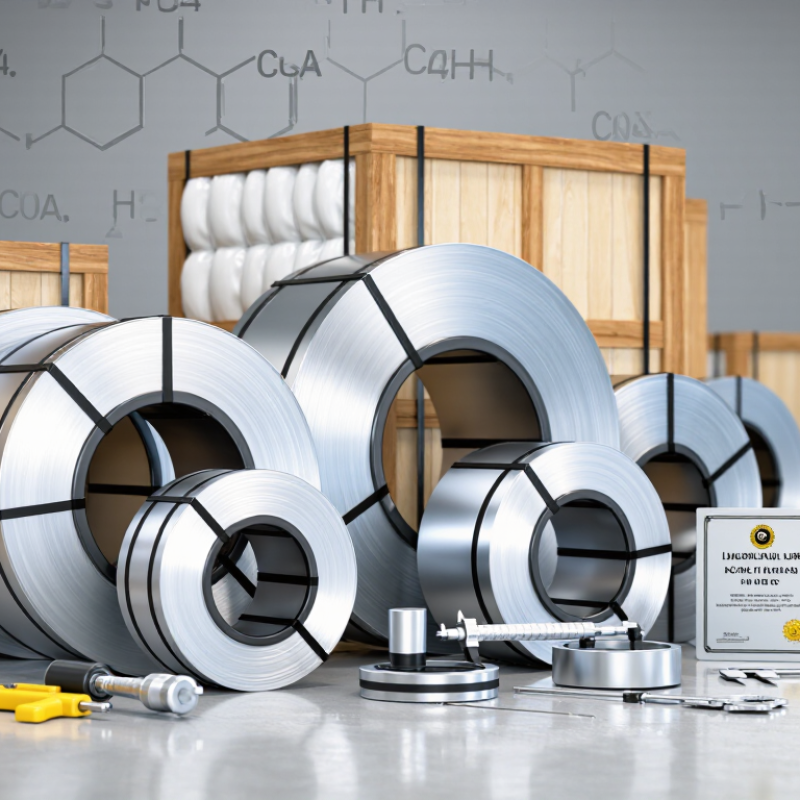
Choosing a reliable 304 stainless steel strip coil supplier requires more than comparing prices. I have learned that a polished quotation can still hide practical weaknesses. Ask for the material grade, thickness tolerance, width tolerance, coil weight, and surface finish. Details matter.
Request recent test certificates and heat-number traceability for every shipment. The certificate should match the actual coil, not a generic file. Confirm whether testing follows recognized standards, such as ASTM or EN requirements.
If possible, order a small sample before approving mass production. Test before scaling. Check hardness, surface quality, edge condition, and dimensional stability during your own processing.
A dependable supplier should explain lead times, minimum order quantities, packaging, and storage protection clearly. Inspect photos of wooden cases, moisture barriers, and coil supports before shipment. Ask how complaints are handled and how corrective actions are documented.
Fast replies are useful, but technical answers matter more. One overlooked detail can cause slitting delays or poor forming results. That sounds simple, yet many buyers focus only on the lowest offer.
A factory visit or independent inspection can reveal cleanliness, process control, and actual production capacity. Still, no supplier is perfect, and my own specifications have sometimes been incomplete. Leave room for clarification, record every agreed tolerance, and review performance after delivery.
A&B has become the leader in fresh packing and cleaning equipment for fruits and vegetables worldwide. We have achieved this by relentlessly working to produce new and innovative ideas, along with the best customer service on Earth combined with hard working, dedicated, loyal employees and the latest industrial manufacturing techniques. We are now proud to say that we manufacture The Fulcrum Fresh Harvester, this is a one of a kind Berry Harvester that was specifically designed to handle fresh pick blueberries.
732 W. Saint Joseph Street
Lawrence, MI 49064
Phone: 269-539-4700 Fax: 269-539-4705
sale@industrialpackagingmachines.com