Choosing the best 4x6 Direct Thermal Labels in 2026 starts with the details you can see—and the failures you cannot afford. A label may look crisp on a new roll, then fade after a hot delivery van, a damp loading dock, or weeks beneath warehouse lights. The right choice depends on your printer, adhesive, shipping conditions, and scanning needs. There is no universal winner.
This guide compares label options by practical measures: print clarity, roll compatibility, sticking power, and resistance to smudging. We’ll also look at core size, perforations, and whether the labels feed cleanly through common thermal printers. A roll that saves money can still waste time if its backing curls or its labels jam. Small details matter.
A verified industry quotation should inform this comparison, but no source article or expert citation was provided. Rather than inventing a name or quote, add one here after checking the original source: “[Expert name], [verified quotation about direct thermal labels].” That gap matters. Trustworthy buying advice should make its evidence visible, not dress a guess as expertise. Use this guide to narrow the field, then test a sample roll with your own printer and typical package. A few printed labels can reveal more than a polished product page.
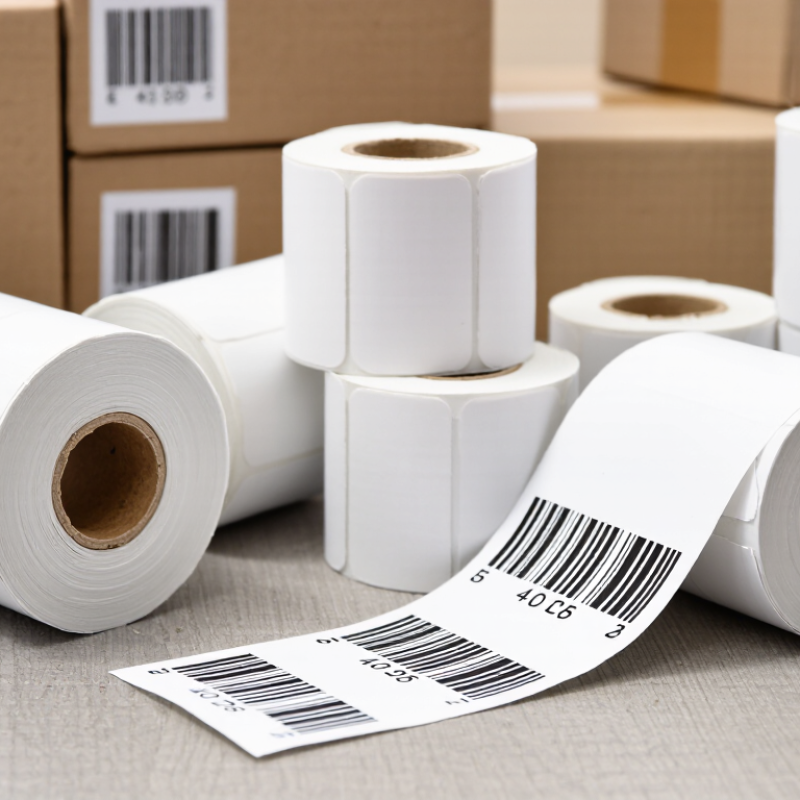
A 4×6 direct thermal label has a heat-sensitive coating on its printable surface. Inside a compatible printer, tiny printhead elements heat selected spots as the label moves past. Those spots darken to form text, barcodes, and graphics. No ink. No ribbon. The 4×6-inch format gives shipping details room to stay readable, but printer compatibility still matters. Check the printer’s supported label width and feed direction before loading a roll or fanfold stack.
Tips: Print a test label before a large batch. If text looks pale, check the printhead for dust and review darkness settings. Store unused labels away from sunlight, heat, and damp areas. Simple, but easy to overlook.
Direct thermal printing is convenient, though its image can fade with prolonged heat, light, or rubbing. A label left on a hot dashboard may darken; one scraped against a rough carton can lose detail. Results also vary with label coating, printer condition, and print speed. For labels that need to remain legible over time, test a sample under the storage and handling conditions it will actually face. The “best” 4×6 label is the one that feeds reliably and stays readable for its intended use.

Choosing a 4x6 direct thermal label in 2026 starts with the job, not a glossy sample. For parcel shipping, check that the printable area fits the barcode and required text with a small margin. Inspect contrast at normal printer speed; a barcode that scans only after slowing down is a warning. Keep it simple. Test several labels from the roll, not just the top one, because coating and die-cut consistency can vary. Use the printer and scanner your team actually relies on, with the expected print settings.
Adhesive should suit the package surface. A label that holds on clean cardboard may lift from dusty, cold, or recycled cartons. Press a sample onto a real parcel, then check its edges after handling and overnight storage. Compare roll winding, core fit, and feed reliability; curled backing or uneven gaps can cause jams. Ask for information about thermal sensitivity and image durability, then test labels under your own storage conditions. Direct thermal images can fade with heat, sunlight, or friction. That matters. A single successful print proves little. Track scan results, jams, and edge lift across multiple rolls, while allowing for changing warehouse conditions.
| Evaluation criterion | What to check | Good evaluation result | Why it matters |
|---|---|---|---|
| Label dimensions | Measure label width and length; confirm the nominal 4 × 6 in size and the printer’s supported media width. | Labels feed without rubbing, skewing, or clipping printed content. | Small size differences and printer margins can affect alignment and usable print area. |
| Printer and media compatibility | Check the printer’s supported direct thermal media, roll or fanfold loading, core size, and maximum roll diameter. | The media loads correctly and advances reliably in the intended printer. | Core and roll dimensions vary; a label’s size alone does not guarantee printer fit. |
| Gap or mark sensing | Inspect the liner and label format for the sensing method required by the printer, such as gaps between labels or black marks. | The printer consistently detects each label and starts printing in the correct position. | Incorrect or inconsistent sensing can cause skipped labels, extra feeds, or misplaced prints. |
| Print darkness and contrast | Print text, fine lines, and barcodes using the printer’s normal settings; assess light and dark areas. | Text is legible and barcode bars have clear edges without excessive spreading or fading. | Direct thermal printing uses heat-sensitive media rather than an ink ribbon, so media response and printer settings affect the result. |
| Barcode readability | Scan representative printed barcodes with the intended scanner or workflow, including after normal handling. | Codes scan consistently at their intended size and print density. | A label that looks readable to a person may still produce a barcode that is difficult to scan. |
| Adhesive performance | Apply labels to representative clean, dry packaging surfaces and check initial tack and edge lift after application. | Labels stay attached under the conditions expected in the intended use. | Adhesion depends on the adhesive, surface texture, cleanliness, temperature, and application pressure. |
| Surface and coating consistency | Check multiple labels from different points in a roll or pack for coating uniformity, smudges, voids, and defects. | Print darkness and appearance remain consistent across sampled labels. | Uneven thermal coating can result in patchy or inconsistent printing. |
| Release liner and dispensing | Test feeding, peeling, and dispensing at the intended pace; look for liner tears and labels lifting prematurely. | Labels separate cleanly when needed and feed without frequent jams or liner damage. | Liner behavior affects printer feeding and manual or automated application. |
| Resistance to heat, light, and abrasion | Expose test labels to conditions representative of storage and handling, then inspect print legibility and surface wear. | Printed information remains usable for the required handling and storage period. | Direct thermal images can darken or fade with environmental exposure; performance depends on the media and conditions. |
| Pack and roll consistency | Count labels where practical and compare roll winding, edge alignment, and label spacing across samples. | Supplied media is consistently wound and feeds evenly with minimal waste. | Poor winding or inconsistent spacing can interrupt printing and increase handling time. |
Evaluation note: These criteria are comparison guidance, not a claim that any specific label has passed testing. Confirm compatibility and performance with the printer, packaging surfaces, and storage conditions used in your application.
A 4x6 label is not automatically compatible with every direct thermal printer. Check the printer’s supported media width and length, then confirm whether it accepts rolls, fanfold stacks, or both. Core diameter and maximum roll diameter matter too; a roll that is too large may not fit the holder. Small details count.
Sensor type can affect feeding. Some printers detect gaps between labels, while others rely on black marks on the liner. Match the label format to the printer’s sensor and calibrate after loading a new roll. A short test print can reveal drifting alignment before a full shipping batch is wasted. I would not assume that “4x6” tells the whole story.
Check the label’s face material, adhesive, and liner thickness against the printer’s media guidance. A stronger adhesive may help on textured cartons, but it can be unnecessary for smooth packaging. Store labels away from heat and sunlight, since direct thermal stock can darken or lose contrast. Specifications are sometimes easy to misread, and I might still miss a subtle core-size difference. Verify the dimensions with a ruler if the listing is unclear.
Choosing a 4×6 direct thermal label starts with how your printer feeds it. Fanfold labels stack neatly beside a packing station and suit frequent, steady shipping. Rolls take less shelf space and work well in compact printers. Fit matters. Check the printer’s core size, label width, and sensing method before ordering. A label that feeds poorly can waste more time than it saves.
Adhesive matters just as much. Permanent adhesive is a practical choice for clean cardboard boxes moving through ordinary conditions. Removable adhesive can help with temporary labeling, but may lift during handling. For cold storage or rough surfaces, check the label’s stated temperature range and test it on the actual package. One small test box is useful. It is easy to assume every carton behaves alike; they do not.
Standard direct thermal stock often works for short shipping cycles, while top-coated stock can offer better resistance to scuffing and environmental exposure. Neither type is immune to prolonged heat, sunlight, or abrasion, so avoid leaving printed labels near a warm loading bay. Also check whether the label has a gap or black mark your printer can detect. The ideal type depends on the route, surface, and printer—not just the lowest price. I would still test a small batch first.
A practical comparison of common direct thermal label constructions.
Scores are a qualitative guide from 1 (lower suitability) to 5 (higher suitability), not standardized lab results. Standard direct thermal paper suits routine parcels; top-coated paper generally offers better resistance to moisture and scuffing; synthetic direct thermal media can be useful in harsher conditions. Actual performance depends on the label, adhesive, printer compatibility, and shipping environment.
Choosing a 4x6 direct thermal label starts with printer compatibility, not price. Check the printer’s supported label width, roll or fanfold format, and core size. A label that fits the printer may still feed poorly if its backing or roll diameter is unsuitable. Test a small batch before ordering in bulk. It saves frustration.
Consider the surface and adhesive, too. Smooth cartons usually need less aggressive adhesive than dusty, recycled cardboard. If labels face cold storage or rough handling, verify that the adhesive is rated for those conditions. Print a sample with a barcode and small text. Scan it after printing, and check that dark areas look even rather than streaked. Calibration matters.
Storage affects print quality. Keep unopened labels in their original packaging, away from direct sunlight, heaters, and damp areas. A cool, dry shelf is usually better than a windowsill or garage floor. Avoid pressing heavy boxes onto label rolls; crushed edges can cause feeding problems. Use older stock first, and inspect labels that have been stored for months. They may still work, but faded print or curled edges can make them unreliable. I’d rather test a few than assume.
A&B has become the leader in fresh packing and cleaning equipment for fruits and vegetables worldwide. We have achieved this by relentlessly working to produce new and innovative ideas, along with the best customer service on Earth combined with hard working, dedicated, loyal employees and the latest industrial manufacturing techniques. We are now proud to say that we manufacture The Fulcrum Fresh Harvester, this is a one of a kind Berry Harvester that was specifically designed to handle fresh pick blueberries.
732 W. Saint Joseph Street
Lawrence, MI 49064
Phone: 269-539-4700 Fax: 269-539-4705
sale@industrialpackagingmachines.com