A power outage can turn a quiet evening into a scramble for flashlights, extension cords, and a safe way to keep essential equipment running. An Automatic Transfer Switch (ATS) can move selected electrical loads between utility power and a backup source, such as a compatible generator. The changeover may happen automatically or require manual action, depending on the model. That distinction matters. A switch designed for a standby generator may not suit a portable unit or a particular electrical panel.
This guide looks at seven automatic transfer switches for backup power, with attention to practical details that affect real installations: rated amperage, voltage, number of circuits, transfer method, and generator compatibility. Small details count. A unit with enough capacity on paper may still leave out the refrigerator, sump pump, or other circuit you care about. Some models support only selected loads; others are designed for broader service, and their installation requirements differ. The labels can be confusing, and product specifications do not always make the trade-offs obvious. Treat this roundup as a starting point, not a substitute for checking the manufacturer’s instructions and having a qualified electrician assess your setup. Backup power is reassuring, but the wrong switch can create costly problems. It is worth pausing over what your household actually needs before choosing.
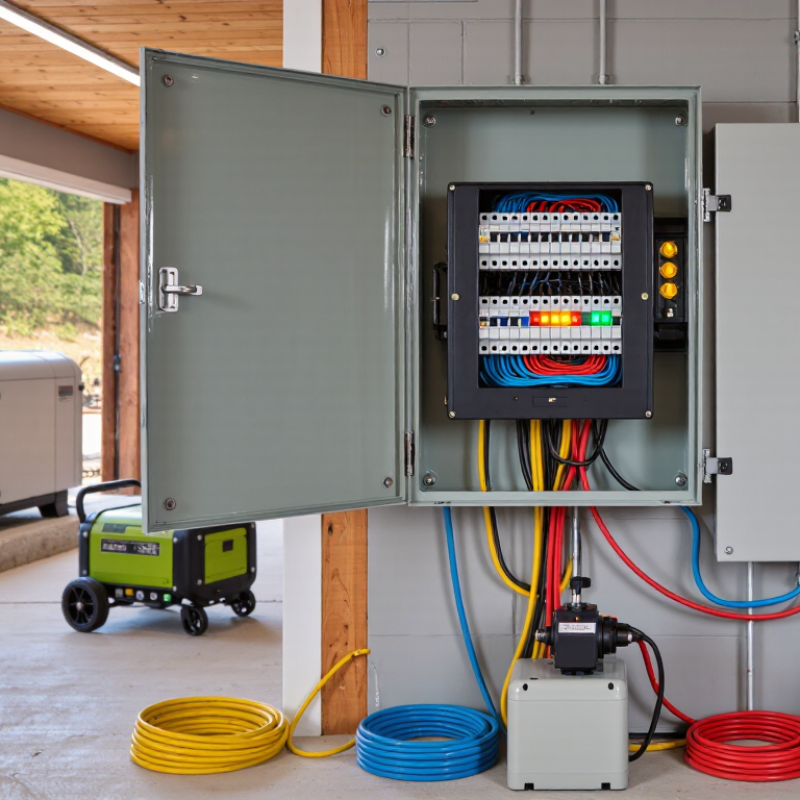
An automatic transfer switch (ATS) monitors the normal power supply and watches for a failure. When voltage drops or disappears, its controller confirms the outage, often after a short delay. That pause helps prevent a brief flicker from triggering an unnecessary transfer. The switch can then signal a compatible generator to start. Once backup power is stable, it disconnects the home or building from utility power and connects the selected circuits to the backup source.
The changeover is usually brief, but many systems interrupt power for several seconds. That matters for computers, pumps, and other sensitive equipment. Some installations use a battery inverter, while others rely on a standby generator; the switch must suit the source and electrical load. When utility power returns, the ATS checks that it is stable before transferring circuits back. A generator may continue running briefly to cool down. No switch fits every setup. Circuit capacity, starting surges, and which loads matter most all affect selection. A qualified installer can verify the wiring, grounding, and load plan; even a well-sized unit can disappoint if those details are overlooked.

How an Automatic Transfer Switch Works
This conceptual sequence shows load availability, not measured timing: when utility power fails, the load remains without power while the standby generator starts. Once the generator is ready, the ATS transfers the load. When utility power returns, the ATS transfers back. A UPS or other backup may be needed to keep sensitive loads powered during the interruption.
Automatic transfer switches differ in how they move a load between utility power and a backup source. An open-transition switch disconnects one source before connecting the other, causing a brief interruption. For lights, that may mean a quick flicker. For sensitive equipment, it can be more disruptive.
A closed-transition switch briefly connects both sources during transfer, helping avoid an interruption. This requires compatible, synchronized sources and careful system design. A delayed-transition switch pauses between sources, which can help certain motor loads settle. The categories look tidy on paper; actual installations are less tidy. Load behavior matters.
Ratings deserve equal attention. Check the switch’s continuous current rating, voltage, number of poles, and phase. Its short-circuit withstand and closing rating must also suit the available fault current at the installation point. Transfer time, enclosure protection, and load type can affect suitability too. A higher amp rating alone does not guarantee a good match. Not always. Have a qualified professional verify the generator capacity, connected loads, and fault-current details before selecting equipment. That small check can prevent an expensive mismatch.
How to read the ratings: The values below are representative ranges for common equipment classes, not specifications for a particular product. Available ratings vary by design and jurisdiction. Confirm the generator’s output, system voltage, fault-current rating, grounding arrangement, and local electrical-code requirements before selecting an ATS.
| ATS Type | Typical Current and Voltage | Common Phase / Pole Arrangement | Transfer Behavior | Best-Fit Application | Key Selection Check |
|---|---|---|---|---|---|
| Residential service-entrance ATS | Commonly 100–200 A; 120/240 V, single-phase | Single-phase; typically 2 poles, with neutral treatment determined by the system design | Usually open transition: the utility is disconnected before generator power is connected | Whole-home backup where the switch also serves as the service disconnect | Verify service-entrance listing, available fault-current rating, generator capacity, and whether neutral switching is required. |
| Residential non-service-entrance ATS | Commonly 100–200 A; 120/240 V, single-phase | Single-phase; often 2 poles; neutral configuration depends on the installation | Typically open transition, with automatic sensing and generator start controls | Whole-home or subpanel backup when a separate service disconnect is already installed | Check that the ATS is rated for its position in the electrical system and that the selected loads do not exceed generator capacity. |
| Critical-load subpanel ATS | Commonly 30–100 A; 120/240 V, single-phase | Single-phase; commonly 2 poles | Usually open transition; only the circuits wired to the backed-up panel transfer | Homes or small facilities prioritizing essential circuits such as refrigeration, lighting, and communications | Size for the subpanel load and generator output; confirm which circuits require backup and how they are protected. |
| Commercial low-voltage three-phase ATS | Commonly 100–1,200 A; systems up to 600 V AC, including common 208 V and 480 V systems | Three-phase; 3-pole or 4-pole options are available | Most commonly open transition; control options can include adjustable transfer delays | Commercial buildings, pumps, retail sites, and facilities with three-phase loads | Match phase, voltage, frequency, pole count, short-circuit withstand/closing rating, and load type. |
| Closed-transition ATS | Low-voltage units are commonly available in ratings from roughly 100 A upward; voltage and maximum current depend on the design | Single- or three-phase configurations are available | Briefly overlaps sources while synchronism conditions are met, helping avoid an interruption during transfer | Sites with sensitive processes or loads where a momentary break in power is undesirable | Requires compatible, synchronized sources and utility approval where applicable; confirm the permitted overlap time and control scheme. |
| Bypass-isolation ATS | Commonly offered in low-voltage ratings from about 100 A to several thousand amperes; exact limits vary widely | Often three-phase; pole options depend on the system | Automatic transfer with a separate bypass path that can maintain load power while the ATS is isolated for service | Hospitals, data centers, and other facilities where maintenance access and continuity are important | Review bypass operation, isolation procedure, maintenance requirements, and the equipment’s fault-current rating. |
| Medium-voltage ATS | Commonly built for medium-voltage systems in the 2.4–15 kV class; current ratings are design-specific and often hundreds of amperes or more | Typically three-phase; switching and grounding arrangements depend on the system | Automatic source transfer using medium-voltage switching equipment and dedicated controls | Large campuses, industrial facilities, and sites supplied at medium voltage | Requires engineering review of system voltage, protection coordination, grounding, switching duty, and utility requirements. |
Seven automatic transfer switches serve different backup needs, and the right choice depends on the load and power source. The U.S. Energy Information Administration’s Electric Power Annual 2022 reports average customer interruptions of 5.5 hours, including major events, and 2.5 hours without them. That gap matters: a brief outage and a long storm-related failure demand different backup plans.
For a small essential-load panel, a compact residential ATS can switch selected circuits, such as a refrigerator and a few lights. A whole-home ATS transfers a larger service, but requires a generator sized for the expected load. Service-entrance-rated models combine transfer and service equipment; non-service-entrance models sit downstream. Check the panel arrangement and available fault-current rating before choosing. Details matter.
Commercial sites may prefer open-transition switches, which briefly disconnect one source before connecting the other. Delayed-transition models add a pause, helping certain motor loads settle before reconnection. Closed-transition switches overlap sources briefly, but require compatible, synchronized supplies. For hospitals or other critical facilities, bypass-isolation designs allow maintenance without interrupting supported loads. That can be valuable, though the equipment and installation are more complex.
A seventh option is a multi-source ATS, designed to select among utility power, a generator, or another approved source. Confirm the switch’s voltage, pole count, current rating, and transfer timing with a qualified electrical professional. A label can mislead: “automatic” does not mean every load transfers safely or seamlessly.
A backup transfer switch should be sized for the loads it will actually serve, not every appliance in the house. Add the running watts of essential equipment, then account for startup surges from refrigerators, pumps, or air conditioners. A pump may draw several times its normal power for a moment. Check the switch’s continuous current and voltage ratings against the generator and the circuits being transferred. Leave a sensible margin. Real loads vary.
Transfer time matters most for equipment that cannot tolerate an interruption. Many household devices restart without trouble, while computers, network gear, and some controls may shut down during even a brief gap. Compare the published transfer time, and confirm whether the device is automatic or requires manual action.
Compatibility is just as practical: verify the supply type, number of poles, neutral arrangement, and whether the switch supports the generator’s connection method. Read both equipment manuals. Ask a qualified electrician if wiring or grounding details are unclear; a specification sheet cannot reveal every condition in an existing panel.
Also check the enclosure rating and installation location, especially where moisture or dust may be present. Capacity can look adequate on paper, yet startup surges may change the choice.
That detail is easy to miss.
An automatic transfer switch must match the generator’s voltage, phase, and rated current. A mismatch can cause nuisance trips or overheating. Have a qualified electrician verify conductor sizes, grounding, neutral switching, and utility isolation before installation. The switch should be mounted where it stays dry, remains accessible, and has clear working space. Never treat a neat-looking installation as proof of safety.
NFPA’s analysis of 2015–2019 U.S. fire data found an annual average of 46,700 home fires involving electrical failure or malfunction. Careful installation matters.
Test the system under realistic conditions, following the switch and generator manufacturers’ instructions. Confirm that utility power loss triggers transfer, and that the switch returns safely when utility power is restored. Keep a simple log of test dates, transfer behavior, and unusual sounds or delays. Small details count.
For emergency power systems within its scope, NFPA 110 sets inspection, testing, and maintenance requirements; owners should use the applicable schedule rather than guess at intervals. Ask a qualified technician to inspect contacts, terminals, enclosure seals, and signs of heat or corrosion. Dust and moisture can hide trouble.
A test that passes once is reassuring, but it is not a guarantee—especially if the generator rarely runs under load.
A&B has become the leader in fresh packing and cleaning equipment for fruits and vegetables worldwide. We have achieved this by relentlessly working to produce new and innovative ideas, along with the best customer service on Earth combined with hard working, dedicated, loyal employees and the latest industrial manufacturing techniques. We are now proud to say that we manufacture The Fulcrum Fresh Harvester, this is a one of a kind Berry Harvester that was specifically designed to handle fresh pick blueberries.
732 W. Saint Joseph Street
Lawrence, MI 49064
Phone: 269-539-4700 Fax: 269-539-4705
sale@industrialpackagingmachines.com