Choosing a Cnc Vertical Turning Lathe is a production decision, not a simple equipment comparison. Global buyers must assess spindle capacity, table diameter, turning height, rigidity, thermal stability, and service support. These details decide whether a machine handles heavy castings or struggles with repeated aerospace tolerances.
Industry data shows why this decision matters. The International Federation of Robotics reported 541,302 industrial robots installed worldwide in 2023. That figure reflects growing pressure for connected, repeatable, and labor-efficient production. Deloitte’s 2024 Smart Manufacturing and Operations Survey also found that 86% of manufacturing leaders expect smart manufacturing to become a major competitiveness driver within three years. A modern vertical lathe should therefore support automation, probing, remote diagnostics, and reliable data exchange. Not every factory needs the same level of integration.
The seven machines in this guide are evaluated through practical buyer criteria. These include cutting performance, CNC control capability, accuracy evidence, chip management, maintenance access, and global technical support. ISO 230-2 and ISO 13041 provide useful references for positioning accuracy, repeatability, and turning-machine testing. Supplier brochures, however, do not always explain test conditions clearly. That is a weakness worth remembering. Real performance depends on tooling, foundation quality, workholding, coolant control, and operator skill. A machine may look impressive on paper, yet disappoint beside a vibrating shop floor. This guide combines manufacturer specifications, recognized industry reports, and application-focused judgment to help buyers compare capability with actual production risk.
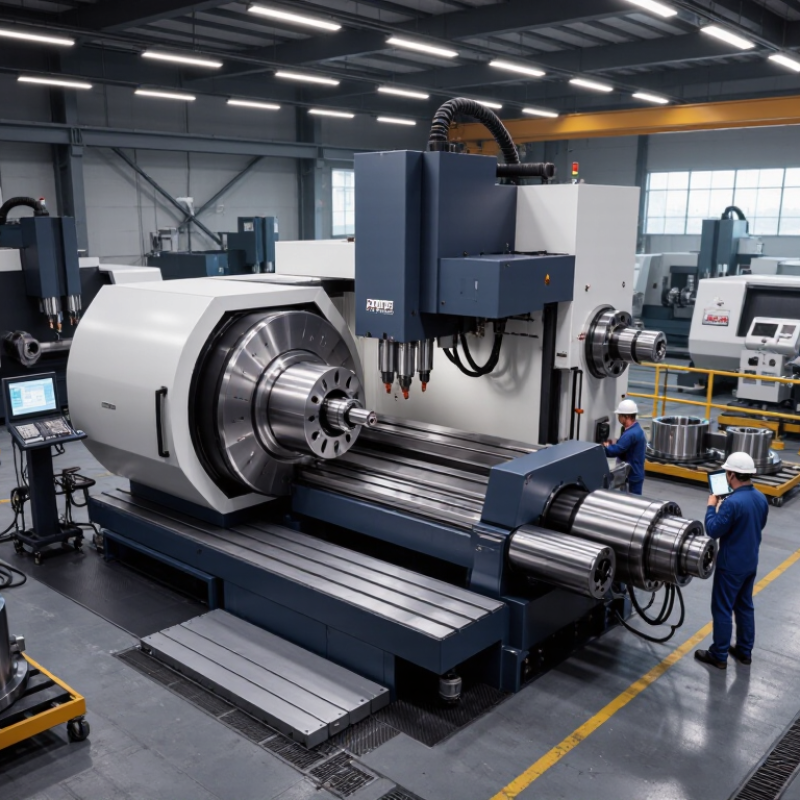
A CNC vertical turning lathe is a computer-controlled machine with a vertical spindle and worktable. The workpiece sits on a horizontal chuck, while cutting tools move around its outer and inner surfaces. This arrangement uses gravity to hold heavy parts steadily during machining. The spindle stays vertical.
These lathes suit large, short, and heavy components, such as flanges, bearing housings, wheels, and valve bodies. Their wide tables can support substantial loads without requiring complex workholding. A programmed control system coordinates turning, boring, drilling, facing, and sometimes threading operations. Operators still need sound judgment. Incorrect clamping can cause vibration, poor accuracy, or tool damage.
For global buyers, machine structure matters as much as advertised spindle speed. Check table diameter, maximum turning height, load capacity, axis travel, motor power, and positioning accuracy. Ask how accuracy is tested and which standards support the measurements. Chip removal also deserves attention, especially when cutting cast iron or hardened steel. In daily production, access to tools, replacement parts, training, and remote technical support can affect uptime. A larger machine is not automatically better. It may consume more energy and require a stronger foundation. This point is easy to overlook. A careful review should match the lathe to actual part dimensions, materials, batch sizes, and operator skill.

Choosing among the seven best CNC vertical turning lathes requires more than comparing price and maximum diameter. Start with the work envelope. Confirm swing diameter, turning height, table load, and axis travel against your largest planned component. Leave practical clearance for fixtures and chip removal. A machine that barely fits today’s part may restrict tomorrow’s production.
Check spindle torque across the actual cutting range, not only the peak rating. Heavy steel turning needs stable torque at low speed. Aluminum work may demand higher rotational speed and balanced tooling. Evaluate table accuracy, clamping force, thermal compensation, and guideway rigidity. Request a test cut using similar material. Measure roundness, surface finish, and dimensional drift after several hours. Numbers on a brochure can look impressive.
Control usability also affects real output. Operators should access tool offsets, alarms, probing, and programs without confusion. Inspect chip evacuation around the table and enclosure. Poor drainage can create maintenance problems quickly. For global buyers, verify electrical compatibility, installation requirements, spare-part availability, training, and remote technical support. Documentation should be clear and machine-specific. Measure twice. A larger lathe is not always better; I have seen oversized equipment consume floor space while smaller, better-matched machines produced more consistently. That detail deserves honest review.
Seven Leading CNC Vertical Turning Lathes for Global Buyers
Global buyers often compare seven leading CNC vertical turning lathe configurations: compact single-column, heavy-duty double-column, live-tool, twin-spindle, multi-axis, high-speed, and automated pallet models. Each design serves different workpieces and production rhythms. Compact machines suit smaller components and limited floorspace. Double-column structures provide stronger support for large rings, housings, and castings. Live-tool systems reduce secondary setups by combining turning, drilling, and milling.
A reliable evaluation should examine spindle torque, table diameter, maximum turning height, tool capacity, and control compatibility. These details affect real output more than impressive brochure language. Check thermal stability during long cycles. Request sample machining data, surface-finish results, and energy requirements. Installation conditions also matter. Voltage, foundation strength, coolant handling, and operator training may vary across regions. No machine is perfect. A model with excellent rigidity may sacrifice speed, while a fast machine may need more careful maintenance.
Tips: Match the machine to your heaviest regular part, not your occasional oversized job. Measure doorways and workshop access before ordering. Confirm spare-parts availability and remote service response times. Ask for acceptance testing with your actual material and tooling. One overlooked detail can delay production. Also, leave capacity for future work. Buying too narrowly can become an expensive mistake.
This benchmark compares seven commonly used CNC vertical turning lathe capacity classes by nominal maximum turning diameter. Larger capacity classes are generally selected for heavier components such as bearing rings, gear blanks, wheels, and industrial flanges. The figures represent standard machine-size categories rather than company or brand specifications.
The seven strongest CNC vertical turning lathe configurations differ by spindle power, swing diameter, and automation readiness. A compact single-column model suits precision parts, such as flanges, valve bodies, and bearing rings. Its smaller footprint also reduces installation costs for overseas buyers. However, limited table capacity can restrict future production.
A heavy-duty double-column lathe handles large castings, energy components, and oversized industrial housings. It offers stronger cutting stability and deeper machining capacity. A high-speed model supports shorter cycles on aluminum and lighter alloys. A live-tool version adds drilling, tapping, and milling without repeated setups. That can improve accuracy. It can also increase maintenance demands.
For repeated batch work, an automated pallet-changing lathe reduces loading delays and operator movement. A four-axis configuration improves productivity on complex profiles and uneven surfaces. A precision-focused model prioritizes thermal control, rigid guideways, and fine positioning. These features matter when tolerances become tight. Yet, higher precision often requires better foundations and controlled workshop temperatures. Buyers should compare maximum workpiece weight, chuck size, motor torque, control compatibility, spare-parts access, and local service support. A machine may appear powerful on paper, but poor chip evacuation can reduce real output. This comparison remains imperfect because material, tooling, and operator skill change the result. Performance claims need practical cutting trials.
7 Best CNC Vertical Turning Lathes for Global Buyers
How to Choose the Right CNC Vertical Turning Lathe
Choosing a CNC vertical turning lathe starts with the workpiece, not the catalog. Measure diameter, height, weight, material, and required tolerance. A 1,250 mm swing may appear impressive, yet it can waste floor space and energy for smaller steel rings. Check spindle torque at low speed, table load, ram travel, and thermal stability. For heavy parts, a rigid machine with stable hydraulic clamping often matters more than maximum rpm. According to Fortune Business Insights’ 2024 CNC Machine Market report, the global CNC machine market was valued at about 83.99 billion dollars in 2023. This growth reflects wider automation demand, but market size alone cannot select your machine.
I have seen buyers focus on cutting speed and overlook chip evacuation. That mistake becomes expensive during long batches. Ask for verified cutting tests using your material, tooling, and coolant. Review positioning accuracy, repeatability, tool-change time, control compatibility, and operator access. ISO 230-2 testing records can provide more reliable evidence than promotional claims. Service response also deserves a score: spare-part availability, remote diagnostics, installation training, and local technicians can protect production schedules. Bigger is not always better. Sometimes, it is simply slower to recover.
Tips: Compare total cost over five years, including power, tooling, maintenance, and downtime. Request references from users machining similar parts. Leave safety clearance around the table. Then challenge your own assumptions; the cheapest quote may not be the lowest-cost choice.
Comparative guide based on common industrial machine configurations and representative published specification ranges.
| Rank | Machine Type | Recommended Buyer | Maximum Turning Diameter | Maximum Turning Height | Chuck / Faceplate Size | Spindle Speed Range | Main Motor Power | Typical Accuracy | Key Advantages | Main Limitation |
|---|---|---|---|---|---|---|---|---|---|---|
| 1 | Heavy-Duty Single-Column VTL | Steel, energy, mining and large-component manufacturers | 1,600–3,150 mm | 1,200–2,000 mm | 1,250–2,500 mm | 2–250 rpm | 55–110 kW | ±0.02–0.05 mm | High rigidity, strong low-speed torque, large work envelope and excellent chip evacuation | Large footprint, higher installation cost and longer setup time |
| 2 | Double-Column CNC VTL | Aerospace, power-generation and large-diameter machining operations | 2,500–8,000 mm | 1,600–4,000 mm | 2,000–6,300 mm | 0.5–100 rpm | 90–250 kW | ±0.03–0.08 mm | Supports very large workpieces, stable cross-rail design and multiple rams or tool posts | Highest capital cost and demanding foundation requirements |
| 3 | Medium-Duty Slant-Bed VTL | General engineering, automotive components and job shops | 800–1,600 mm | 700–1,200 mm | 630–1,250 mm | 5–1,200 rpm | 22–55 kW | ±0.01–0.03 mm | Good chip flow, compact layout, accessible workholding and balanced production capability | Less suitable for extremely heavy interrupted cuts |
| 4 | Compact High-Speed VTL | Automotive, bearing, hydraulic and high-volume component producers | 500–1,000 mm | 500–800 mm | 400–800 mm | 50–2,500 rpm | 15–37 kW | ±0.008–0.02 mm | Short cycle times, automatic loading compatibility and efficient use of factory space | Limited workpiece diameter and lower heavy-cutting capacity |
| 5 | Live-Tooling VTL with C-Axis | Multi-operation machining and manufacturers seeking fewer setups | 600–1,500 mm | 600–1,200 mm | 500–1,250 mm | 5–1,000 rpm | 22–45 kW | ±0.01–0.03 mm | Turning, milling, drilling and tapping in one setup; reduces handling and alignment errors | Higher programming complexity and increased maintenance requirements |
| 6 | Two-Ram Production VTL | High-throughput manufacturers requiring simultaneous operations | 1,000–2,500 mm | 800–1,800 mm | 800–2,000 mm | 3–400 rpm | 45–90 kW | ±0.02–0.05 mm | Parallel cutting, reduced cycle time and flexible roughing-finishing combinations | More expensive tooling, controls and operator training |
| 7 | Entry-Level CNC VTL | Small workshops, maintenance departments and developing markets | 500–1,000 mm | 500–800 mm | 400–800 mm | 10–800 rpm | 11–30 kW | ±0.02–0.05 mm | Lower purchase cost, simpler operation, modest utility demand and easier installation | Fewer automation options and lower productivity for complex or large parts |
Selection Notes for Global Buyers
A&B has become the leader in fresh packing and cleaning equipment for fruits and vegetables worldwide. We have achieved this by relentlessly working to produce new and innovative ideas, along with the best customer service on Earth combined with hard working, dedicated, loyal employees and the latest industrial manufacturing techniques. We are now proud to say that we manufacture The Fulcrum Fresh Harvester, this is a one of a kind Berry Harvester that was specifically designed to handle fresh pick blueberries.
732 W. Saint Joseph Street
Lawrence, MI 49064
Phone: 269-539-4700 Fax: 269-539-4705
sale@industrialpackagingmachines.com