Choosing an Electric Valve supplier is not a logo contest. Buyers need reliable actuation, clear documentation, and support that continues after delivery. A valve may look suitable on a catalog page, yet fail to match the fluid, pressure, temperature, or control signal in the actual system. Small details matter. A wiring diagram, spare-part lead time, or tested enclosure can prevent hours of troubleshooting beside a noisy pump skid.
Dr. Bela G. Lipták, a respected process-control author, emphasizes matching control equipment to real process conditions. A practical takeaway from his work is: “Choose the valve for the process, not the catalog headline.” That distinction helps global buyers compare manufacturers beyond price. It also encourages useful questions: Are materials traceable? Can the actuator meet the required duty cycle? Does the supplier provide test records and responsive technical help? Answers should be verified, not assumed.
This guide reviews ten Electric Valve suppliers through buyer-focused criteria, including product range, engineering support, customization, quality practices, and international service. The right choice depends on the application. A compact valve for water treatment has different demands from a high-cycle unit on a packaging line. No list is perfect. Supplier capabilities change, and published claims do not replace a project-specific review. Treat each entry as a starting point, then confirm specifications, certifications, delivery terms, and support directly with the manufacturer. That extra check is easy to overlook. It is often the one that matters.
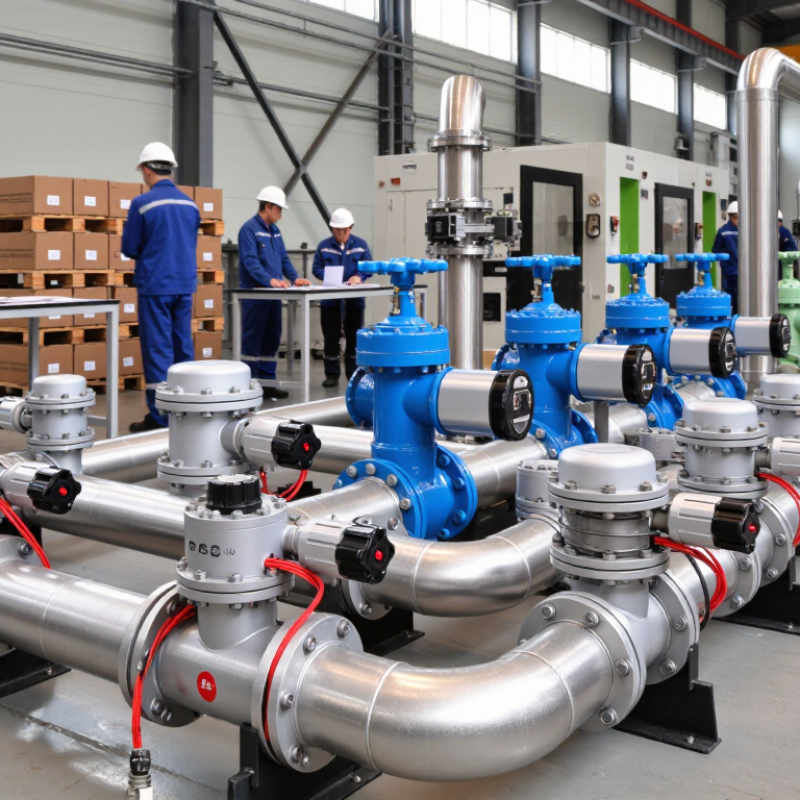
Electric Valve Fundamentals: On/Off and Modulating Control with 4–20 mA Signals
Electric valves generally operate in on/off or modulating modes. An on/off valve moves between two positions: open and closed. It suits simple isolation tasks, such as starting flow through a water line. The control signal is typically a discrete command, not a 4–20 mA position request. Simple, but not adjustable.
A modulating valve can stop at intermediate positions to regulate flow or pressure. A controller sends a 4–20 mA signal, often mapped so 4 mA represents minimum travel and 20 mA represents maximum travel. The actuator converts that signal into movement. Actual response depends on configuration, valve characteristics, and process conditions. A signal alone does not confirm the valve reached its target; position feedback may be needed.
During commissioning, technicians can check the signal at several points, such as 4, 12, and 20 mA, and compare commanded travel with observed position. Wiring polarity, input settings, and calibration matter. In practice, tidy diagrams can hide awkward tuning. A valve may respond slowly or cause flow changes that feel too abrupt. Buyers comparing suppliers should ask about signal compatibility, feedback options, and actuator behavior on signal loss, then verify these details against the application.

For global buyers, supplier evaluation should connect actuator fit with actual valve duty. ISO 5211 defines standardized mounting interfaces, including flange dimensions and drive components. Confirm the valve’s mounting pattern, stem dimensions, and actuator output before ordering. A matching bolt circle alone does not guarantee a suitable connection. Check required torque across the operating range, including breakaway torque after long periods of inactivity. Small details matter.
IEC 60534 provides methods for sizing control valves using flow conditions and valve characteristics. Share minimum, normal, and maximum flow, plus fluid properties, inlet pressure, and outlet pressure. Ask suppliers to state their assumptions and show the calculated flow coefficient and pressure drop. For liquids, review cavitation risk; for gases, check for choking and noise concerns. I would not treat a neat datasheet as proof: sizing results are only as reliable as the operating data supplied.
Tips: Send a clear interface drawing and duty-point table with your inquiry. Request written confirmation of ISO 5211 compatibility and the IEC 60534 sizing basis. Keep one operating case for independent review; it may reveal gaps in the original assumptions.
Illustrative IEC 60534 liquid-sizing relationship—not supplier ratings. The chart shows calculated water flow for selected Kv values at a 0.25 bar pressure drop.
For water (specific gravity = 1), the simplified non-choked liquid relationship is Q = Kv × √(Δp), with Q in m³/h and Δp in bar. ISO 5211 actuator mounting-interface compatibility is a separate check: confirm the flange and drive dimensions against the applicable standard and the valve and actuator drawings.
Comparing ten global electric-valve suppliers means looking beyond catalog size. Check whether each offers suitable ball, butterfly, and control valves, plus actuators matched to required torque and duty cycles. A compact actuator may suit a water-treatment skid; a high-cycle process line needs different ratings and maintenance access. Ask for material data, operating limits, and test records—not just a product sheet.
The MarketsandMarkets Industrial Valves Market report estimated the overall market at US$79.4 billion in 2024, with a forecast of US$100.5 billion by 2029. This is not an electric-valve market estimate, but it signals broad demand across industrial applications. Product choice still depends on the actual medium, pressure, temperature, and control needs. A mismatch can be costly.
Review certifications and service reach carefully. ISO 9001 relates to quality management, while ISO 5211 specifies actuator mounting interfaces; neither alone proves that a valve suits a particular process. For control valves, ask about relevant IEC 60534 documentation. Also verify local commissioning, spare-part availability, and realistic response times. A certificate is only a starting point. I would want a sample inspection record, too; supplier claims can look tidy, while field conditions rarely are.
When comparing electric valve suppliers, request sizing data for your real flow range, not just a catalogue headline. Cv indicates flow capacity, but the required value depends on fluid, pressure drop, and operating conditions. An undersized valve may restrict flow; an oversized one can make control less stable. Ask for the assumptions behind the calculation. Check pressure ratings at your actual temperature, since allowable pressure can change with temperature and valve materials.
For outdoor installations, IP67 indicates dust protection and resistance to temporary immersion under specified test conditions. It does not mean the actuator can remain underwater. Confirm cable-entry sealing and mounting orientation, too. Match actuator duty cycle to how often the valve operates. A unit rated for occasional movement may overheat during frequent cycling. Ask suppliers for torque data across the operating range, and verify that the actuator can overcome expected differential pressure. Small details matter.
Tips: Share a simple duty profile: cycles per hour, ambient temperature, and expected pressure. Request test records and the rating conditions in writing. I still find specifications easy to misread when conditions are missing, so leave room for a second review before ordering.
Comparison note: The profiles below are anonymized supplier categories, not named or ranked companies. Pressure classes are common market options, not specifications guaranteed by every supplier. Cv, pressure limits, ingress protection, and duty ratings must be confirmed for the exact valve-and-actuator model.
| Anonymous supplier profile | Typical electric-valve focus | Common pressure options* | Cv and flow checks | IP67 and actuator duty checks |
|---|---|---|---|---|
| 1. Industrial ball-valve specialist | Quarter-turn metal or resilient-seat ball valves for process isolation | Often offered in PN16–PN40 or ASME Class 150; higher classes depend on design and materials. | Request Cv for the exact size, port, and trim; compare the published curve with required flow and pressure drop. | Verify IP67 applies to the complete actuator enclosure. Confirm allowable starts per hour and duty rating for the required operating frequency. |
| 2. Butterfly-valve specialist | Wafer, lug, or flanged quarter-turn valves for water and general service | PN10 or PN16 are common options; some designs are available for other pressure classes. | Ask for Cv versus disc position; flow capacity and control performance vary with size, seat, and disc design. | Check enclosure rating, cable entries, and installation conditions. Match actuator duty and torque to cycling frequency and differential pressure. |
| 3. Globe control-valve specialist | Modulating electric control valves for throttling and process regulation | PN16–PN40 and ASME Class 150–300 are common ranges for many product lines; confirm the selected trim and body. | Request rated Cv, inherent characteristic, rangeability, and sizing calculations for the actual process conditions. | Confirm the actuator is rated for continuous or frequent modulation as required; an on/off duty rating may not suit control service. |
| 4. Water-treatment valve supplier | Resilient-seated butterfly and ball valves for treatment plants and distribution systems | PN10 and PN16 are widely used options; ratings depend on valve size, lining, and applicable standard. | Obtain the model-specific Cv or Kv data and check that the valve will not create excessive pressure loss at design flow. | For outdoor locations, verify IP67 documentation and corrosion protection. Check the actuator duty declaration against expected daily cycles. |
| 5. Knife-gate valve supplier | Electric knife-gate valves for slurry, pulp, and solids-bearing services | Low-pressure designs commonly include PN6 or PN10 options; some models are rated PN16. Confirm direction and service limits. | Do not infer flow capacity from nominal size alone; request flow data for the specified medium and valve position. | Check actuator thrust, stem protection, and duty rating under the expected solids load. Confirm enclosure sealing for the installation environment. |
| 6. Pinch-valve supplier | Electric pinch valves for abrasive or corrosive slurries where the sleeve is the wetted component | Pressure limits are highly design- and sleeve-dependent; confirm the rated pressure for the selected size and material. | Request flow data for the sleeve and operating position; confirm that the flow curve reflects the intended medium. | Verify actuator duty against sleeve closure requirements and cycle frequency. Check IP rating and sleeve replacement access. |
| 7. High-pressure ball-valve supplier | Trunnion-mounted or other engineered ball valves for higher-pressure process applications | Some product lines cover ASME Class 300 and above; the available class is model- and material-specific. | Request certified Cv data and verify operating torque at the maximum differential pressure and specified temperature. | Confirm actuator sizing margin, declared duty, and enclosure rating for the site. Check any required hazardous-area approvals separately. |
| 8. HVAC valve supplier | Electric ball and butterfly valves for heating, cooling, and building services | Many building-service products are designed for low or moderate system pressures; use the exact model rating, not a category assumption. | Select Cv to meet design flow and control authority; confirm whether the valve is intended for on/off or modulating control. | IP67 may be optional and is not universal in HVAC ranges. Verify the required duty and control signal compatibility. |
| 9. Compact utility-valve supplier | Small-bore motorized ball valves for utility lines, equipment, and packaged systems | Options vary widely by body, connection, and seal material; confirm the working pressure and temperature together. | Request Cv at the specified port configuration; reduced-port and full-port valves of the same nominal size can differ substantially. | Check whether IP67 covers the actuator only or the assembled product. Confirm run time, starts per hour, and rated duty. |
| 10. Severe-service valve supplier | Engineered valves for demanding temperatures, corrosive media, or high-cycle operation | Pressure rating must be established for the exact body, trim, temperature, and applicable design standard. | Request sizing calculations, Cv data, and confirmation of the intended operating range and process medium. | Review IP67 test documentation, temperature limits, and duty classification. Specify cycle frequency and fail-safe requirements in the inquiry. |
Buyer checks: Cv is model-specific and should be supported by a manufacturer’s flow data. IP67 indicates dust-tight protection and protection against temporary immersion under defined test conditions; it does not mean continuous submersion protection. Actuator duty-cycle terminology and ratings vary, so request the declared rating, operating limits, and permitted starts per hour for the selected unit.
For global buyers, electric valve procurement should begin with site conditions, not a preferred catalog rating. IEC 60529 classifies enclosure protection against solids and water: the first digit covers solids, and the second covers water. An IP66 actuator may suit powerful water jets, while temporary immersion needs separate assessment. IPX7 does not automatically mean protection against water jets unless the product is also rated for them. Small details matter. Confirm cable entries, seals, mounting orientation, temperature limits, and whether the rating applies to the complete actuator assembly. An IP code does not establish corrosion resistance or suitability for every chemical exposure. Request test evidence for the delivered configuration, not only a datasheet claim.
Spare planning should name seal kits, coils, position sensors, manual overrides, and regional lead times before a failure occurs. Specify part interchangeability, serial-number traceability, storage conditions, and service availability. The U.S. Department of Energy’s Operations & Maintenance Best Practices Guide (2010) reports potential energy savings of 5–20% from effective operations and maintenance. That estimate applies broadly to facilities, not electric valves alone; treat it as context, not a purchasing promise. A lifecycle plan should also set maintenance intervals, response targets, and end-of-life notification procedures. Perfect paperwork? Rarely. Still, a practical spare-parts list and a realistic service route can keep a small seal fault from becoming a prolonged shutdown.
A&B has become the leader in fresh packing and cleaning equipment for fruits and vegetables worldwide. We have achieved this by relentlessly working to produce new and innovative ideas, along with the best customer service on Earth combined with hard working, dedicated, loyal employees and the latest industrial manufacturing techniques. We are now proud to say that we manufacture The Fulcrum Fresh Harvester, this is a one of a kind Berry Harvester that was specifically designed to handle fresh pick blueberries.
732 W. Saint Joseph Street
Lawrence, MI 49064
Phone: 269-539-4700 Fax: 269-539-4705
sale@industrialpackagingmachines.com