10 Best Electrical Insulation Paper Suppliers Worldwide
Choosing among the 10 Best Electrical Insulation Paper Suppliers Worldwide takes more than comparing prices or catalog photos. Electrical Insulation Paper protects conductors inside transformers and other electrical equipment. Its thickness, density, moisture content, and tensile strength can affect processing and long-term performance. Small differences matter.
Lord Kelvin, the electrical engineer and physicist, wrote, “When you can measure what you are speaking about, and express it in numbers, you know something about it.” His words concern measurement, not insulation paper specifically, but the principle fits supplier evaluation. Ask for technical data sheets, test methods, batch traceability, and samples for your own process. Look closely at the roll edges. Check whether sheets handle cleanly and arrive with packaging intact. Details like these can reveal practical issues that a product listing may not show.
This guide introduces suppliers serving different regions and applications, then outlines factors buyers can compare: cellulose grades, dimensional consistency, certification, production capacity, delivery reliability, and technical support. A supplier’s claims still need checking against project requirements. Not every buyer needs the same paper. And a polished datasheet is not the whole story. Availability, communication, and repeatable quality deserve equal attention, though they can be harder to judge before an order. The comparisons that follow are a starting point, not a substitute for testing.
What Electrical Insulation Paper Is and How It Is Produced
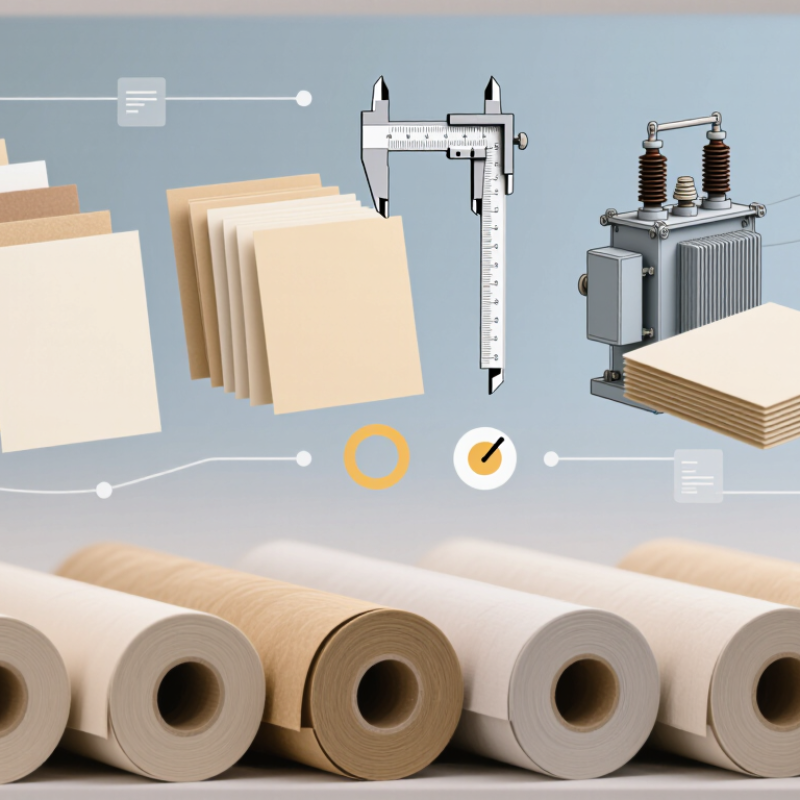
Electrical insulation paper is a porous, fibrous sheet that separates conductors and helps limit current leakage. Most grades use cellulose fibers, while specialty papers may use other fiber systems. Performance depends on more than thickness: density, moisture, tensile strength, and dielectric behavior all matter. In a transformer, thin paper may wrap conductors before the assembly is dried and impregnated with insulating fluid. It must fit closely without tearing. Small details count.
Production begins with selected pulp, which is cleaned and screened to remove grit and unwanted fibers. Refining loosens and fibrillates the fibers, helping them bond into an even web. Water carries the mixture onto a moving screen, where drainage forms a wet sheet. Pressing removes more water, and controlled drying stabilizes the paper. Some grades are calendered to adjust smoothness or thickness, but finishes vary by application. Manufacturers test dimensions, moisture, tensile properties, and electrical performance against the intended specification. There is no universal best paper. A clean-looking roll can still vary internally, so representative sampling and traceable test records matter. It is tempting to view paper as a passive barrier; winding fit, drying, and assembly also shape insulation performance.
Key Material Properties and Industrial Applications
10 Best Electrical Insulation Paper Suppliers Worldwide
Key Material Properties and Industrial Applications
Electrical insulation paper is selected for more than its dielectric strength. Thickness consistency, tensile strength, moisture content, density, and oil absorption all affect winding performance. In oil-filled transformers, porous cellulose must absorb insulating fluid while remaining strong during wrapping and drying. Small variations matter. A paper that handles well on a roll may still perform poorly if damp or unevenly calendered.
CIGRE Technical Brochure 323, Ageing of Cellulose in Mineral-Oil Insulated Transformers, discusses cellulose degradation as its degree of polymerization falls. New paper commonly measures around 1,000 DP; values near 200 are often treated as an end-of-life indicator, though actual limits depend on the transformer and assessment method. IEC 60076-7 also models how higher transformer hot-spot temperatures accelerate insulation aging. These references make thermal stability and moisture control essential—not just headline dielectric figures.
Kraft and thermally upgraded papers are widely used in transformer windings, while thinner grades also serve motors, generators, cables, and capacitors. Engineers typically compare supplier test data with applicable IEC 60641 requirements and their own processing conditions. Ask for measured thickness, tensile properties, moisture, and dielectric results, not only a grade name. One caveat: lab tests cannot fully reproduce years of heat, oil exposure, vibration, and handling on a production line.
Criteria for Evaluating Global Insulation Paper Suppliers
When evaluating electrical insulation paper suppliers, compare verified performance, not catalog claims. Request recent batch certificates showing thickness, density, moisture, tensile strength, and dielectric test results. Check that test methods match the intended application and relevant IEC specifications. Then test samples under your own operating conditions. A tidy datasheet is useful, but it cannot reveal every production variation.
Consistency matters. Ask how suppliers control pulp quality, calendering, drying, and batch traceability; small changes can affect winding and impregnation. Review production capacity, lead times, packaging, and technical support, especially for urgent orders. The International Energy Agency’s 2023 report, Electricity Grids and Secure Energy Transitions, estimates that over 80 million kilometres of grids must be added or refurbished by 2040. It also says annual grid investment needs to exceed US$600 billion by 2030. These figures signal pressure on supply chains, not proof that any supplier can meet your schedule. Ask for delivery records and contingency plans. Imperfections remain. Even a strong audit is only a snapshot. Check environmental claims against documented sourcing and measurable data, and revisit them periodically.
Thermal-Class Reference for Evaluating Electrical Insulation Paper Suppliers
IEC 60085 thermal classes provide a useful reference when assessing the temperature capability of electrical insulation systems.
The chart shows reference temperatures for insulation-system classes—not guaranteed maximum operating temperatures for individual paper products. When comparing suppliers, check product-specific test reports and qualification data for the intended application.
Profiles of Ten Leading Electrical Insulation Paper Suppliers
Profiles of Ten Leading Electrical Insulation Paper Suppliers
A useful supplier profile starts with the paper itself. One supplier may specialize in high-volume kraft paper for transformer winding, while another focuses on thin, smooth grades for compact coils. A third may offer thermally upgraded paper for equipment exposed to sustained heat. Other suppliers distinguish themselves through flexible paper laminates, motor insulation grades, recycled-fiber options, or custom sheet and roll widths. These capabilities matter more than broad claims of quality.
The remaining profiles highlight service and technical support. Some suppliers serve transformer manufacturers with consistent roll dimensions and dependable batch records. Others focus on regional delivery, shorter lead times, or smaller custom orders. A technically strong supplier can provide relevant test data, explain moisture-control procedures, and help match paper thickness to a design. Still, a polished data sheet does not guarantee performance in every assembly. That part deserves careful verification.
Tips: Ask for samples and current test reports. Confirm thickness, tensile strength, thermal class, and storage conditions. Compare like with like. Then trial the paper in the intended process; a small production test can reveal handling issues that specifications miss.
Comparing Supplier Capabilities, Certifications, and Product Ranges
Comparing electrical insulation paper suppliers requires more than checking a catalogue. A useful review starts with operating conditions: voltage, temperature, moisture exposure, and the winding process. Ask for thickness tolerances, density, tensile strength, and dielectric test data. These details affect handling and insulation performance. Small differences matter.
Product range also reveals practical capability. Some suppliers offer kraft, crepe, pressboard, and thermally upgraded papers in several thicknesses and widths. Others focus on fewer grades but provide tighter control or custom slitting. Check whether sample rolls match production specifications. A neat sample is not proof of consistent output.
Certifications need careful reading. ISO 9001 describes a quality-management system; it does not certify every paper grade for a particular application. Request current certificates, batch traceability, and test reports tied to the supplied material. Ask how suppliers manage moisture, storage, and paper damage during shipment. These questions can expose gaps that a polished brochure misses. Supplier comparisons are imperfect, too: test methods and reported units may differ. I would flag those differences rather than rank vendors from catalogue claims alone. A clear, documented answer is often more useful than a broad promise.