Choosing the right Iron Pipe Bending Machine can shape production quality, labor efficiency, and long-term operating costs. Global buyers face a crowded market, with machines designed for different pipe diameters, wall thicknesses, materials, and bending methods. A compact workshop model may suit light steel tubing, while a hydraulic system may handle large industrial pipes with greater consistency. The difference often appears in small details, such as die alignment, control response, and repeatability after several hours of operation.
This guide reviews seven notable machines for international purchasing decisions. The comparison considers bending capacity, automation, machine structure, safety features, energy use, maintenance access, and technical support. Practical experience shows that a strong specification sheet does not always guarantee smooth production. It can hide confusing controls or limited spare-parts availability. No ranking is flawless. Buyers should verify local voltage, installation requirements, warranty terms, and compliance documentation before placing an order. Shortlist carefully. A reliable machine should create clean bends without visible flattening, cracking, or excessive springback. Operators also need clear instructions and realistic training time. For buyers in construction, fabrication, furniture, automotive, or pipeline industries, these seven options provide a useful starting point. The best choice depends not only on price, but also on workload, material behavior, production volume, and after-sales reliability. This article aims to make that decision more practical, transparent, and easier to defend.
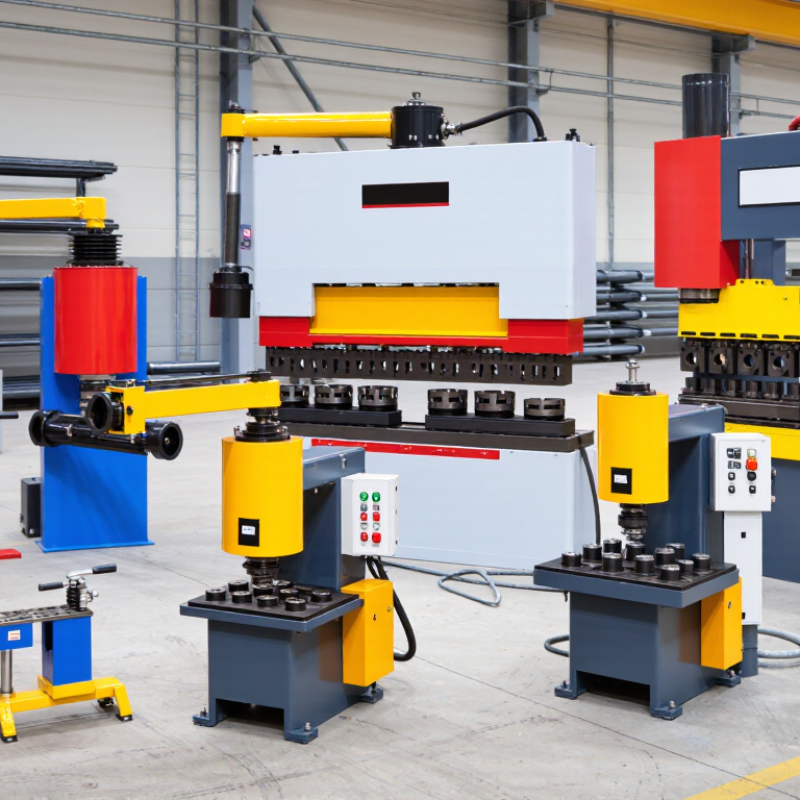
Choosing among the 7 best iron pipe bending machines starts with understanding the bending method, not the machine’s appearance. Rotary-draw bending uses a fixed die, pressure die, and mandrel. It produces accurate angles and clean, tight radii. This method suits structural frames, handrails, and process piping. A mandrel supports the pipe wall during bending. Without proper support, thin iron pipe may wrinkle or flatten. Small details matter.
Roll bending uses three rollers to create broad curves. It works well for large arcs, rings, and gentle bends. The pipe moves gradually between adjustable rollers. Operators can control the radius through repeated passes. However, roll bending usually cannot match rotary-draw precision at tight corners. I have seen buyers expect one machine to perform every task. That assumption is often wrong.
Induction bending heats a narrow section before forming the pipe. Localized heat reduces forming force and supports large-diameter applications. It can create smooth bends with limited mechanical distortion. Temperature control remains critical. Excessive heat may damage the pipe surface or change its properties. Cooling speed also deserves attention. For global buyers, inspect control accuracy, tooling range, operator training, and maintenance access. Ask for sample bends using your actual pipe dimensions. A machine that looks powerful may still produce inconsistent results. Testing is worth the delay.

Selecting an iron pipe bending machine requires more than checking its maximum diameter. Global buyers should confirm continuous capacity from DN15 through DN150. Capacity on paper is not enough. Ask for sample bends across several sizes, including thick-wall pipe near DN150. Review the machine’s tooling range, drive force, and support for manual, hydraulic, or CNC operation. A practical trial reveals problems that brochures often hide. Watch for pipe flattening, surface marks, and springback after unloading. These details affect installation quality and rework costs.
A 1.5D center-line radius demands controlled material flow and accurate tooling alignment. That tight radius can expose weak clamping or poor mandrel adjustment. Request production records showing repeatable bends at this radius. For ±1° accuracy, check how the manufacturer defines measurement points and correction methods. A reliable supplier should provide calibration records, inspection data, electrical specifications, and clear maintenance instructions. Confirm voltage compatibility before shipment. Also examine emergency stops, guarding, and operator access. I have seen buyers focus heavily on angle accuracy while overlooking setup time. That was a costly mistake. Some machines need careful adjustment between sizes. An on-site acceptance test can confirm real performance, not just advertised capability. Measure at least three repeated bends per size. Small differences matter.
Selecting the seven best iron pipe bending machines depends on material, wall thickness, and throughput. For thin carbon-steel pipe, a manual rotary-draw bender offers low cost and simple maintenance. It suits prototypes and small batches. An electric rotary-draw machine improves repeatability for stainless steel and coated pipe. Its servo control reduces springback errors, although setup still needs skilled operators.
For medium-wall pipe, a hydraulic rotary-draw bender delivers higher torque and stable clamping. A CNC multi-stack bender handles several radii without repeated tooling changes. It is useful for frames, handrails, and complex process lines. A roll bender fits large-radius bends in thicker pipe, while an induction bender supports heavy-wall sections with controlled local heating. A three-roll orbital machine can process long, large-diameter sections, but its bend accuracy may require extra correction.
Material choice matters. The World Steel Association reported 1.89 billion tonnes of crude steel production in 2023, confirming steel’s continuing industrial scale. However, tonnage alone does not determine machine suitability. Stainless steel needs controlled pressure and clean tooling. High-strength steel demands stronger frames and accurate force measurement. Thin walls need mandrels, wipers, and anti-wrinkle dies. Throughput also changes the decision: CNC and induction systems support repeat production, while manual equipment remains practical below continuous industrial demand. Real workshops often overestimate speed. I would test three sample batches first. Scrap rates can reveal more than a brochure.
Global buyers comparing the 7 best iron pipe bending machines should examine compliance before speed or advertised capacity. ASTM A53 pipes may vary in wall thickness, grade, and surface condition. ISO 1127 dimensions also require accurate tooling selection. A die that fits the outside diameter may still create excessive ovality.
In practical trials, operators should bend sample pipes before approving a machine. Check the radius, wall thinning, springback, and visible scoring under workshop lighting. Hydraulic systems need stable pressure. CNC controls need repeatable positioning. Small details matter. Record the pipe size, bending angle, and final measurement for each test.
CE marking supports applicable European conformity requirements, while UL recognition may matter for North American electrical installations. Neither mark should be accepted without checking certificates, models, and stated scope. Power compatibility deserves equal attention. Confirm voltage, phase, frequency, and motor configuration for both 50 Hz and 60 Hz sites. A machine may run at the wrong frequency, but performance, heating, or warranty conditions can change. I would not rely on a supplier’s short statement alone. Request wiring diagrams, protection ratings, manuals, and inspection records. Even a strong checklist can miss local installation requirements. That uncertainty deserves a final engineering review.
| Machine Type | Typical Pipe OD Range | Typical Wall Thickness | Maximum Bend Angle | Typical Centerline Radius | Drive and Control System | Typical Installed Power | ASTM A53 / ISO 1127 Compatibility | CE / UL / 50–60 Hz Considerations | Recommended Application |
|---|---|---|---|---|---|---|---|---|---|
| 1. CNC Rotary Draw Pipe Bender | 12–76 mm | 1.0–4.0 mm | 0–190° | 1.5–3.0 × pipe OD | Servo-controlled axes with programmable bending, feeding, rotation, and automatic sequence control | 5.5–11 kW | Suitable for carbon-steel pipes manufactured to ASTM A53 when the selected tooling matches the outside diameter and wall thickness. ISO 1127 dimensions can be accommodated within the machine range. | CE documentation should cover the supplied machine configuration. UL-recognized electrical components and 50/60 Hz versions should be specified before purchase. | High-repeatability production of frames, handrails, heat-exchanger tubing, and general industrial pipe assemblies |
| 2. Hydraulic Rotary Draw Pipe Bender | 25–114 mm | 2.0–6.0 mm | 0–180° | 2.0–4.0 × pipe OD | Hydraulic clamping and rotary bending with PLC or digital angle control | 7.5–18.5 kW | Appropriate for ASTM A53 steel pipe within the rated capacity. ISO 1127 pipe sizes require correctly matched dies, clamp tooling, and mandrels. | Confirm CE marking for the complete assembly. For North American installations, request UL-listed control-panel components or an applicable NRTL evaluation. Motor voltage and frequency must be confirmed for 50 or 60 Hz sites. | Medium-duty structural pipe, construction equipment, agricultural machinery, and utility assemblies |
| 3. CNC Three-Roll Pipe Bending Machine | 38–168 mm | 2.0–8.0 mm | Up to 360° by multiple passes | 3.0–8.0 × pipe OD | Hydraulic or servo-driven rolls with digital position control | 11–30 kW | Can process ASTM A53 and ISO 1127 pipe dimensions when roll diameter, material strength, and wall thickness remain within the rated forming limits. | CE conformity depends on guarding, emergency-stop circuits, electrical documentation, and the final machine build. UL components and 50/60 Hz electrical packages are normally specified for the destination market. | Large-radius bends, arches, pipelines, pressure-free structural tubing, and circular or spiral sections |
| 4. Electric Servo Pipe Bender | 10–63 mm | 0.8–3.5 mm | 0–190° | 1.5–3.0 × pipe OD | All-electric servo axes with touchscreen programming and stored bending recipes | 3–9 kW | Well suited to thin- and medium-wall ASTM A53 pipe within the tooling range. ISO 1127 sizes can be processed after verifying actual OD and wall-thickness tolerances. | All-electric designs can simplify energy and maintenance requirements, but CE conformity still requires machine-specific assessment. Specify 380–415 V / 50 Hz, 440–480 V / 60 Hz, or another required supply. | Clean, repeatable production for furniture, sanitary systems, HVAC supports, and light industrial components |
| 5. Mandrel Pipe Bending Machine | 20–90 mm | 1.0–5.0 mm | 0–180° | 1.0–2.5 × pipe OD | Hydraulic or servo bending with mandrel, pressure-die, wiper-die, and booster options | 7.5–22 kW | Suitable for ASTM A53 pipe where the material condition and wall thickness support mandrel bending. ISO 1127 dimensional compatibility depends on die and mandrel selection. | Request a CE technical file or declaration applicable to the exact model. UL electrical parts, enclosure requirements, and 50/60 Hz motor ratings should be confirmed for the importing country. | Tight-radius bends with improved ovality control for fluid lines, exhaust systems, boilers, and precision pipework |
| 6. Heavy-Duty Hydraulic Pipe Bender | 60–219 mm | 4.0–12.0 mm | 0–90° or 0–180° | 3.0–6.0 × pipe OD | High-force hydraulic cylinders with manual, PLC, or digital angle control | 18.5–45 kW | Designed for larger carbon-steel pipe, including many ASTM A53 sizes, provided yield strength, wall thickness, and bend radius are within the machine rating. ISO 1127 dimensions must be checked against tooling capacity. | CE guarding, hydraulic safety, electrical protection, and emergency-stop requirements must be documented for the delivered unit. Heavy-duty motors should be ordered for the local 50 or 60 Hz supply and voltage. | Industrial fabrication, water infrastructure, structural steelwork, shipyards, and heavy equipment manufacturing |
| 7. Portable Hydraulic Pipe Bender | 21–108 mm | 2.0–8.0 mm | Up to 90° | Typically 3.0–6.0 × pipe OD | Hand-operated or compact hydraulic power pack with interchangeable forming dies | 1.5–5.5 kW, or manual hydraulic operation | Can bend selected ASTM A53 pipe sizes if the die set is rated for the pipe OD and wall thickness. ISO 1127 compatibility is dependent on the supplied die set rather than the frame alone. | For powered versions, verify CE requirements, electrical protection, and the correct 50/60 Hz motor configuration. UL suitability depends on the power pack and control components supplied. | On-site maintenance, installation work, repair operations, workshops, and low-volume fabrication |
For global buyers, the cheapest iron pipe bender is rarely the lowest-cost choice. A practical ranking should measure cycle time, energy use, tooling, maintenance, and warranty coverage. DOE reports that motor-driven systems consume about 70% of industrial electricity in the United States. Hydraulic machines may therefore carry higher long-term energy costs, especially in high-volume production.
The seven strongest machine categories rank differently by workload. Servo-electric CNC models usually lead on repeatability and energy control. Hybrid hydraulic machines follow, balancing force and speed. Mandrel rotary-draw machines suit thin-wall pipes but require costly tooling. Three-roll machines handle large radii efficiently. Standard rotary-draw units offer dependable mid-range performance. Compact programmable benders fit smaller workshops. Manual hydraulic models rank last for volume, despite their low purchase price.
Cycle time needs real test pieces. Ask suppliers to bend identical pipes, including setup and repositioning. A ten-second cycle advantage can become significant after thousands of bends. Tooling costs can also erase early savings. The U.S. Department of Energy’s Better Plants guidance supports measuring energy per production unit, not only machine wattage. Warranty terms deserve equal scrutiny. Check response times, spare-part availability, and labor coverage across borders. This ranking is not perfectly universal. A lower-speed machine may still win when tooling lasts longer. That caveat matters.
Comparison based on typical published specifications and operating benchmarks for medium-duty industrial pipe bending. Lower total cost per 1,000 bends indicates better cost efficiency.
Total cost combines estimated electricity consumption, annual tooling expense, and routine service allocation. Cycle time is measured per standard 90-degree bend; warranty duration is shown in years. Values are anonymized and intended for cross-market comparison.
A&B has become the leader in fresh packing and cleaning equipment for fruits and vegetables worldwide. We have achieved this by relentlessly working to produce new and innovative ideas, along with the best customer service on Earth combined with hard working, dedicated, loyal employees and the latest industrial manufacturing techniques. We are now proud to say that we manufacture The Fulcrum Fresh Harvester, this is a one of a kind Berry Harvester that was specifically designed to handle fresh pick blueberries.
732 W. Saint Joseph Street
Lawrence, MI 49064
Phone: 269-539-4700 Fax: 269-539-4705
sale@industrialpackagingmachines.com