Choosing a thermal printer supplier in China involves more than comparing prices. Global buyers need equipment that fits their labels, workflow, and expected print volume. A warehouse may need fast, durable shipping labels, while a small retailer may prioritize a compact desktop model. The right choice depends on actual use.
Start with the specifications. Check print width, resolution, connection options, supported media, and compatibility with your existing software. Ask suppliers for product datasheets and sample prints, then compare the results using your own labels. Details matter. A barcode that looks clear on screen may print poorly on textured stock. For buyers searching “Print Thermal” solutions, this practical test can reveal more than a polished product photo.
Supplier reviews should cover quality control, warranty terms, replacement parts, and technical support across time zones. Request clear answers about lead times, packaging, and sample-order costs. If a supplier lists certifications, verify which products and markets they apply to rather than relying on a logo alone. A factory visit or independent inspection may also help, depending on order size and risk. Still, no checklist removes every doubt. Product descriptions can be incomplete, and communication may take time. Comparing a few qualified suppliers, documenting questions, and testing a sample batch gives buyers a more reliable basis for choosing a Chinese thermal printer partner.
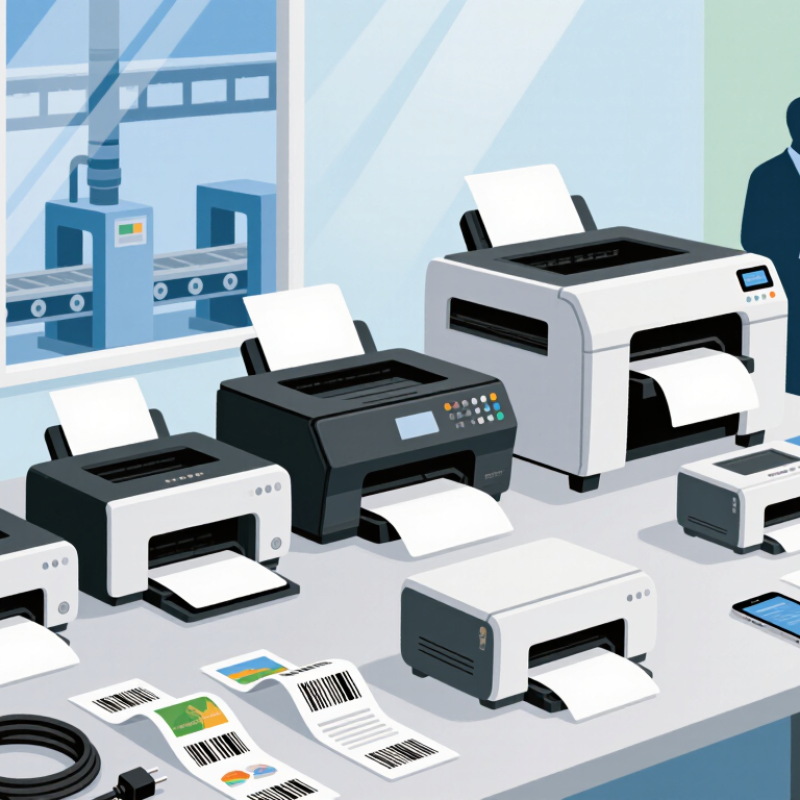
Thermal printers mainly use direct thermal or thermal-transfer technology. Direct thermal printing applies heat to treated paper, so it suits receipts, queue tickets, and short-life shipping labels. Thermal transfer uses a heated ribbon to print on label stock. With suitable materials, its output can better withstand handling, moisture, or sunlight. The right choice depends on label life, surface, and working conditions—not just printer speed.
Their uses span retail, healthcare, warehousing, and transport. GS1 reports that barcodes are scanned more than 10 billion times each day, underscoring the need for readable labels across supply chains. UNCTAD estimated that e-commerce sales across 43 economies approached US$27 trillion in 2022. That scale brings practical demands: a warehouse may need crisp, scannable labels on hundreds of parcels per shift. One easy-to-miss issue is that direct thermal labels can darken with heat or light. Real operating conditions matter.
Tips: Test labels with the actual scanner, packaging, and storage conditions before large orders. Check print clarity after handling. Small tests help.

China Best Thermal Printer Suppliers for Global Buyers?
Mapping China’s Thermal Printer Supplier Landscape
China’s thermal printer suppliers range from factories focused on complete devices to firms producing print mechanisms, control boards, or custom enclosures. Their capabilities can look similar in a catalog. The real differences emerge in engineering support, production consistency, and willingness to test a specific configuration.
A buyer should map suppliers against the intended workload. A compact receipt printer for a counter has different demands from a label unit running through long shifts in a warehouse. Check print width, resolution, interface options, supported media, and rated duty cycle. Ask for sample units and test them with your actual paper or labels. Small details matter: cutter wear, feed alignment, and how clearly the device reports an error.
Ask how incoming parts and finished units are inspected, and request relevant test records. Clarify firmware revision control, spare-part availability, sample-to-production changes, and realistic lead times. Export experience can help with packaging and communication, but it does not replace technical verification. A polished product sheet proves little by itself. Not always. I would also compare the supplier’s answers after a test failure; vague replies are easy to overlook when schedules are tight. A ten-minute call can reveal whether the engineering team understands the fault or is only repeating specifications.
Choosing thermal printer suppliers requires more than comparing unit prices. Grand View Research estimated the global barcode printer market at USD 4.6 billion in 2023, with projected growth through 2030. That expanding market raises the stakes for consistent output and dependable production. Ask suppliers for sample labels printed at your target speed, darkness, and barcode size. Check edge sharpness, alignment, and readability—not just whether a sample prints. Small flaws matter.
Customization should solve a specific workflow problem. Request options for print width, interfaces, firmware, and casing, then test them with your actual labels and host systems. A polished prototype is not proof of repeatable quality. Ask how incoming components, printhead performance, and final inspection are recorded; ISO 9001 certification can support process confidence, but it does not replace product testing. Production capacity needs similar scrutiny. Request monthly output, lead times, peak-season plans, and evidence of capacity for your configuration. A large factory may still struggle with a small custom run. I would verify a pilot order before committing—and revisit assumptions if delivery slips.
A supplier’s certification claim is only a starting point. Request the certificate number, issuing body, covered printer models, factory location, and validity dates. Check the details with the issuer when possible. Requirements vary by destination, so confirm which standards apply to your intended market. A certificate for one model may not cover another.
Test a production-representative sample before placing a large order. Print dense barcodes and small text, then check clarity, paper feeding, connection stability, and cutter performance if included. Run repeated print jobs, not just one quick test. A sample is not proof of consistency. Ask how the supplier controls changes to components and production batches; the answer may reveal gaps.
Export readiness shows up in practical details. Confirm packaging dimensions, carton markings, lead times, spare-part availability, and who handles shipping documents. Ask for a recent packing list and commercial invoice example with sensitive information removed. Verify destination-specific paperwork with your freight forwarder or customs broker. Small details matter. I would also request written confirmation of the agreed specifications, even when early discussions feel clear. That extra step can seem tedious, but memories differ once production starts.
When comparing thermal printer quotes, check the same configuration: print width, resolution, interface, power supply, and included accessories. Grand View Research estimated the global thermal printing market at about USD 4.2 billion in 2023, with projected growth through 2030. That estimate signals a sizable market, but it does not tell buyers which supplier offers better value. A low quote can still mislead. Ask for itemized pricing, sample output, warranty coverage, and the cost of replacement printheads and rollers.
Logistics deserve equal attention. The World Bank’s 2023 Logistics Performance Index compares 139 economies across areas including shipment tracking, logistics competence, and timeliness. Request the shipping method, dispatch lead time, packaging details, and a clear process for reporting transit damage. For after-sales support, confirm response hours, troubleshooting channels, spare-parts availability, and whether remote setup help is included. Get these terms in writing. One detail is easy to overlook: a fast reply before purchase does not guarantee fast technical help later. I would weigh documented support commitments more heavily than vague promises, while remembering that supplier estimates and delivery dates can still change.
Anonymous product-offer comparison for sourcing discussions. These are representative product specifications and RFQ checkpoints—not verified supplier quotations or supplier-specific service claims. Prices, lead times, warranty terms, and shipping costs must be confirmed in a current written quote.
| Comparison Dimension | Compact Receipt Printer Offer | Desktop Label Printer Offer | Industrial Label Printer Offer | What Global Buyers Should Compare |
|---|---|---|---|---|
| Typical application | POS receipts, queue tickets, and transaction records | Shipping, retail, and product labels in regular-volume workflows | Higher-volume labeling in warehouses, factories, and distribution centers | Match the printer to daily print volume, operating environment, and required label or receipt format. |
| Print technology | Usually direct thermal; prints on heat-sensitive receipt paper without a ribbon | Direct thermal or thermal transfer, depending on the model | Commonly thermal transfer, with direct-thermal configurations also available | Direct thermal avoids ribbon changes but requires compatible heat-sensitive media. Thermal transfer uses a ribbon and can suit applications needing more durable labels. |
| Common media format | 58 mm or 80 mm receipt paper; confirm the supported roll width and core size | Often designed for labels up to approximately 4 inches (about 104 mm) wide; confirm the printable width | Frequently configured for approximately 4-inch-wide labels; wider formats are available in some product lines | Check maximum print width, roll diameter, media core, gap or black-mark sensing, and supported label thickness. |
| Resolution options | 203 dpi is common for standard receipt text and graphics | 203 dpi is common; 300 dpi may be useful for smaller text or compact barcodes | 203 dpi is common for general labels; 300 dpi is available when finer detail is required | Request a sample using the buyer’s actual barcode, font size, and label stock before approving production. |
| Quote comparison | Request separate pricing for the printer, power supply, interface, and any required cutter | Request separate pricing for the printer, communication interfaces, and included accessories | Request separate pricing for the printer, interface options, rewinder or cutter, and other selected accessories | Compare the same configuration and quantity. Ask for unit price, minimum order quantity, sample cost, packaging, payment terms, and quote validity. |
| Technical compatibility | Confirm USB, Ethernet, serial, or wireless options and the required POS command language | Confirm the host connection, supported printer languages, and operating-system or software compatibility | Confirm interface options, print language, integration requirements, and compatibility with existing warehouse systems | Ask for current manuals, driver links, SDK availability, and written confirmation of the exact interface and protocol in the quoted configuration. |
| Logistics and delivery | Delivery timing and freight cost depend on order quantity, production status, destination, shipping method, and customs processing. | Request a dispatch estimate and a named Incoterms® rule with the applicable place, such as FCA or FOB for shipment arrangements, or DAP/DDP when appropriate. Confirm who handles export clearance, insurance, import duties, and taxes. | ||
| Packaging and shipment checks | Packaging configuration and shipment testing should be agreed in the purchase order. | Confirm carton dimensions and weight, protective packaging, labeling, packing list, serial-number records, and any pre-shipment inspection or sample approval requirements. | ||
| After-sales support | Warranty length, coverage, spare-parts availability, and repair arrangements vary by seller and must be confirmed in writing. | Check warranty start date, covered components, exclusions, response channel, troubleshooting process, spare-part pricing, and whether repairs are local or require return shipment. | ||
| Key components and consumables | Confirm printhead and cutter specifications where applicable, plus compatible receipt-paper requirements | Confirm printhead replacement details and supported label and ribbon specifications if thermal transfer is used | Confirm printhead, platen roller, cutter or rewinder options, and compatible media and ribbons | Ask for part numbers, replacement instructions, availability, and quoted prices for wear parts and consumables. |
| Recommended RFQ evidence | A complete quotation should identify the exact model configuration and included accessories. | Request a dated quotation, specification sheet, sample-print approval, production and inspection plan, shipping terms, warranty document, and after-sales contact process before placing an order. | ||
Buyer note: No company names, brand rankings, or invented supplier prices are shown. Obtain comparable, destination-specific quotations from shortlisted suppliers using the same specifications, order quantity, and delivery terms.
A&B has become the leader in fresh packing and cleaning equipment for fruits and vegetables worldwide. We have achieved this by relentlessly working to produce new and innovative ideas, along with the best customer service on Earth combined with hard working, dedicated, loyal employees and the latest industrial manufacturing techniques. We are now proud to say that we manufacture The Fulcrum Fresh Harvester, this is a one of a kind Berry Harvester that was specifically designed to handle fresh pick blueberries.
732 W. Saint Joseph Street
Lawrence, MI 49064
Phone: 269-539-4700 Fax: 269-539-4705
sale@industrialpackagingmachines.com