The Cup Paper Bowl sector serves everyday moments: a hot drink handed across a café counter, soup carried home in a paper bowl, or a stack of cups ready for a busy lunch rush. Grand View Research estimated the global paper cups market at USD 8.35 billion in 2023 and projected a 4.6% compound annual growth rate from 2024 to 2030. These figures indicate meaningful demand, but they do not describe every product category or guarantee growth for each manufacturer.
Choosing a supplier takes more than comparing unit prices. Buyers also examine paperboard consistency, rim quality, leak resistance, printing accuracy, production capacity, and communication during sampling. A carton can look excellent in a catalogue. The finished cup still has to hold its shape in a customer’s hand. Details matter.
Circular-design expert William McDonough is known for the phrase, “Waste equals food,” a principle that invites packaging makers to consider materials beyond the moment of use. It is a useful lens, not a complete scorecard. Claims about recyclability depend on coatings, local collection systems, and processing facilities. This Top 10 guide introduces Chinese manufacturers of cups and paper bowls, with attention to product range, manufacturing strengths, and practical sourcing questions. Company details deserve verification. Even a polished factory profile cannot replace a sample, a clear specification, and a careful conversation.
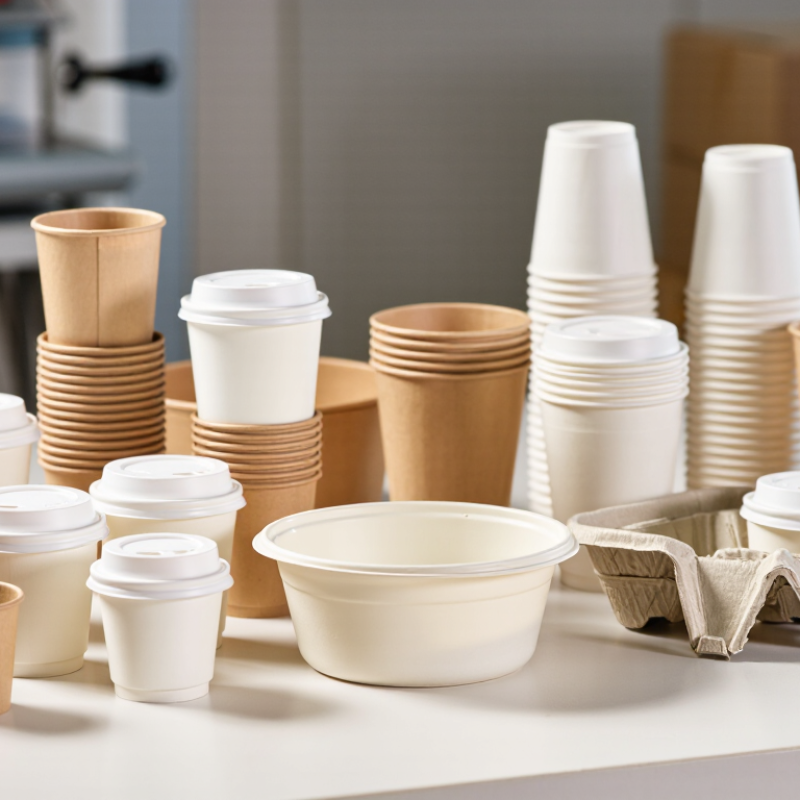
China’s cup and paper bowl manufacturing industry rests on a large paper base. The China Paper Association reported 127.05 million tonnes of paper and paperboard production in 2023, with consumption at 131.65 million tonnes. These figures describe the wider sector, not disposable food containers alone. I would not treat them as a cup-market estimate. The distinction matters.
For buyers, production quality is visible in small details: a bowl’s rim should feel even, and a cup’s seam should stay closed when filled. Manufacturers must manage paperboard stiffness, forming temperature, coating consistency, and sealing pressure. Scale matters. Yet high output does not guarantee reliable batches; inspection records and sample testing still deserve attention. The association’s annual industry report offers useful context, but it does not isolate cup and bowl volumes. That gap makes supplier-level evidence important. Ask for material specifications, production tolerances, and test results for the intended use. One more caution: capacity claims can sound precise while saying little about actual quality.

Paper cups are commonly made from food-grade paperboard with a thin inner barrier. Single-wall cups suit water, juice, and quick-service drinks; double-wall or ripple-wall designs add insulation for hot coffee and tea. The outer texture matters when a cup is held for several minutes. So does the rim. A smooth, firmly rolled edge feels more comfortable and helps reduce drips.
Paper bowls range from shallow soup containers to wide, lidded bowls for noodles, salads, and takeaway meals. Their stiffness depends on board weight, shape, and coating, not just thickness. Some products use polyethylene linings, while others use alternative barriers such as PLA or water-based coatings. These materials behave differently, and “compostable” claims depend on the product and available processing facilities. Check specifications, not just the label. Small detail: lids must fit. A bowl that holds hot broth at the factory may soften during a long delivery, especially if its barrier or rim is poorly matched to the food. Samples tested with the intended contents offer a more reliable comparison than appearance alone.
A reliable comparison starts with product quality, not a polished catalog. Check whether cup and bowl samples match the stated paper weight, coating, dimensions, and rim finish. Ask for current food-contact test documents and material specifications. For cups, test lid fit and hot-liquid resistance. For bowls, check seam strength and leakage after filling. Small flaws matter. A lid that loosens during delivery can spoil an otherwise good order.
Review production capacity, quality-control records, minimum order quantities, and quoted lead times. Request a sample batch before discussing large volumes. Compare the supplier’s stated schedule with its actual response time and willingness to explain defects. A low price can still be costly if printing shifts or bowl sizes vary between cartons. I would not rank a factory on one sample alone; consistency takes more checking than expected.
Tips: Ask for samples from more than one production run. Record dimensions and test results, then compare them with the written specifications. If answers stay vague, pause before ordering.
These ten profiles highlight different strengths found among cup and paper bowl manufacturers in China.
A high-volume producer may run fast forming lines for plain cups, with steady output suited to large orders.
A custom-print specialist focuses on color matching and registration; request a physical sample before approving artwork.
A small-batch workshop can offer flexible order quantities, though lead times may vary.
A bowl-focused factory may handle deeper shapes and heavier paperboard for meals and soups. Check rim strength and lid fit.
A food-service supplier may combine cups, bowls, and lids, simplifying purchasing but not always lowering costs.
An export-oriented plant may provide clear specifications and inspection records; verify that documents match the actual product.
A recycled-fiber specialist can describe its material sourcing, but ask how the board performs with hot or oily food.
A premium-finish maker may offer smooth surfaces and detailed printing, with higher minimum quantities.
A regional converter may respond quickly to design changes, though its equipment range could be limited.
Finally, an integrated manufacturer may control more production steps, from printing to forming.
Ask for recent samples, production capacity, and defect-handling terms.
Small details matter.
A sample may look excellent, yet bulk consistency still deserves careful checking.
When comparing cup and paper bowl manufacturers in China, start with the product details your customers will notice. Specify cup capacity, rim diameter, bowl depth, paper weight, lining, and lid fit. Ask for physical samples, not just catalog images. Test them with hot drinks or oily foods, then check for leaks, soft spots, and lids that loosen during transport. Small details matter. Request documentation for food-contact suitability in your destination market, and confirm what each report actually covers.
Price is only one part of the comparison. Ask each supplier for minimum order quantities, production lead times, printing setup costs, and packaging details. A quote should separate product, tooling, and freight charges where possible. Request recent production photos or a factory assessment, and clarify how quality checks are recorded. A low unit price can hide expensive setup fees or a long wait for replenishment.
Plan around realistic demand, not an optimistic sales forecast. A small trial order can reveal print differences, carton strength, and stacking problems before you commit to larger volumes. Put the approved sample, key dimensions, defect process, and delivery schedule in writing. Forecasts are still guesses; I would leave room for delays, even when a supplier’s timeline looks precise.
A&B has become the leader in fresh packing and cleaning equipment for fruits and vegetables worldwide. We have achieved this by relentlessly working to produce new and innovative ideas, along with the best customer service on Earth combined with hard working, dedicated, loyal employees and the latest industrial manufacturing techniques. We are now proud to say that we manufacture The Fulcrum Fresh Harvester, this is a one of a kind Berry Harvester that was specifically designed to handle fresh pick blueberries.
732 W. Saint Joseph Street
Lawrence, MI 49064
Phone: 269-539-4700 Fax: 269-539-4705
sale@industrialpackagingmachines.com