China’s steel-processing ecosystem gives Strut Channel Machine buyers a deep manufacturing base. The World Steel Association reported that China produced about 1.019 billion tonnes of crude steel in 2023, representing more than half of global output. This scale supports strong supply chains for galvanized steel, electrical cabinets, roll-forming components, and automation systems.
However, a large industrial base does not make every supplier equal. Reports from Grand View Research and MarketsandMarkets show continuing demand for automated metal-forming and roll-forming equipment, driven by construction, solar mounting, and infrastructure projects. Buyers still need evidence. A polished showroom is not enough.
This guide examines China’s top 10 Strut Channel Machine manufacturers through practical criteria. These include forming accuracy, line speed, material compatibility, tooling design, machine stability, control systems, and after-sales support. It also considers whether manufacturers can provide complete lines, from decoilers and straighteners to punching and cutting units. Factory experience matters. So does measurable testing.
A useful warning remains. Rankings can change with project requirements, delivery records, and service performance. Some companies excel at standard channels, while others handle custom profiles or high-volume production better. Buyers should request sample channels, tolerance data, video inspections, and references from comparable installations. That step often reveals more than a brochure.
This overview combines market evidence with manufacturing-focused evaluation. It aims to help engineers, distributors, and project purchasers compare suppliers with greater confidence, while recognizing that no single list can represent every capable Chinese manufacturer.
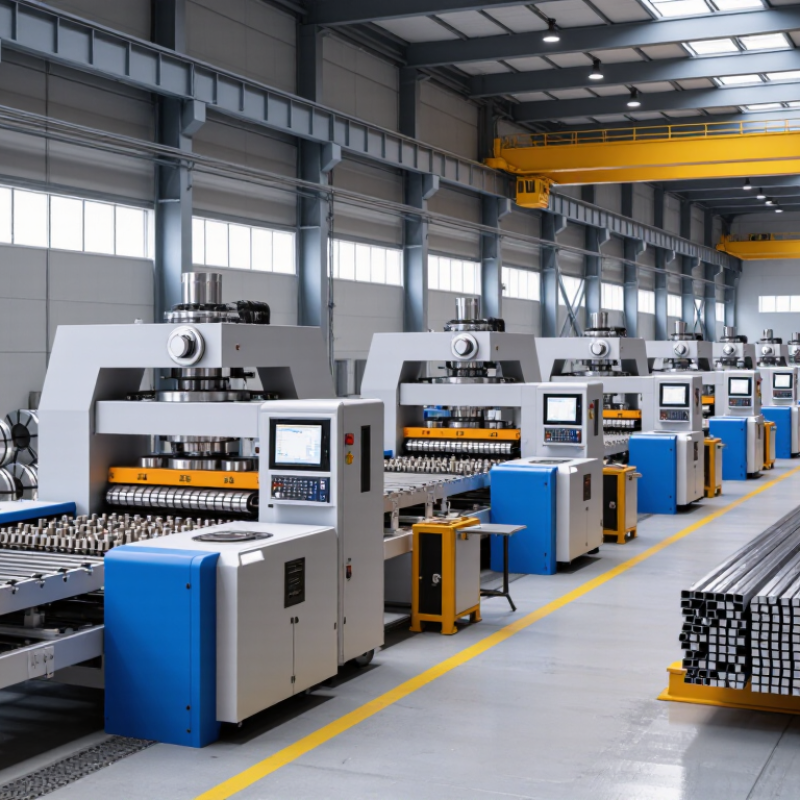
Strut channel machines are industrial roll-forming systems used to produce metal channels for electrical, mechanical, and construction support frameworks. A typical line uncoils steel strip, levels it, punches holes, forms profiles, and cuts finished lengths. The process must keep hole spacing, channel width, and flange angles consistent. Small errors can cause installation problems on site.
In China, these machines support large-scale production and customized export requirements. Engineers may adjust roller stations for different channel sizes, steel thicknesses, and perforation patterns. Servo feeders improve punching accuracy, while automatic cutting reduces repeated manual work.
Operators still need to check alignment, tool wear, and surface damage during each shift. A clean workshop helps, but it does not replace inspection.
Reliable evaluation requires more than a polished specification sheet. Buyers should review sample profiles, dimensional reports, load-test data, and after-sales response procedures. Material traceability also matters when channels must meet project requirements.
In my experience, commissioning often reveals practical issues, such as vibration, noisy punching, or slow tooling changes. No machine is perfect. A careful supplier should discuss these weaknesses openly and provide measurable corrections. Yet production speed should never outweigh profile accuracy, worker safety, or stable long-term maintenance.

Evaluating Chinese strut channel machine manufacturers requires more than comparing catalog prices. Start with production experience, machine structure, and process control. Ask how long the manufacturer has built roll forming equipment. Request videos showing coil feeding, punching, forming, and cutting under continuous operation. A clean showroom proves little.
Check technical details closely. The frame should resist vibration during high-speed forming. Rollers need accurate machining and suitable surface treatment. Examine tolerance data for channel width, hole spacing, and cut length. Ask whether the machine supports different steel thicknesses without lengthy adjustments. Control systems should record alarms, speed changes, and production counts. Good suppliers explain these details clearly.
Reliability appears in less glamorous evidence. Request reference installations, maintenance records, spare-parts lists, and a factory acceptance test plan. Confirm electrical components, safety guards, documentation, and operator training before payment. A supplier that answers slowly may still produce good equipment, but unclear communication creates avoidable risk. I have seen polished demonstrations hide unstable feeding after several coils. That matters. Buyers should inspect sample channels from extended production, not only one perfect piece. No evaluation method is flawless; even experienced purchasers can overlook tooling wear or future upgrade costs.
China’s Top 10 Strut Channel Machine Manufacturers are often judged by more than production volume. In practical factory visits, engineers inspect frame rigidity, roller alignment, and electrical cabinet layout. These details influence channel accuracy during long production runs. A reliable manufacturer should provide test samples, machine drawings, and clear tolerance data. It should also explain how the forming line handles different steel thicknesses.
The strongest manufacturers usually offer complete lines, including decoilers, leveling units, roll forming stands, punching systems, and cutting devices. Their machines may support common channel profiles, customized hole patterns, and automatic length control. Operators should examine weld quality, bearing protection, sensor placement, and emergency controls. Small design choices matter. A poorly positioned sensor can create repeated scrap. After-sales support is equally important, especially for installation, spare rollers, software adjustments, and operator training.
A careful buyer should compare at least ten qualified suppliers through factory audits and recorded trial runs. Ask for production videos, reference projects, inspection reports, and realistic delivery schedules. Some suppliers describe performance too confidently. That deserves questions, not immediate trust. Material testing should use the buyer’s actual steel grade and thickness. Even then, results can vary because tooling wear, coil quality, and operator experience affect output. A written acceptance standard makes the purchase more dependable.
Common strut channel profile dimensions used when evaluating roll-forming machine capability
The chart compares widely used nominal strut channel profiles by channel height and width. The 41 mm wide profile family is commonly used for cable support, mechanical services, solar mounting, and industrial framing. Actual machine configuration also depends on material thickness, steel grade, punching pattern, and required production speed.
China’s leading strut channel machine manufacturers compete through forming accuracy, line flexibility, and production stability. A serious evaluation should examine decoilers, leveling units, roll stations, punching systems, and automatic cutting. Many advanced lines process galvanized steel from 1.5 to 3.0 millimeters thick. Servo-driven punching can position holes accurately before the final cut. Speed matters. However, advertised output often excludes setup time, tool changes, and material delays.
Industry data supports this demand. Grand View Research reported continued growth in the global roll-forming machine market, with automation and construction applications driving investment. MarketsandMarkets also identifies infrastructure, electrical support systems, and industrial facilities as major users of formed metal products. These findings explain why a practical top-ten list should assess more than machine price. It should compare line speed, tolerance control, energy use, tooling life, and after-sales engineering support. In real production, a stable 25-meter-per-minute line may outperform a faster system that requires frequent adjustments.
Applications include cable-tray supports, pipe racks, solar mounting structures, warehouse framing, and mechanical service installations.
Modern equipment may combine punching, embossing, labeling, and length cutting in one continuous process. Digital monitoring helps operators track coil usage and downtime.
Yet weaknesses remain. Some suppliers provide impressive samples but limited long-term performance records. Buyers should request production videos, tolerance reports, reference projects, and factory acceptance tests. Steel variation can expose design problems quickly. A careful comparison creates a more reliable ranking than promotional claims alone.
Choosing the right Chinese strut channel machine manufacturer requires more than comparing prices. Examine its experience with your required channel size, steel thickness, and production speed. A machine for 41×41 mm channels may not suit heavier profiles.
Ask for a complete technical proposal. It should list the decoiler, forming stations, punching unit, cutting system, motor capacity, and control components. Request videos of a real production line, not only polished showroom footage. Better still, send your own steel coil and drawings for a sample run. Check hole spacing, cut length, surface scratches, and profile consistency. Small errors become expensive during installation.
Factory communication matters too. Confirm delivery dates, spare parts, installation support, training, and response times. Review quality records, inspection procedures, and export documentation. A reliable manufacturer should explain tolerances clearly instead of promising everything is “perfect.” That phrase means little without measurements.
I would not rely on price alone. That mistake is easy to make. A lower quotation may exclude tooling, commissioning, or replacement rollers. Ask how the manufacturer handles design changes and production faults after payment. Speak with recent customers when possible, and compare written evidence with sales claims. The strongest choice is usually the supplier that understands your material, tests the machine openly, and documents each responsibility.
The following table provides a practical, manufacturer-neutral framework for comparing Chinese strut channel machine suppliers without displaying company names or brand data. The ranking is based on purchasing priorities, technical verification, production capability, and total supply risk.
| Priority | Selection Dimension | Recommended Verification Points | Practical Benchmark | Documents or Evidence to Request | Suggested Weight |
|---|---|---|---|---|---|
| 1 | Forming accuracy and repeatability | Check dimensional consistency, hole-position accuracy, straightness, and profile stability during continuous production. | Supplier should define measurable tolerances and demonstrate stable results over a continuous trial run. | Sample inspection report, tolerance sheet, trial-run video, and dimensional records. | 18% |
| 2 | Material compatibility | Confirm that the machine is suitable for the required steel grade, thickness range, coil width, and yield-strength range. | The actual working range must match the buyer’s channel sizes and raw-material specifications. | Material range chart, mill certificates, coil specifications, and forming calculations. | 14% |
| 3 | Production speed and output stability | Compare rated line speed with realistic speed after punching, cutting, changeover, and quality inspection. | Evaluate usable output per hour rather than relying only on the maximum unloaded speed. | Factory acceptance-test plan, output records, speed-adjustment settings, and changeover-time data. | 12% |
| 4 | Punching and cutting performance | Verify hole shape, pitch accuracy, burr control, cut length, tool life, and compatibility with the selected channel profile. | Punching and cutting must be tested using the buyer’s actual hole pattern and production material. | Punching layout, tooling drawings, sample parts, wear-parts list, and maintenance schedule. | 12% |
| 5 | Machine structure and component quality | Assess frame rigidity, roll tooling, shafts, bearings, drive system, electrical cabinet, and guarding. | Critical components should have traceable specifications and adequate service access. | General arrangement drawing, component list, load calculations, electrical schematic, and safety layout. | 11% |
| 6 | Automation and operational usability | Review recipe storage, length control, fault alarms, sensor layout, manual override, and operator interface language. | The control system should support repeatable setup and clear troubleshooting without excessive manual adjustment. | Control-system specification, operating manual, alarm list, backup procedure, and training plan. | 9% |
| 7 | Quality management and inspection | Determine whether incoming materials, in-process parts, tooling, welds, electrical systems, and final output are inspected systematically. | A documented inspection plan with recorded results should cover both machine assembly and trial production. | Quality manual, inspection checklist, calibration records, nonconformance procedure, and factory-test report. | 8% |
| 8 | Installation, commissioning, and training | Compare the scope of remote support, on-site commissioning, operator training, production ramp-up, and acceptance testing. | Responsibilities, response times, acceptance criteria, and travel costs should be written into the contract. | Installation schedule, commissioning checklist, training agenda, acceptance protocol, and service contacts. | 6% |
| 9 | Spare parts and after-sales support | Check availability of replacement tooling, sensors, bearings, electrical parts, manuals, and technical assistance. | Common wear parts should be clearly identified, priced, and available through a defined supply channel. | Recommended spare-parts list, service-level terms, warranty policy, troubleshooting guide, and response-time commitment. | 5% |
| 10 | Total cost, delivery risk, and compliance | Assess machine price, tooling cost, packaging, shipping terms, installation expenses, power requirements, safety provisions, and delivery schedule. | Select the lowest-risk total ownership cost rather than the lowest initial quotation. | Itemized quotation, commercial invoice template, packing list, delivery plan, risk register, and applicable conformity documents. | 5% |
| Total Evaluation Weight | 100% | ||||
A&B has become the leader in fresh packing and cleaning equipment for fruits and vegetables worldwide. We have achieved this by relentlessly working to produce new and innovative ideas, along with the best customer service on Earth combined with hard working, dedicated, loyal employees and the latest industrial manufacturing techniques. We are now proud to say that we manufacture The Fulcrum Fresh Harvester, this is a one of a kind Berry Harvester that was specifically designed to handle fresh pick blueberries.
732 W. Saint Joseph Street
Lawrence, MI 49064
Phone: 269-539-4700 Fax: 269-539-4705
sale@industrialpackagingmachines.com