Choosing the right 3 1 8 x 230 thermal paper rolls requires more than matching a product title. The dimensions must fit your printer’s paper path, roll holder, and cutting mechanism. A small mismatch can cause slipping, paper jams, or uneven receipts during busy service hours. Measure an existing roll before ordering. Check its width, outer diameter, core size, and winding direction.
Paper quality matters just as much. A reliable 3 1 8 x 230 thermal paper roll should produce sharp text, clear barcodes, and consistent images from the first receipt to the last. Look for an even thermal coating and smooth edges. Rough paper may leave dust inside the printer. That detail is easy to overlook. It should not be.
Printer compatibility remains the practical starting point. Review the equipment manual or confirm specifications with the printer manufacturer. Consider daily print volume, storage conditions, and receipt durability. For retail counters, restaurants, pharmacies, and service desks, fast, clean printing reduces interruptions. Ask suppliers about coating performance, material composition, and quality-control procedures. Products with BPA- or BPS-free options may support workplace and customer preferences, but claims should be verified through documentation.
Do not choose only by the lowest price. A cheaper roll may fade quickly under sunlight, heat, or friction. Test a small quantity first. Print a barcode, fold the receipt, and store one sample for several weeks. The best choice is not always obvious at purchase. Real use reveals more.
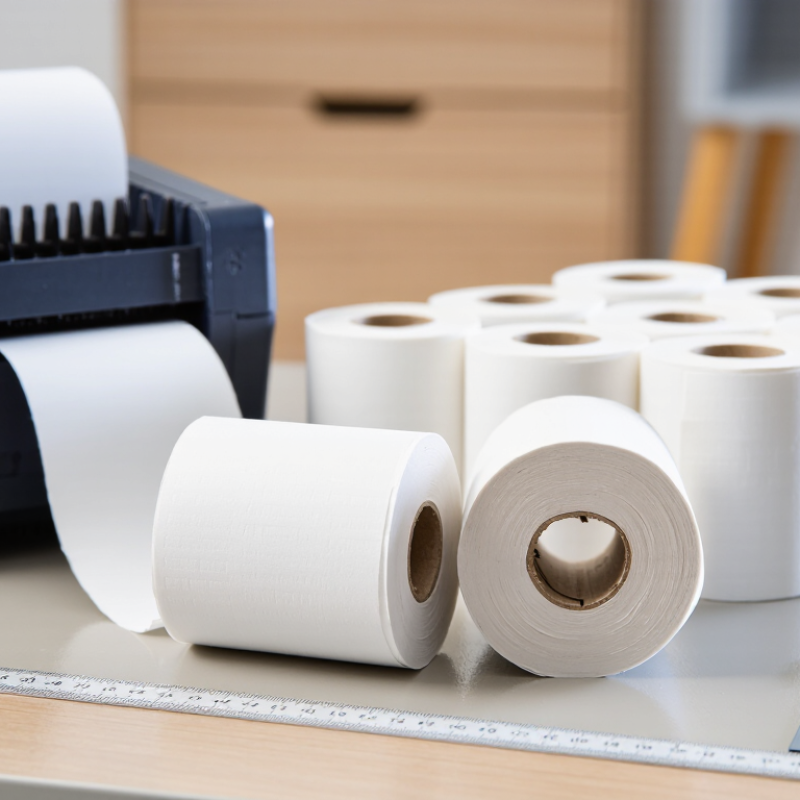
When choosing 3 1/8 x 230 thermal paper rolls, verify both measurements before checking the price. The width should be 3 1/8 inches, or 3.125 inches, across the paper strip. A roll that is slightly wider may rub against the printer guides. A narrower roll can feed unevenly. Measure a sample with a ruler. Do not trust the product title alone.
The 230-foot length refers to the paper wound inside one roll. It does not always guarantee identical usable length. Core size, winding tension, and paper thickness can create small differences. My early mistake was checking only the width and ignoring the roll’s diameter. The roll fit the slot, but the printer cover could not close properly. Leave room for reality.
Check the printer compartment before ordering several rolls. Compare its maximum roll diameter with the supplier’s specifications. Then test one roll for smooth feeding, clear printing, and easy tearing. Thermal paper should produce dark, consistent text without excessive heat settings. Store unused rolls in a cool, dry place away from direct sunlight. Humidity can weaken the paper and affect image quality. Test one roll first.

How to Choose 3 1/8 x 230 Thermal Paper Rolls?
For 3 1/8 x 230 thermal paper rolls, GSM affects image clarity, stiffness, and usable length. ISO 536:2019 defines grammage as grams per square metre. A 48 GSM roll uses less fiber and usually offers better yield. An 80 GSM roll feels stronger and may resist tearing near the cutter. However, GSM alone does not guarantee darker printing. Coating quality, printer temperature, and storage conditions also matter. Smithers’ 2024 thermal paper market report identifies transaction receipts as a major application while noting continued pressure from digital receipts. That makes efficient roll use increasingly practical.
Under similar thickness conditions, 48 GSM can provide roughly 67% more paper area than 80 GSM because 80 divided by 48 equals 1.67. Actual length will vary with caliper, winding tightness, and core size. A 230-foot claim should be checked carefully. Some suppliers may list meters instead. I have seen lighter rolls print clearly, but weak coatings can fade quickly. Real shops are messier than laboratory tests.
Tips: Compare sample receipts after 24 hours, not immediately. Check black density, edge sharpness, curl, and tear resistance. For heavy daily printing, test both grades during a full shift. Choose 48 GSM for maximum yield when clarity remains stable. Select 80 GSM when handling strength matters more. Record the number of receipts per roll; that measurement is more useful than GSM alone.
Choosing a 3 1/8 x 230 thermal paper roll involves more than width, length, and printer fit. The coating matters.
Ask for a current, lot-specific declaration stating whether BPA and BPS are intentionally added, detected, or below a defined limit. “BPA-free” alone is weak evidence. Request independent test results with a named method, detection limit, test date, and production lot. An experienced buyer should also check the core, winding, and print density after storage.
Under EU REACH, BPA in thermal paper is restricted to 0.02% by weight, according to the European Chemicals Agency’s restriction record. This chemical restriction does not prove that every receipt roll meets Regulation (EC) No 1935/2004. That regulation covers materials intended to contact food, so its relevance depends on the roll’s intended use. FDA requirements also need careful wording. The FDA’s 2016 final rule revoked certain BPA food-contact authorizations after those uses were abandoned. It did not create a universal BPA/BPS certificate for ordinary receipt paper.
BPS deserves separate attention. Replacing BPA with BPS does not automatically demonstrate safer chemistry or legal acceptance. Check applicable national and customer requirements. A recurring procurement gap is a declaration covering BPA but omitting BPS, coating layers, or recycled fiber. Do not treat a polished certificate as the whole investigation. Paper performance and compliance must be checked together.
| Selection Dimension | Recommended Specification | Technical Facts | Verification Method |
|---|---|---|---|
| Roll Width | 3 1/8 inches | Nominal width is 79.375 mm, commonly rounded to 80 mm in product descriptions. | Measure the paper width with a ruler or caliper. Allow only the tolerance stated on the product specification sheet. |
| Paper Length | 230 feet | 230 ft is approximately 70.1 m. Actual usable length can vary with caliper, winding tension, and manufacturing tolerance. | Confirm the declared length in feet or metres and compare it with the purchase specification. |
| Core Size | Must match the printer spindle | Core diameter is not determined by the 3 1/8 x 230 size. Common formats vary by printer and dispenser design. | Check the printer manual or measure the core and spindle before ordering. |
| Maximum Roll Diameter | Must fit the printer compartment | The outside diameter depends on paper thickness, winding, and core diameter; it cannot be reliably inferred from length alone. | Compare the supplier’s stated outside diameter with the printer’s maximum roll capacity. |
| Thermal Sensitivity | Compatible with the printer’s thermal setting | Thermal paper requires heat from the printhead. Excessive sensitivity may increase background darkening, while insufficient sensitivity may produce pale text. | Run a test print at the normal printer speed and density settings. |
| Image Durability | Select the retention period required for the application | Heat, direct sunlight, plasticizers, oils, solvents, and prolonged pressure can darken or fade thermal images. | Request documented image-retention testing under the intended storage conditions. |
| BPA Status | BPA-free, supported by current documentation | “BPA-free” is a chemical-composition claim and should be supported by a declaration, test report, or other traceable supplier documentation. | Check that the documentation identifies the paper grade, test method, report date, and applicable detection limit. |
| BPS Status | BPS-free or BPS level disclosed | A product described as BPA-free is not automatically BPS-free. BPS may be used as a substitute developer, so both substances should be addressed separately. | Request a statement or laboratory report that specifically covers bisphenol S, not only bisphenol A. |
| EU Regulation 1935/2004 | Applicable only when the paper is intended for food contact | Regulation (EC) No 1935/2004 establishes general requirements for materials and articles intended to come into contact with food. It does not automatically certify every thermal receipt roll. | Obtain a food-contact declaration when the intended use involves direct or foreseeable food contact, and verify any applicable national or material-specific rules. |
| FDA Reference | Confirm the exact intended-use category | FDA compliance depends on the material, chemical use, and intended contact scenario. A general receipt-paper claim should not be treated as universal FDA food-contact approval. | Request an intended-use statement and supporting regulatory assessment that identifies the relevant FDA requirements. |
| Declaration of Compliance | Product-specific and traceable | A useful declaration should identify the paper grade, manufacturing batch or lot, applicable regulations, restrictions, and issuing party. | Reject generic certificates that do not clearly identify the exact 3 1/8 x 230 roll specification. |
| Storage and Handling | Cool, dry, dark storage | Thermal paper should generally be protected from high heat, humidity, direct sunlight, oils, solvents, and contact with plastic materials that may contain plasticizers. | Follow the supplier’s storage instructions and perform a legibility check before large-scale use. |
How to Choose 3 1/8 x 230 Thermal Paper Rolls?
Choosing a 3 1/8 x 230 thermal paper roll starts with the core size. The 3 1/8-inch width must match the printer’s paper path. The 230-foot length describes the approximate paper supply, not the roll’s outside diameter. Measure the empty core with a ruler or caliper. A small difference can prevent the roll from turning smoothly.
Core size matters.
Check the printer manual for the accepted core diameter and maximum roll diameter. Then compare those measurements with the supplier’s specifications. Paper thickness changes the outer diameter, even when two rolls have identical lengths. A thicker roll may rub against the cover or fail to fit inside the compartment. I have seen users focus only on width and length, then discover the roll will not close properly.
Printer specifications also include the thermal side and loading direction. The coated surface should face the print head according to the printer’s paper path. Test it with a small mark or a short print. The correct roll should feed evenly, cut cleanly, and produce dark, readable text without excessive heat. Storage conditions matter too. Keep rolls away from sunlight, moisture, and strong chemicals. I once underestimated storage humidity; the paper looked normal but printed unevenly. That experience made me check both product data and actual printer performance before ordering in bulk.
How to Choose 3 1/8 x 230 Thermal Paper Rolls?
Assess 18–24-Month Storage Life at 15–25°C and 40–60% RH
A dependable 3 1/8 x 230 thermal paper roll should match your storage conditions, not just your printer. Keep unopened rolls between 15 and 25°C, with relative humidity from 40% to 60%. These conditions reduce curling, fading, and coating damage during storage.
Ask the supplier for documented aging data covering at least 18 months. A 24-month claim is more convincing when it includes print-density checks, image-retention tests, and packaging details. Keep rolls sealed in their original cartons. Store them away from sunlight, heaters, windows, water, and strong chemicals. Avoid placing heavy boxes on the rolls, because pressure can deform the edges.
A practical inspection can reveal problems early. Print a solid black sample, a barcode, and small text from a retained roll. Compare the sample after several weeks and again after three months. The paper should feed smoothly and remain readable. Real storage is rarely perfect. A warehouse may reach 27°C for a short period, so test a small reserve under slightly warmer conditions. This does not replace controlled data, but it exposes weak materials.
Check the core size, roll length, and printer fit before ordering large quantities. Confirm that the coating works with your equipment and remains legible after handling. Some suppliers provide impressive numbers without explaining test methods. That deserves caution. Keep purchase records, batch numbers, and inspection dates for reliable stock rotation.
Assess the target 18–24-month storage life under controlled conditions of 15–25°C and 40–60% relative humidity.
Choose rolls with a clearly stated 3 1/8-inch width and 230-foot length, then confirm that the supplier’s storage guidance supports 18–24 months at 15–25°C and 40–60% RH. Keep cartons sealed, dry, and away from direct sunlight, heat sources, plasticizers, and volatile chemicals. Actual shelf life can vary with paper construction, packaging, transport, and storage conditions.
A&B has become the leader in fresh packing and cleaning equipment for fruits and vegetables worldwide. We have achieved this by relentlessly working to produce new and innovative ideas, along with the best customer service on Earth combined with hard working, dedicated, loyal employees and the latest industrial manufacturing techniques. We are now proud to say that we manufacture The Fulcrum Fresh Harvester, this is a one of a kind Berry Harvester that was specifically designed to handle fresh pick blueberries.
732 W. Saint Joseph Street
Lawrence, MI 49064
Phone: 269-539-4700 Fax: 269-539-4705
sale@industrialpackagingmachines.com