Choosing a Color Dosing Machine in 2026 is not just a matter of comparing prices or selecting the fastest model. The right system must match your materials, production volume, and required color consistency. A small dosing error can become visible across a long production run. It can also mean wasted material and extra adjustments. Details matter.
Manufacturing expert Taiichi Ohno is often associated with the principle, “Where there is no standard, there can be no kaizen.” That idea applies here: compare machines using consistent, measurable tests. Check dosing accuracy across small and large batches, repeatability between runs, cleaning time, and compatibility with your colorants and base materials. Ask suppliers how calibration works and what support is available when a result drifts. A specification sheet can still flatter a machine; request a demonstration using materials close to your own.
This guide explains the practical factors behind a confident selection, from dosing technology and controls to integration, maintenance, and total operating cost. It also considers what changes in 2026: connected controls may offer useful production data, but added features are not automatically valuable. Test them. One point deserves honest reflection: the “best” machine on paper may be a poor fit on your floor. Compare actual samples, record the settings, and involve the operators who will use the equipment every day. That evidence makes a stronger decision than a polished brochure.
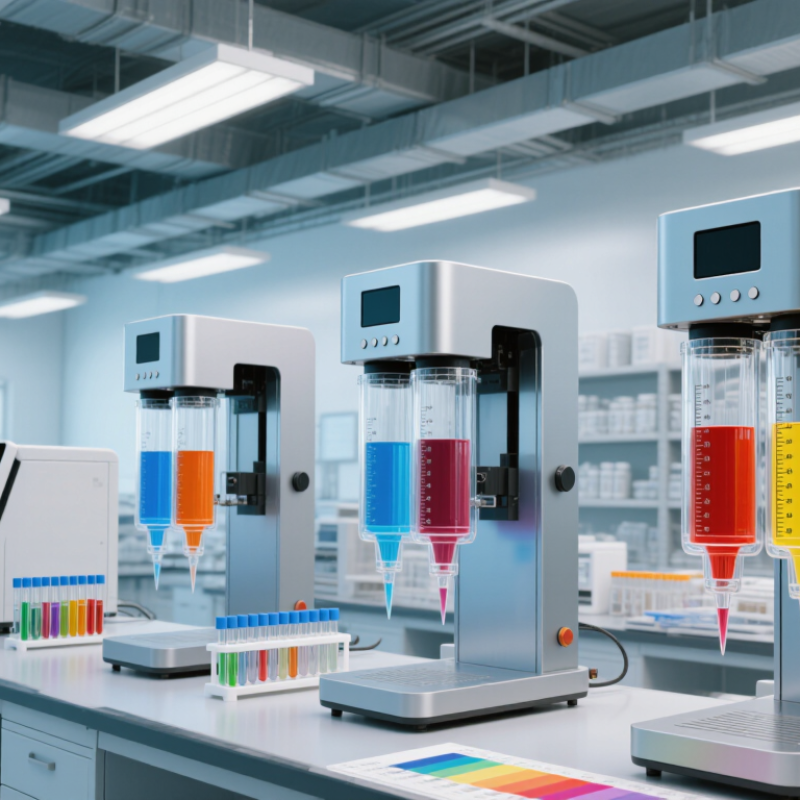
How to Choose a Color Dosing Machine in 2026?
Start with the resin, colorant form, and required output. A free-flowing masterbatch pellet behaves differently from a dusty or irregular concentrate. Check the resin supplier’s processing window and the colorant supplier’s recommended let-down ratio before sizing the feeder. The common 0.1–5% range is a screening guide, not a universal setting. Plastics Europe’s Plastics—The Fast Facts 2024 reports 413.8 million tonnes of global plastics production in 2023, underscoring how varied production scales can be. Your own line rate matters more than the global figure. At 25 kg of resin per hour, a 0.1% addition is about 25 g per hour; 5% is 1.25 kg per hour. Define whether the percentage is based on resin weight or total blend weight.
Check the machine’s stable minimum feed rate, maximum capacity, and dosing accuracy across your actual range. A unit that handles 5% well may struggle to meter 0.1% consistently. Test it with the intended material, at the intended screw speed. Watch for bridging in the hopper and color streaks in molded or extruded samples. Small details matter. Record feed rate and color results over several runs, not just one clean trial. A spreadsheet helps, but it can hide pulsing or material variation. I would not choose from brochure accuracy alone; confirm performance on the production line, then leave room for adjustment when resin lots or colors change.

How to Choose a Color Dosing Machine in 2026?
Start with the production line’s actual material output, not its rated maximum. If a line processes 80 kilograms of resin per hour and the target let-down ratio is 2%, the colorant flow required is 1.6 kilograms per hour. The calculation is resin output multiplied by the colorant percentage. Small calculation. But check how the ratio is defined: a 1:50 ratio means one part colorant to 50 parts base material, which is not exactly the same as 2% of the total blend.
Choose a dosing machine that can handle the calculated rate steadily, including normal changes in line speed. A unit sized only for peak output may struggle to dose accurately at low rates. For example, if production drops to 30 kilograms per hour, a 2% target requires just 0.6 kilograms of colorant per hour. Check the machine’s practical operating range and confirm whether its settings use mass or volume. Colorant density can make those figures differ. That detail is easy to miss.
Then verify the result on the line. Weigh the colorant used over a timed run, compare it with resin output, and inspect samples for shade consistency. Keep a record of the settings and material lots. Real production fluctuates. A calculation gives you a starting point, not proof that the dose is correct. If conveying, screw speed, or material flow changes, repeat the check; even a well-sized machine can drift from the target.
| Base Resin Line Output (kg/h) | Target Color-to-Resin Ratio | Color Concentrate (% of Base Resin) | Calculated Dosing Rate (kg/h) | Equivalent Dosing Rate (g/min) |
|---|---|---|---|---|
| 40 | 1:100 | 1.00% | 0.40 | 6.7 |
| 40 | 1:50 | 2.00% | 0.80 | 13.3 |
| 40 | 1:25 | 4.00% | 1.60 | 26.7 |
| 80 | 1:100 | 1.00% | 0.80 | 13.3 |
| 80 | 1:50 | 2.00% | 1.60 | 26.7 |
| 80 | 1:25 | 4.00% | 3.20 | 53.3 |
| 120 | 1:100 | 1.00% | 1.20 | 20.0 |
| 120 | 1:50 | 2.00% | 2.40 | 40.0 |
| 120 | 1:25 | 4.00% | 4.80 | 80.0 |
| 250 | 1:100 | 1.00% | 2.50 | 41.7 |
| 250 | 1:50 | 2.00% | 5.00 | 83.3 |
| 250 | 1:25 | 4.00% | 10.00 | 166.7 |
| 500 | 1:100 | 1.00% | 5.00 | 83.3 |
| 500 | 1:50 | 2.00% | 10.00 | 166.7 |
| 500 | 1:25 | 4.00% | 20.00 | 333.3 |
| Calculation: Required color dosing rate (kg/h) = base resin line output (kg/h) ÷ ratio denominator. For example, at 80 kg/h and a 1:50 ratio, the required rate is 80 ÷ 50 = 1.60 kg/h. Values are theoretical setpoints; verify the concentrate’s flow behavior and the dosing machine’s stable operating range during commissioning. | ||||
Choosing a color dosing machine starts with the required accuracy and production rhythm. Volumetric feeders meter material by screw speed or displacement. They are often straightforward to set up and suit stable processes where small color shifts are acceptable. But powder or pellet bulk density can change. A setting that worked yesterday may deliver a different mass today. Simple, but not always.
Loss-in-weight gravimetric feeders weigh the hopper and adjust delivery as its weight falls. They can respond to changes in material flow and support tighter dosing control. Check whether the machine can handle your target rate, hopper refill interruptions, and the material’s flow behavior. Vibration or bridging may affect readings. That matters. Ask for trials using your actual color concentrate, not just a similar material.
Batch dosing weighs a set quantity before adding it to a production cycle. It can suit recipes with several ingredients or processes that tolerate a short preparation step. It may be less convenient when output changes frequently or continuous feeding is essential. Compare cleaning access, calibration needs, and the space available around the line. Check the trend. A polished specification sheet cannot replace observing how the feeder behaves during a real run, and I would leave room for a test before final selection.
A color dosing machine should be judged by the color it repeatedly produces, not only by its dosing resolution. Set the acceptance limit using CIEDE2000, or ΔE00, defined in ISO/CIE 11664-6. The formula weights lightness, chroma, and hue differences to better reflect visual perception. A lower ΔE00 means a closer match, but there is no single pass limit that suits every product. Agree on the limit with the customer, then record the illuminant, observer setting, measurement geometry, and sample preparation. Small details matter.
Sharma, Wu, and Dalal’s 2005 paper in Color Research & Application provides 34 test pairs for checking CIEDE2000 calculations. That dataset helps verify software or instrument implementation; it does not define a universal tolerance for production. For machine trials, measure multiple molded or coated samples from separate dosing cycles against one approved reference. Record the average ΔE00 and the spread, since a good average can hide inconsistent batches. Keep samples clean and allow them to reach a stable temperature before measurement. A practical weakness remains: operators may trust one reading too much. Recheck borderline results, and investigate drift before changing the recipe.
Check calibration, controls, and machinery risks against ISO 12100
A reliable color dosing machine should deliver repeatable results, not just look precise on a specification sheet. Ask for calibration records and a live test at both low and high feed rates. Check how operators set recipes, confirm doses, and recover from alarms.
HSE’s 2023/24 workplace statistics recorded 138 fatal injuries and an estimated 604,000 non-fatal injuries in Great Britain. These figures cover all work sectors, but they underline why safe operation deserves attention alongside output quality.
Source: HSE, Health and Safety at Work: Summary Statistics for Great Britain, 2024.
Use ISO 12100 as a framework for identifying hazards throughout the machine’s life, including setup, cleaning, jam removal, and maintenance. Inspect guards, access points, emergency stops, and control behavior with the machine running. A closed guard is not enough if an operator can reach a moving part during a routine adjustment.
Small details matter. Record who performs each task and what happens when a sensor or dosing line fails. A risk review may still miss awkward real-world workarounds; observe operators during actual changeovers and revise the assessment.
Tips: Test a measured dose into a clear container. Compare the result with the setpoint, then repeat after a recipe change. Check calibration intervals, alarm logs, and guard interlocks before purchase.
A&B has become the leader in fresh packing and cleaning equipment for fruits and vegetables worldwide. We have achieved this by relentlessly working to produce new and innovative ideas, along with the best customer service on Earth combined with hard working, dedicated, loyal employees and the latest industrial manufacturing techniques. We are now proud to say that we manufacture The Fulcrum Fresh Harvester, this is a one of a kind Berry Harvester that was specifically designed to handle fresh pick blueberries.
732 W. Saint Joseph Street
Lawrence, MI 49064
Phone: 269-539-4700 Fax: 269-539-4705
sale@industrialpackagingmachines.com