How to Choose the Right CNC Turning Center for Your Needs?
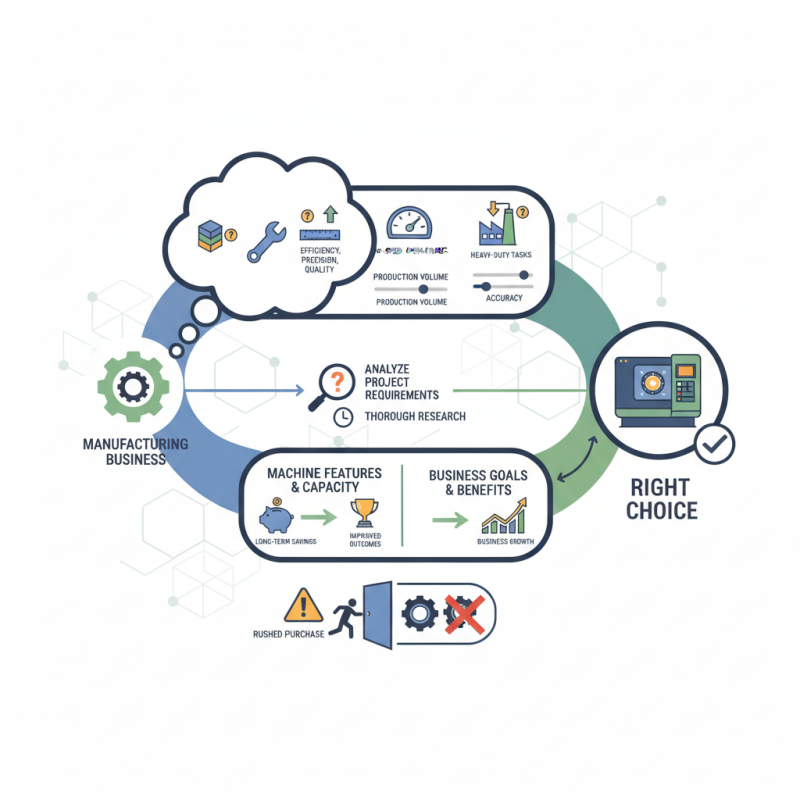
Choosing the right CNC Turning Center is crucial for any manufacturing business. It impacts efficiency, precision, and overall production quality. Many factors come into play, making the selection process challenging. Understanding your specific needs is essential. What type of materials will you work with? What are the size and complexity of the parts?
You may find yourself overwhelmed by choices. CNC Turning Centers vary in features, capacities, and prices. Some are designed for high-speed operations, while others focus on heavy-duty tasks. Take the time to analyze your project requirements closely. Consider the volume of production and the necessary accuracy. Investing in the right machine can lead to long-term savings and improved outcomes.
Reflect on your current capabilities. Are they meeting your expectations? If not, it may be time for an upgrade. Be mindful of common pitfalls. Many companies rush into purchasing without thorough research. This can lead to regrets later. Evaluating your needs will ensure you choose a CNC Turning Center that truly fits your business goals.
Understanding CNC Turning Centers: Key Features and Functions
CNC turning centers are vital in modern machining. They offer precision and efficiency. Key features include live tooling, spindle speed, and the number of axes. According to a 2022 industry report, over 60% of manufacturers prioritize spindle speed when selecting a CNC turning center. A higher spindle speed can significantly enhance production rates.
Live tooling allows for additional operations, such as milling, on a single machine. This versatility saves time and space. However, not all shops need this functionality. A recent survey found that 40% of small manufacturers stick to basic CNC turning due to budget constraints. Investing in advanced features isn't always cost-effective for smaller operations.
Choosing the right center also involves understanding its functions. Each function can bring unique advantages but may also require a learning curve. Operators may need regular training, leading to extra costs. As more features add complexity, the potential for mistakes increases. Balancing technology and practicality is essential for effective production.
Assessing Your Production Needs: Size, Volume, and Material Specifications
Choosing the right CNC turning center requires careful consideration of your production needs. Size is a fundamental factor. Analyze the dimensions of the parts you plan to produce. A larger turning center can handle bigger components, but it may not be necessary. Too often, companies overlook the exact dimensions needed, leading to wasted resources.
Volume is another crucial aspect. Assess how many parts you'll produce in a given timeframe. A higher volume might require a more advanced turning center. However, evaluating your actual throughput can be challenging. You might overestimate, leading to underutilized machines. It’s important to find a balance between capacity and demand.
Material specifications also play a key role. Different materials require different approaches. For example, machining softer materials may not need a heavy-duty machine. On the other hand, hard materials demand robust machinery and precise controls. Often, manufacturers forget to analyze the properties of their materials thoroughly. This oversight can result in complications and inefficiencies in production.
Evaluating Precision and Accuracy: Importance of Tolerance and Repeatability
When selecting a CNC turning center, precision and accuracy are paramount. Tolerance levels define acceptable deviations in measurement. If a part’s tolerance is too loose, it may not fit as intended. Conversely, overly tight tolerances can lead to increased costs and longer production times. Understanding these limits is key to achieving the desired part quality.
Repeatability is another critical aspect that should not be overlooked. A CNC turning center that cannot consistently reproduce parts may lead to frustration. Operators might have to adjust settings frequently, wasting time and resources. It's essential to evaluate how a machine performs over multiple cycles to ensure consistent output.
Moreover, it's important to conduct tests using sample materials. Sometimes, theoretical tolerances may not align with real-world results. If a turning center cannot maintain the required precision during real operations, adjustments will be necessary. Make sure to contemplate the implications of these factors on your project timeline and budget.
How to Choose the Right CNC Turning Center for Your Needs? - Evaluating Precision and Accuracy: Importance of Tolerance and Repeatability
| Feature | Description | Importance | Recommended Tolerance | Repeatability |
| Spindle Speed | The maximum speed at which the spindle operates. | Higher speeds can improve machining efficiency. | ±0.01 mm | 0.002 mm |
| Tool Holder | Stability and compatibility of the tool holder. | Ensures precision during machining operations. | ±0.005 mm | 0.001 mm |
| Workpiece Size | Maximum diameter and length of the workpiece. | Influences the choice of CNC turning center size. | ±0.02 mm | 0.003 mm |
| Control System | Type of CNC control (e.g. G-code). | Ease of use and programming capabilities. | N/A | N/A |
| Feedback Mechanism | Method of feedback for accuracy (e.g. encoders). | Crucial for maintaining position accuracy. | ±0.003 mm | 0.0005 mm |
Analyzing Automation Options: Choosing Between Manual and CNC Operations
Choosing between manual and CNC operations is a critical decision in manufacturing. Many companies use CNC turning for its precision. According to a recent industry report, 70% of manufacturers see significant cost savings with CNC technology. Manual operations can offer flexibility and lower initial costs. However, the speed and repeatability of CNC machines often outweigh these factors.
Manual setups sometimes struggle with complex designs. Therefore, businesses may need to invest in training for their workforce. A study revealed that 40% of operators felt overwhelmed by CNC technology, indicating a skills gap. The shift to automation could help alleviate this. But, it requires a thoughtful approach.
Consideration of space is essential. CNC turning centers typically need more room for operation than manual lathe machines. Many small businesses hesitate, fearing equipment costs and space constraints. Still, the long-term efficiency and reduced labor might justify the upfront investment. Understanding your specific operational needs will guide this choice effectively.
Budget Considerations: Cost Analysis and ROI for CNC Turning Centers
When selecting a CNC turning center, budget plays a crucial role. It's vital to analyze the initial cost versus the long-term benefits. A more affordable machine might seem appealing, yet it could have limitations. Consider the materials you’ll work with and the complexity of your projects. Higher-end machines may provide better precision and longevity, justifying the upfront investment.
Calculating return on investment (ROI) is key. Look at how often the machine will be used. If you're planning to run it daily, a more expensive center may yield faster production rates. Factor in maintenance costs and potential downtimes. Sometimes, cheaper machines result in more repairs, which drain resources.
It's often easy to overlook hidden costs. Power consumption varies by model, and operational efficiency matters. Evaluate the training required for your team. Less intuitive machines might need additional time for staff to adjust. A careful assessment can lead to a well-informed decision.
Budget Considerations for CNC Turning Centers