Choosing the right Automotive Lens supplier affects safety, styling, durability, and production stability. A clear lens may look flawless under showroom lights, yet fail after months of ultraviolet exposure. Heat, vibration, moisture, and road chemicals reveal weaknesses quickly. The supplier must understand these conditions before offering a confident quotation.
W. Edwards Deming, a leading quality-management expert, said, “Quality comes not from inspection, but from the improvement of the production process.” That principle matters in Automotive Lens manufacturing. Strong suppliers control resin selection, mold precision, coating adhesion, optical performance, and dimensional consistency. They should provide test records, material traceability, and practical evidence from similar projects. Ask about thermal cycling, humidity resistance, impact testing, and assembly compatibility. A polished presentation is not enough.
Look beyond the lowest price. It may conceal weak tooling support, unstable batches, or delayed corrective action. Visit the production site when possible. Watch how operators handle parts, inspect surfaces, and record defects. Small details matter, such as protective films, clean storage racks, and calibrated measuring equipment. No supplier is perfect. That is worth remembering. A responsible partner admits limitations and explains how risks will be controlled. Sometimes, buyers also focus too heavily on unit cost and overlook engineering communication. That mistake can become expensive later. The best choice balances technical capability, responsive service, transparent quality systems, delivery reliability, and long-term improvement. These ten practical tips will help buyers compare suppliers with sharper judgment and fewer unpleasant surprises.
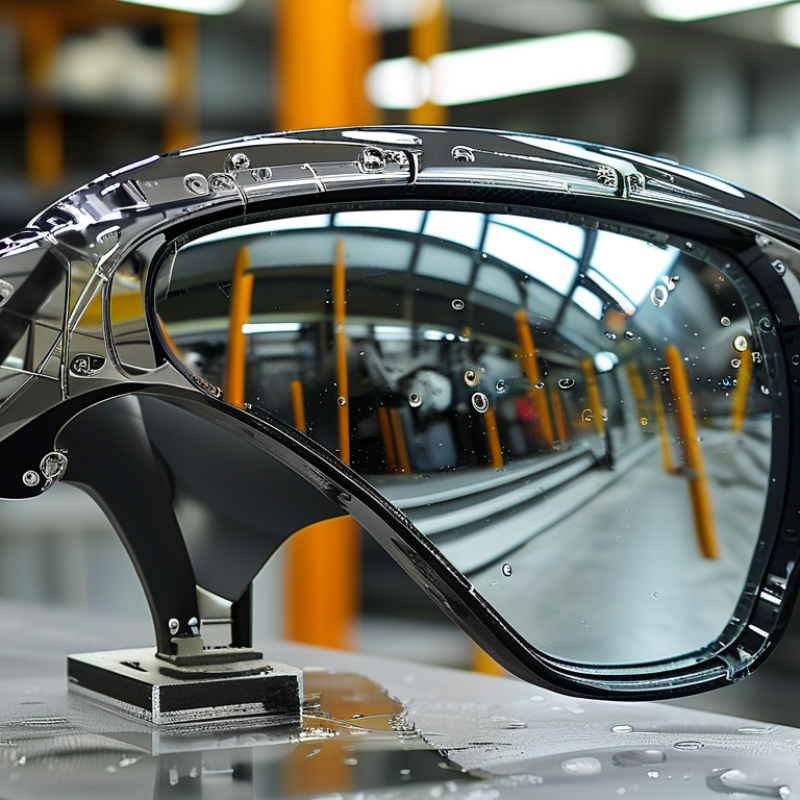
Before comparing suppliers, define what the lens must do in the vehicle. Specify its function, mounting space, field of view, focal requirements, and expected service life. For lighting applications, record luminous transmittance, beam uniformity, color stability, and allowable distortion. For camera systems, include resolution, flare control, infrared behavior, and image performance across temperatures. Small gaps become expensive later. Measure twice.
Performance standards should reflect real vehicle conditions. Define operating temperatures, humidity, ultraviolet exposure, vibration, chemical contact, and water or dust ingress. Translate these conditions into test methods, cycles, acceptance limits, and inspection frequency. Ask suppliers for dimensional tolerances, coating data, material certificates, and test reports with clear sample identification. Traceability matters when a lens changes shape after repeated heat cycles. Request pilot samples before approving mass production. Check optical results on your own equipment, because supplier data may use different fixtures.
A useful specification also covers manufacturability, repair constraints, cleaning methods, and end-of-line inspection. Leave room for engineering judgment, but document every exception. Our first specification was too general. It passed basic inspection yet exposed glare at night. That mistake changed our process: we now test complete assemblies, not lenses alone. Reality disagrees. Choose a supplier that can explain failed results, control revisions, and repeat performance across batches. That evidence is more valuable than polished sales language.

Tip 1: Verify the lens material, not only its appearance. Optical-grade polycarbonate or PMMA should resist yellowing, impact, heat, and ultraviolet exposure. Ask for test records covering haze, transmission, and color stability. The IEA Global EV Outlook 2024 expects global electric car sales to exceed 17 million units in 2024. This growth increases demand for lightweight, durable lighting components.
Tip 2: Examine manufacturing discipline. Visit the molding area, inspect tool maintenance, and review process capability data. Stable injection pressure and mold temperature reduce distortion and uneven light distribution. Check traceability from resin batch to finished lens. A flawless sample proves little. In practical audits, production consistency matters more. I have sometimes trusted polished samples too quickly.
Tip 3: Assess technology beyond basic molding. Suppliers should understand optical simulation, photometric testing, surface coatings, and thermal management. Their laboratories should measure transmission, glare, color, and aging performance. The U.S. Department of Energy reports that LED lighting uses at least 75% less energy than incandescent lighting. Efficient light sources still need precise lenses to control output. Ask whether the supplier can support sensor windows, adaptive lighting, and compact electric-vehicle designs. Require documented validation plans, independent test results, and corrective-action records. A responsive engineering team is valuable. A perfect audit is impossible, so keep reviewing data after launch.
| No. | Evaluation Dimension | What to Assess | Evidence to Request | Practical Benchmark | Suggested Weight |
|---|---|---|---|---|---|
| 1 | Material Selection | Check whether the supplier selects lens materials according to optical performance, impact requirements, temperature range, chemical exposure, and vehicle location. | Material technical data sheets, safety data sheets, incoming inspection records, and approved material specifications. | The material grade, additives, colorants, and coating system should be clearly controlled and traceable to each production lot. | 12% |
| 2 | Optical Performance | Evaluate light transmission, haze, distortion, color consistency, and the supplier’s ability to maintain optical quality across the entire lens surface. | Optical inspection procedures, measurement reports, control plans, and sample inspection data from different production lots. | Measurements should be linked to drawing tolerances or applicable customer specifications, with defined sampling and acceptance criteria. | 12% |
| 3 | Manufacturing Expertise | Review experience with injection molding, compression molding, hard coating, anti-fog treatment, laser marking, and other processes required by the lens design. | Process flow charts, machine capability records, tooling history, qualified operator records, and representative production samples. | The supplier should demonstrate stable control of molding, coating, curing, handling, and packaging rather than relying only on final inspection. | 12% |
| 4 | Tooling and Mold Capability | Assess mold design, cooling balance, cavity control, maintenance planning, dimensional repeatability, and the ability to manage complex optical surfaces. | Mold design reviews, maintenance schedules, dimensional capability studies, mold trial reports, and spare-part plans. | Tooling changes should be documented, approved, validated, and traceable before affected parts enter regular production. | 10% |
| 5 | Testing and Validation Technology | Confirm access to testing for impact, thermal cycling, humidity, ultraviolet exposure, chemical resistance, abrasion, adhesion, and long-term environmental durability. | Validation plans, laboratory equipment lists, calibration certificates, test reports, and failure-analysis records. | Tests should reflect the intended vehicle environment and be conducted using documented methods with calibrated equipment. | 12% |
| 6 | Quality Management System | Evaluate formal controls for document management, nonconforming product, corrective action, internal audits, supplier control, and continuous improvement. | Current quality certificates, audit results, corrective-action reports, process control plans, and inspection instructions. | An automotive-focused quality system, such as one aligned with IATF 16949 principles, should be supported by objective audit evidence. | 10% |
| 7 | Traceability and Change Control | Check whether raw materials, molds, machines, operators, inspection results, and shipment lots can be traced throughout the product life cycle. | Lot coding examples, digital production records, retention policy, change-notification procedure, and recall or containment workflow. | Material, process, tooling, and design changes should require documented review and customer approval when contractually required. | 10% |
| 8 | Engineering and Development Support | Assess the supplier’s ability to support optical simulation, tolerance analysis, design-for-manufacturing reviews, prototyping, and validation planning. | Engineering organization chart, development schedules, prototype records, design review minutes, and problem-solving examples. | A capable supplier should identify manufacturability and optical risks before tooling release, not only after production defects occur. | 10% |
| 9 | Capacity and Delivery Reliability | Review available molding and coating capacity, production flexibility, preventive maintenance, capacity planning, and contingency arrangements. | Capacity studies, recent delivery performance, production schedules, maintenance records, and business-continuity plans. | The supplier should show realistic capacity for forecast demand and a documented response plan for equipment failure or material disruption. | 6% |
| 10 | Cost, Compliance, and Total Value | Compare total cost rather than unit price alone, including tooling, inspection, logistics, warranty exposure, regulatory requirements, and engineering support. | Detailed quotations, warranty terms, compliance declarations, packaging specifications, logistics assumptions, and cost-breakdown logic. | The preferred supplier should combine transparent pricing, documented compliance, stable quality, and manageable long-term operating risk. | 6% |
| Total Suggested Evaluation Weight | 100% | ||||
Choosing an automotive lens supplier requires more than comparing samples and prices. Start by checking whether its quality system follows IATF 16949 and ISO 9001 principles. The ISO Survey 2023 reported more than one million ISO 9001 certificates worldwide, but certification alone does not guarantee stable lens performance. Ask for recent audit findings, corrective-action records, and evidence that controls remain active after approval.
Inspect the production process in detail. Verify incoming resin inspection, mold-temperature control, coating thickness checks, optical measurement, and final visual inspection. Request capability data for critical dimensions, preferably with Cp and Cpk results from real production batches. Review calibration certificates and measurement-system analysis records. Small gaps matter. A supplier should also explain its PPAP process, traceability method, change-control procedure, and reaction plan for defects. According to the 2023 U.S. National Highway Traffic Safety Administration report, vehicle safety recalls affected millions of units, showing why early defect prevention deserves serious attention.
Product consistency needs proof over time. Compare samples from at least three production lots, not one carefully selected shipment. Check haze, transmittance, color stability, impact resistance, and fit under temperature cycling. Independent laboratory testing adds credibility, especially for coatings and optical clarity. I once viewed a clean inspection report as sufficient evidence; that was too optimistic. Production data can drift between audits. Ask for monthly quality trends, customer-return analysis, and layered-process-audit results. A capable supplier welcomes difficult questions and can show what changed, who approved it, and how the risk was contained.
Choosing an automotive lens supplier requires more than a polished sample. OICA recorded 93.5 million vehicles produced worldwide in 2023. That scale demands repeatable quality, not only optical clarity. Ask for measured tolerances, coating uniformity, photometric results, and traceable material records. For custom lenses, confirm tooling ownership, CAD revision control, and validation samples. Small design changes can affect glare, beam spread, and sealing performance. Request a documented change process.
Pricing comparisons should separate tooling, unit cost, testing, packaging, and logistics. A low quotation may exclude rework. It happens. Compare total landed costs across three volume levels. Lead times also need detail: prototype, mold fabrication, pilot production, and mass manufacturing. Obtain each milestone in writing. The IEA Global EV Outlook 2024 reported expected global electric-car sales above 17 million in 2024. This growth may increase demand for compact lighting components. However, forecasts are not purchase orders. Ask about machine loading, spare capacity, shift patterns, and backup lines.
Production capacity should include cycle time, quality records, inspection equipment, and emergency recovery plans. Request recent capability studies, not attractive promises. My own checklist is imperfect. It can overvalue factory size and undervalue engineering response. Evaluate sample approval speed, corrective-action discipline, and communication clarity. A supplier with modest capacity may still perform reliably, if expansion plans match your forecast.
A normalized procurement benchmark comparing the four factors most often used when selecting an automotive lens supplier: customization capability, pricing competitiveness, lead-time performance, and production capacity. Higher scores indicate stronger overall performance.
Scores are normalized to a 100-point scale for comparison. Actual results may vary according to optical specifications, tooling requirements, qualification standards, order volume, and production scheduling.
Choosing the Best Automotive Lens Supplier
A supplier’s support team becomes most valuable after the purchase order. Ask how quickly engineers answer technical questions and handle installation problems. Request a named contact, not only a shared email address. Experienced teams should explain optical testing, thermal cycling, UV exposure, and vibration resistance in clear terms. Ask for test reports and production samples. Do not guess.
Warranty terms deserve careful reading. Check the coverage period, acceptable defect limits, replacement process, and shipping responsibilities. Confirm whether optical distortion, yellowing, cracking, and water entry are included. Some warranties sound strong but exclude common field conditions. I once overlooked a freight clause, and the replacement cost changed the project budget. That mistake still influences my supplier reviews.
Long-term reliability requires evidence, not confident promises. Review quality records, production capacity, inspection procedures, and change-notification practices. A dependable supplier should maintain batch traceability and explain corrective actions after failures. Speak with technical customers when possible, while protecting confidential information. Track response times during a trial order. Slow support before production rarely improves later. Reliability can also weaken when one facility handles every process, so ask about backup capacity and realistic delivery plans. A supplier may meet today’s target but struggle after volume increases. Leave room for that possibility.
A&B has become the leader in fresh packing and cleaning equipment for fruits and vegetables worldwide. We have achieved this by relentlessly working to produce new and innovative ideas, along with the best customer service on Earth combined with hard working, dedicated, loyal employees and the latest industrial manufacturing techniques. We are now proud to say that we manufacture The Fulcrum Fresh Harvester, this is a one of a kind Berry Harvester that was specifically designed to handle fresh pick blueberries.
732 W. Saint Joseph Street
Lawrence, MI 49064
Phone: 269-539-4700 Fax: 269-539-4705
sale@industrialpackagingmachines.com