Choosing the right case packer is crucial for any packaging operation. As John Smith, a leading expert in the packaging industry, once said, "Selecting the right case packer can make or break your efficiency." Many manufacturers face challenges when deciding which case packer suits their needs.
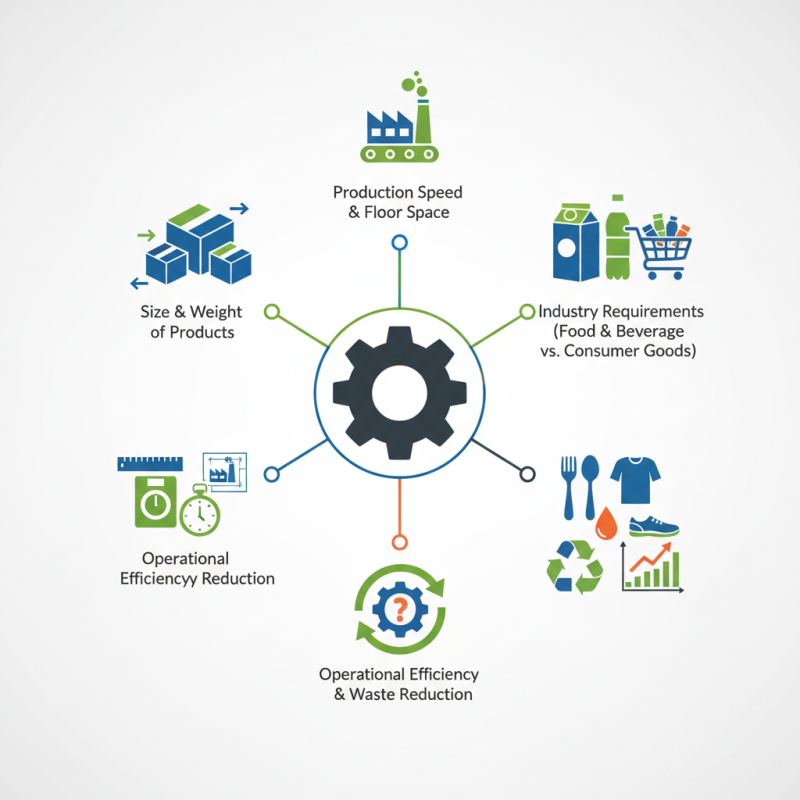
There are multiple factors to consider. The size and weight of your products are vital. Each case packer is built for specific types of packaging goals. Different industries have different requirements. For instance, food and beverage companies may need robust solutions, while consumer goods may require flexibility.
Moreover, think about your production speed and floor space. Not all case packers can fit into every layout. Some companies rush and make the wrong choice. This can lead to inefficiencies and waste. It’s essential to reflect on what your actual needs are before making a decision. A thoughtful approach to selecting a case packer can greatly improve operational efficiency.
Choosing the right case packer is crucial for efficiency in the packaging industry. Various types of case packers serve different packaging needs. Horizontal case packers, for example, are prevalent. They handle products with ease and speed. According to industry reports, horizontal packers can achieve speeds up to 120 cases per minute. This efficiency can significantly boost production rates.
Vertical case packers are also popular. They work well with lightweight or unstable products. They have smaller footprints, making them suitable for limited spaces. These packers can process up to 60 cases per minute. However, they may require more frequent adjustments than horizontal options. It’s important to evaluate your product type and volume needs carefully.
Tip: Always benchmark your production flow before investing. Understand whether your products are best suited for horizontal or vertical packers. Testing both types on a smaller scale may yield valuable insights. Watch out for maintenance costs as well; they can add up over time. Remember, there’s no one-size-fits-all solution. Each facility has unique requirements that must be addressed.
| Type of Case Packer | Best For | Speed (Cases/Min) | Footprint (sq ft) | Approx. Cost ($) |
|---|---|---|---|---|
| Manual Case Packer | Small to Medium Volume | 5-10 | 50 | 2,000 |
| Semi-Automatic Case Packer | Medium Volume | 15-25 | 75 | 5,000 |
| Fully Automatic Case Packer | High Volume | 30-60 | 150 | 15,000 |
| Robotic Case Packer | Flexible Product Sizes | 20-40 | 100 | 10,000 |
Choosing the right case packer involves understanding your production speed requirements. Speed is crucial for maximizing efficiency. Make sure to identify your target output. Consider how many cases you need per hour. This will help narrow down your options.
Evaluate your current production line. Are there delays when packaging? Think about how a new case packer can change that. If you need to speed up to meet demand, look for a machine that can adapt. Features like adjustable speed settings can be vital.
Sometimes, focusing solely on speed can lead to issues. A faster packer may not ensure quality. Finding a balance between speed and reliability is essential. Take the time to evaluate your needs carefully. Think about your products and the overall workflow. An informed choice can save time and resources down the line.
Choosing the right case packer is crucial. The compatibility between your case packer and packaging materials greatly affects efficiency. Different materials require unique handling. For example, corrugated boxes need different adjustments compared to plastic containers. Make sure to assess the specific characteristics of your packaging.
Evaluate how your materials perform under pressure. Some boxes deform easily under stress. This can lead to product damage. Test the case packer’s speed too. A faster machine might not work well with fragile materials. The result could be wasted resources. The right balance is essential for smooth operations.
Consider your production volume as well. Smaller operations may find a more manual case packer sufficient. Larger scales often need fully automated systems. However, automation doesn’t always mean higher quality. Ensure your chosen machine doesn’t compromise product integrity. Rethink your choices periodically to improve overall efficiency.
Investing in the right case packer can be daunting. Companies often struggle to balance initial costs with long-term savings. According to a 2022 industry report, automated case packing systems can reduce labor costs by up to 30%. This reduction can significantly impact your bottom line over time.
However, factors like maintenance and energy usage can add complexity. It's crucial to analyze total cost of ownership. Data shows that over five years, a typical manual packing line can incur up to 20% more in operational expenses than an automated solution. Still, the upfront investment for automation might seem overwhelming. Businesses must weigh immediate budget constraints against potential efficiency gains.
Consider the flexibility of case packers, too. Many systems can adapt to different product sizes, accommodating changing market demands. An adaptable system may save future costs related to re-investment in new equipment. Failing to assess production scalability could lead to costly mistakes. Thoughtful analysis can pave the way for better financial outcomes and more streamlined operations.
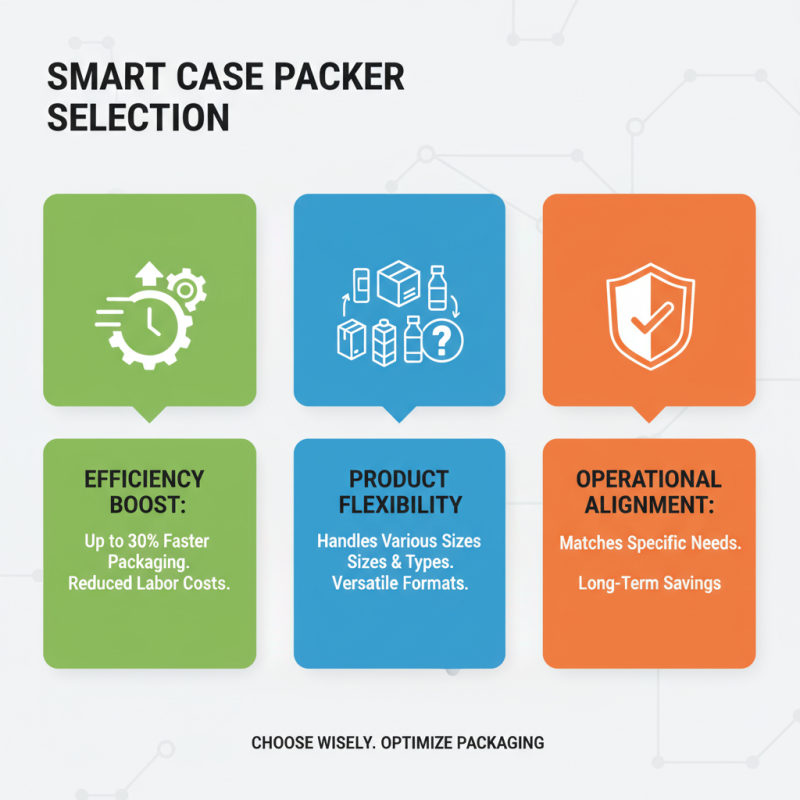
When selecting a case packer, it’s important to focus on key features that align with your specific operations. Efficiency is critical. According to a recent industry report, the right case packer can enhance packaging speeds by up to 30%. This can significantly reduce labor costs over time. Look for machines that can handle various sizes and types of products. Flexibility in packaging formats can save valuable time and resources.
Reliability is another essential aspect. Data indicates that downtime can cost companies approximately $2 million per year in lost productivity. A dependable case packer minimizes breakdowns and maintenance issues. It’s also vital to consider the equipment’s ease of use. Operators should quickly adapt to new machines without extensive training. A user-friendly design reduces errors and boosts morale among staff.
While these features are critical, not all machines will suit every operation. Some businesses find the initial investment challenging. Additionally, larger systems might be more complex than necessary for smaller operations. It's also worth assessing future growth; transitioning to a new machine down the line can be costly and disruptive. Maintaining a balance between cost and capability is essential in the decision-making process.
A&B has become the leader in fresh packing and cleaning equipment for fruits and vegetables worldwide. We have achieved this by relentlessly working to produce new and innovative ideas, along with the best customer service on Earth combined with hard working, dedicated, loyal employees and the latest industrial manufacturing techniques. We are now proud to say that we manufacture The Fulcrum Fresh Harvester, this is a one of a kind Berry Harvester that was specifically designed to handle fresh pick blueberries.
732 W. Saint Joseph Street
Lawrence, MI 49064
Phone: 269-539-4700 Fax: 269-539-4705
sale@industrialpackagingmachines.com