How to Choose a China Bitumen Tanks Manufacturer?
Choosing the right China Bitumen Tanks Manufacturer is not a simple price comparison. It is a decision about safety, heating performance, maintenance, and delivery reliability. A suitable supplier should understand how bitumen behaves during storage, transfer, and temperature control. Tank capacity matters, but so do insulation thickness, heating pipe layout, steel quality, and access for cleaning.
“Engineering details decide whether a bitumen tank serves reliably or creates daily problems,” says Chen Wei, a senior bitumen-storage engineer with more than fifteen years of field experience. His point is practical. A tank may look impressive in photographs, yet poorly positioned heating coils can leave cold zones near the bottom. That creates difficult pumping conditions. Small design choices matter.
Look for a China Bitumen Tanks Manufacturer that can provide drawings, material specifications, welding standards, and inspection records. Ask how the company tests leakage, insulation, temperature control, and pressure-related components. Request photographs of completed tanks, not only factory models. Speak with previous customers when possible. Their feedback may reveal delivery delays, weak after-sales support, or unexpected installation costs.
Do not accept every claim immediately. Some brochures promise everything. Few explain limitations clearly. Consider your bitumen grade, local climate, loading method, power supply, and required working temperature. A technically strong manufacturer should ask these questions before offering a quotation. The cheapest tank may become the most expensive choice after repeated heating losses, repairs, or production interruptions. Careful comparison is slower, but it usually protects the investment.
What Is a Bitumen Tank and Why Does the Manufacturer Matter?
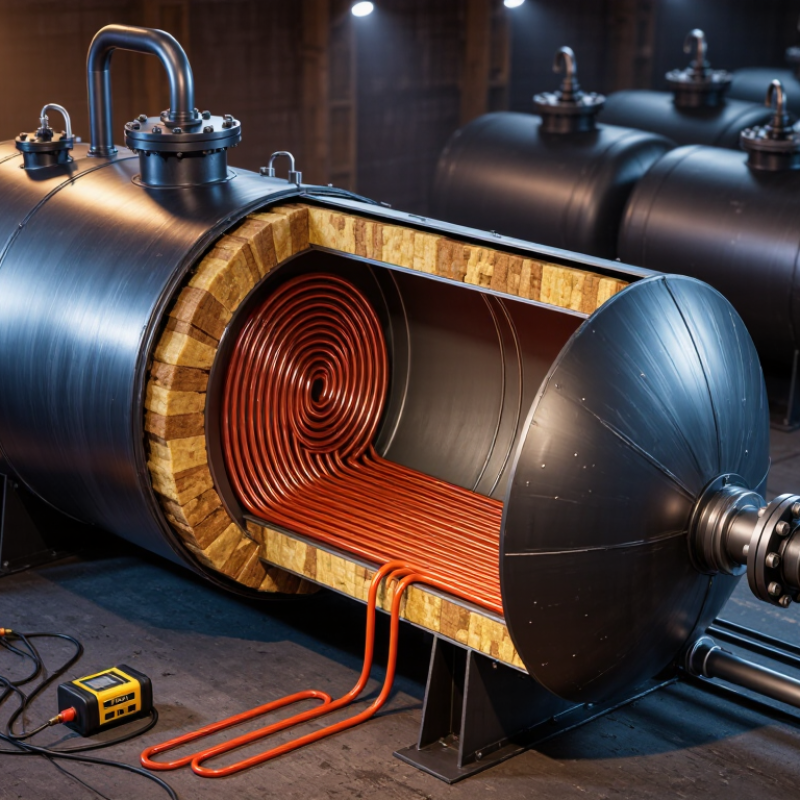
A bitumen tank stores and heats asphalt binder until it remains pumpable. It usually includes a steel shell, thermal insulation, heating coils, temperature controls, valves, and a loading system. Without steady heat, bitumen can harden around outlets and delay production. Small design details matter.
The manufacturer matters because tank safety and performance depend on engineering quality. Ask how the supplier calculates tank capacity, heating power, insulation thickness, and pressure limits. Check welding procedures, material certificates, factory testing, and control-panel documentation. Experienced manufacturers can adapt the tank to local temperatures, transport limits, and operating habits. They should also explain cleaning access and spare-part availability. A polished brochure is not enough. Some specifications may still need closer review.
Tips: Request drawings before placing an order. Confirm usable capacity, not only total volume. Inspect weld records and test reports. Ask for a heating test using realistic bitumen conditions. Check whether temperature sensors have independent protection. Visit the factory if possible, but do not rely on appearance alone. A low price can be attractive, yet weak insulation may increase fuel use every working day. I would also question vague delivery promises. No checklist is perfect. That is worth remembering.
How to Choose a China Bitumen Tanks Manufacturer? - What Is a Bitumen Tank and Why Does the Manufacturer Matter?
| Evaluation Dimension | What to Check | Practical Reference Data | Recommended Evidence | Why the Manufacturer Matters |
|---|---|---|---|---|
| Tank Capacity | Confirm the working capacity, gross capacity, loading method, and required storage duration. | Common project specifications may range from approximately 10 m³ to more than 100 m³, depending on plant throughput and delivery frequency. | Dimensioned drawings, capacity calculation, and a clearly stated usable-volume percentage. | A competent manufacturer sizes the tank around actual operating demand rather than quoting only nominal volume. |
| Bitumen Temperature Range | Check the normal storage temperature, maximum operating temperature, heating-up time, and temperature uniformity. | Many paving-bitumen applications operate around 140–180°C; the exact range depends on the bitumen grade and process requirements. | Temperature-control logic, sensor locations, heat-up test results, and a defined maximum design temperature. | Poor thermal design can cause overheating, material aging, uneven viscosity, or unnecessary fuel consumption. |
| Heating System | Compare thermal-oil coils, electric heating, hot-gas systems, or combined heating arrangements. | Heating capacity should be calculated from tank volume, insulation, ambient temperature, heat-up time, and required operating temperature. | Heat-load calculation, heater specifications, control-panel documentation, and protective shutdown settings. | The heating design directly affects energy use, temperature stability, maintenance, and operational safety. |
| Thermal Insulation | Review insulation material, thickness, weather protection, removable panels, and surface-temperature control. | Mineral wool or similar high-temperature insulation is commonly specified at approximately 50–100 mm, subject to the heat-loss calculation. | Insulation specification, cladding details, heat-loss estimate, and accessible inspection points. | Effective insulation reduces heat loss, improves temperature consistency, and lowers the risk of accidental contact burns. |
| Tank Material and Thickness | Verify material grade, plate thickness, corrosion allowance, welding method, and compatibility with hot bitumen. | Material and thickness must be determined by capacity, temperature, structural loads, local regulations, and transport requirements rather than by a universal fixed value. | Material certificates, approved drawings, welding procedures, and inspection records. | Experienced manufacturers can match construction details to thermal expansion, loading conditions, and long-term service requirements. |
| Agitation and Circulation | Determine whether the process requires a mixer, recirculation pump, internal coil layout, or multiple outlets. | Circulation requirements depend on bitumen viscosity, storage time, tank geometry, discharge rate, and the need to prevent temperature stratification. | Flow diagram, pump curve, nozzle schedule, and operating sequence. | Correct circulation design helps reduce dead zones, improves batch consistency, and supports reliable unloading. |
| Safety Features | Check high-temperature alarms, emergency shutdown, overflow protection, level indication, access platforms, and guarding. | Safety functions should be defined through a project risk assessment and applicable local occupational-safety requirements. | Risk assessment, control logic, alarm list, emergency-stop test, and safety inspection checklist. | A responsible manufacturer integrates safety into the design instead of treating it as an optional accessory. |
| Instrumentation and Automation | Assess temperature sensors, level measurement, control accuracy, data logging, remote access, and communication interfaces. | The control system should provide stable temperature regulation and independent high-temperature protection; required accuracy should be stated in the specification. | Instrument list, calibration certificates, PLC or control-panel drawings, and factory acceptance test results. | Good instrumentation improves process control, troubleshooting, energy management, and traceability. |
| Welding and Quality Control | Review welder qualifications, welding procedures, non-destructive testing, dimensional inspection, and leak testing. | Inspection scope should be agreed in the purchase specification and may include visual inspection, dimensional checks, liquid-penetrant or ultrasonic testing, and pressure or leak tests where applicable. | Welding procedure records, inspection reports, test certificates, and final quality dossier. | Tank integrity, service life, and shipment reliability depend heavily on fabrication quality and documented inspection. |
| Compliance and Documentation | Confirm the standards, codes, electrical requirements, environmental rules, and import documentation required at the installation site. | Applicable requirements vary by country, tank classification, heating method, electrical system, and whether the equipment is pressure-rated. | Standards compliance statement, technical file, manuals, certificates, packing list, and installation drawings. | A manufacturer familiar with export documentation can reduce approval delays, customs problems, and installation changes. |
| Factory Testing and Acceptance | Define what will be tested before dispatch, including dimensions, controls, heating performance, alarms, and accessories. | A factory acceptance test should be based on agreed project criteria and completed before shipment whenever practical. | FAT procedure, signed test records, inspection photographs, and corrective-action log. | Pre-shipment verification reduces commissioning risks and helps identify defects while the equipment is still at the factory. |
| Installation and Commissioning Support | Check whether the supplier provides foundation loads, lifting instructions, piping layouts, electrical diagrams, and start-up guidance. | Support requirements should be agreed before order placement, especially for oversized tanks or integrated heating systems. | Installation manual, commissioning checklist, remote-support plan, and clearly defined service scope. | Clear technical support can shorten installation time and prevent incorrect piping, wiring, or heating-system operation. |
| Maintenance and Spare Parts | Evaluate access to heaters, valves, sensors, pumps, insulation panels, and replacement seals. | Recommended spare parts should cover commissioning and the initial operating period; quantities depend on equipment configuration and duty cycle. | Spare-parts list, maintenance schedule, component specifications, and stated response times. | Reliable after-sales support reduces downtime when a temperature sensor, pump, valve, or control component requires replacement. |
| Total Cost of Ownership | Compare purchase price with shipping, installation, energy consumption, maintenance, spare parts, and expected service life. | The lowest initial quotation is not necessarily the lowest-cost option if insulation, controls, safety devices, or documentation are excluded. | Itemized quotation, utility-consumption estimate, warranty terms, exclusions list, and lifecycle-cost comparison. | A transparent manufacturer makes technical and commercial comparisons possible before the purchase decision. |
| Delivery and Packaging | Confirm production schedule, shipping dimensions, container or break-bulk requirements, corrosion protection, and lifting points. | Lead time varies with tank size, customization, fabrication capacity, inspection requirements, and shipping method; it should be contractually defined. | Manufacturing schedule, packing drawings, loading photographs, lifting plan, and shipping documents. | Experienced export manufacturers can design packaging and shipping arrangements that reduce transit damage and site delays. |
Note: The numerical ranges shown are general procurement references for hot-bitumen storage systems. Final values must be confirmed through process calculations, the bitumen grade, local regulations, and the approved project specification.