Choosing a Digital Crimper in 2026 requires more than comparing screen size or advertised pressure. The right tool should match the terminals, wire gauges, materials, and working conditions it will face. A professional installer may need repeatable crimp force, programmable settings, and clear readings in a noisy workshop. A maintenance technician may value battery life, compact handling, and quick jaw changes instead. Small details matter. A bright display helps under a vehicle dashboard. A balanced handle reduces wrist strain during repeated work. These practical points often matter more than impressive specifications.
This guide examines how to select a Digital Crimper through real application needs, technical evidence, and dependable after-sales support. Manufacturer manuals, calibration information, load data, and independent user experience deserve careful attention. Marketing language can sound precise while hiding important limits. That assumption can fail. A tool rated for one terminal family may not produce reliable results with another. The safest choice includes verified compatibility, overload protection, service access, and a warranty with clear conditions. No tool is perfect. Even an expensive model may feel slow, heavy, or awkward after several hours. Battery tools also depend on charging habits and replacement battery costs. Careful buyers should inspect those weaknesses before purchase. By weighing measurable performance against daily comfort, users can choose a crimper that delivers consistent connections, safer workmanship, and reasonable value throughout 2026.
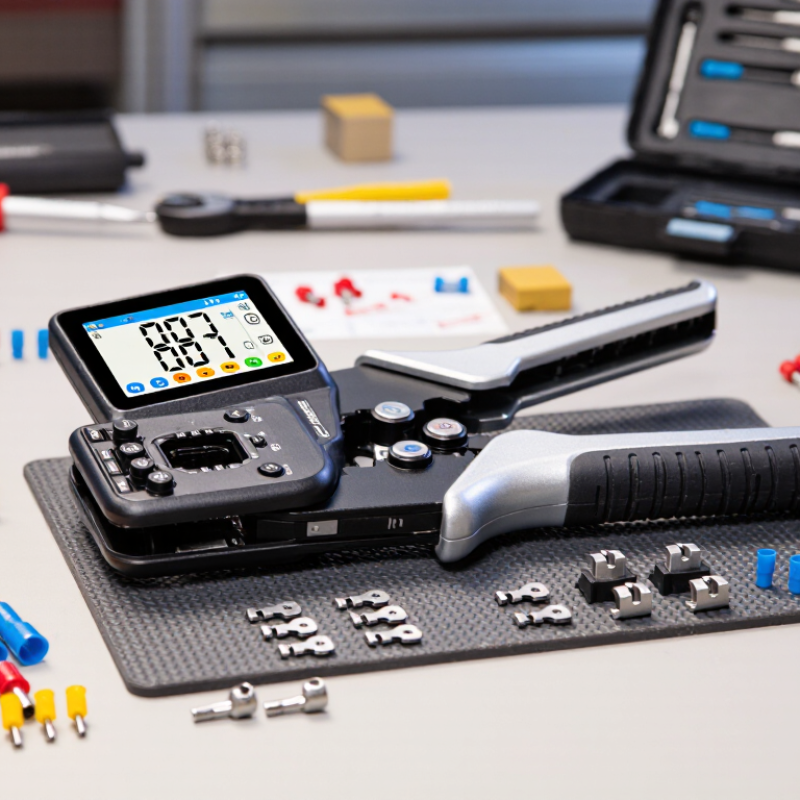
A digital crimper joins a terminal to a wire through controlled mechanical pressure. Its die compresses the terminal around the conductor and insulation. Sensors monitor force, stroke, or crimp height during each cycle. A microcontroller then compares readings with preset limits. If the result falls outside tolerance, the tool can stop or display a warning.
It is more than a powered hand tool. The screen may show cycle counts, force curves, error codes, and maintenance reminders. Some models also store production records for traceability. The International Federation of Robotics reported 541,302 industrial robot installations worldwide in 2023. This figure shows why connected tooling is becoming more relevant in modern assembly cells. However, automation does not guarantee a good connection. I still inspect stripped length, terminal alignment, and conductor placement before trusting the screen.
IPC/WHMA-A-620 remains a useful reference for cable and wire-harness acceptance criteria. A digital crimper should support repeatable settings for the actual terminal and wire combination. Check whether its force range matches your work.
Also verify calibration intervals, data export, die availability, and emergency release functions. Cheaper tools may provide impressive displays but weaker measurement stability. That difference is easy to miss.
It deserves testing with pull-force checks and sample cross-sections. Personally, I would not select a tool from software features alone; the physical crimp still decides whether the connection is reliable.

A digital crimper must match the work, not just display force in kilonewtons. The IEA Global EV Outlook 2024 recorded nearly 14 million electric-car sales in 2023. That growth increases demand for reliable low-voltage and high-voltage harnesses. Your crimper should handle the exact terminal family, wire gauge, insulation thickness, and conductor material used in production.
Copper terminals are common, but aluminum conductors need compatible tooling and controlled compression. The machine should support interchangeable dies, programmable force limits, cycle counting, and clear error records. Force monitoring matters when operators process hundreds of terminals daily. A good system can identify under-crimping before a loose connection reaches testing. Still, digital readings are not proof by themselves. Pull tests and cross-section checks remain necessary.
Tips: List every terminal and cable combination before buying. Test the smallest and largest sizes. Check stranded copper, aluminum, shielded cables, and sealed terminals separately. Grand View Research estimated the global automotive wiring harness market at about USD 58.7 billion in 2023, but market growth should not dictate your tooling. A higher force rating is not automatically better. Excessive compression can damage strands or deform insulation. I would also question impressive software features if technicians cannot read the screen beside a noisy production line. Simple controls may prevent more mistakes.
How to Choose a Digital Crimper in 2026?
Comparing digital crimpers requires more than checking their maximum force. Start with the supported wire sizes, terminal types, and die compatibility. A tool rated for 10 tons may still perform poorly on small terminals. Check whether the display shows actual force, target force, or only a preset number. That difference matters during inspection. Look for repeatability data, measurement units, and overload warnings. A clear screen also helps in dim workshops.
Battery capacity affects daily productivity. Check charging time, battery replacement options, and performance during low power. Weight matters too. A heavy tool can become uncomfortable after repeated overhead work. I have found that grip shape often matters more than advertised speed. Consider cycle time, return speed, noise, and hydraulic leakage protection. Review the calibration method and available service records. A certificate is useful, but its date and testing method deserve attention. Specifications can look impressive and still leave important questions unanswered.
Tips: Test the crimper with your actual terminals before purchase. Examine the finished crimp for even compression, correct shape, and secure retention. Compare several cycles, not just one successful result. Record force readings and inspect the display from different angles. If the interface feels confusing, it may slow careful work. That small weakness is easy to overlook.
How to read the chart: Crimp force is shown as a typical operating range for three common digital hydraulic crimper classes. Compact models are suitable for smaller terminals, general-purpose models cover most electrical installation work, and heavy-duty models are designed for larger cable lugs and conductors.
When comparing tools, also check the supported conductor range, die compatibility, cycle time, battery voltage, tool weight, force monitoring, overload protection, and whether the digital display records completed crimp cycles. Always confirm the required force and conductor size against the connector manufacturer’s specifications.
The values represent typical specification ranges for commonly available battery-powered hydraulic crimper classes and are intended as a neutral purchasing benchmark.
Accuracy should be your first practical test. A reliable digital crimper should show stable pressure readings, not numbers that jump during one cycle. Test it with several wire sizes or terminal types. Compare the result with a calibrated gauge when possible. A clean, even crimp matters more than a bright screen. In workshop testing, I check pull strength, terminal shape, and repeatability. Small variations can reveal worn jaws or poor sensors.
Safety deserves equal attention. Look for insulated handles, a guarded moving head, and automatic release after excessive pressure. The display should remain readable without forcing your hands near the crimping area. Battery warnings and error alerts are useful, but I would not trust them alone. Inspect the tool before every job. Digital features cannot replace careful judgment.
Tips:
Choose replaceable dies, a firm grip, and clear controls. Ask about calibration records and spare parts. Check the tool’s weight after ten minutes of use. It may feel comfortable briefly, then become tiring. I once underestimated this detail, and hand fatigue affected my accuracy. Durability also depends on storage, cleaning, and correct pressure settings. A solid case helps prevent dust from reaching the mechanism. Select a model that explains maintenance clearly, even if its design looks less impressive.
When choosing a digital crimper, match the tool to your actual workload, not its feature count. Your budget should cover the tool, compatible dies, maintenance, and replacement parts. A low-cost model may suit occasional repairs, but its display and motor can wear faster under daily use. Check the rated crimping range, operating force, cycle speed, and battery or power requirements.
For regular production, prioritize repeatability over flashy controls. The display should show pressure, force, or cycle data clearly, even under bright workshop lighting. Look for adjustable settings, overload protection, and an easy die-change system. The jaws must close evenly around the terminal or fitting. Uneven compression can create weak connections, wasted materials, and difficult rework. Ask for calibration information or test reports before purchasing.
Physical comfort matters more than many product pages suggest. A balanced handle, low vibration, and a readable screen reduce fatigue during long sessions. Check whether replacement dies are affordable and easy to find. Digital accuracy is useful, but it does not replace clean materials or correct positioning. A common mistake is buying the strongest model for light work. I would rather choose a simpler tool with reliable measurements and accessible service support. Real workshop conditions are rarely perfect. Dust, cold hands, and hurried setup can expose weaknesses that specifications overlook.
A&B has become the leader in fresh packing and cleaning equipment for fruits and vegetables worldwide. We have achieved this by relentlessly working to produce new and innovative ideas, along with the best customer service on Earth combined with hard working, dedicated, loyal employees and the latest industrial manufacturing techniques. We are now proud to say that we manufacture The Fulcrum Fresh Harvester, this is a one of a kind Berry Harvester that was specifically designed to handle fresh pick blueberries.
732 W. Saint Joseph Street
Lawrence, MI 49064
Phone: 269-539-4700 Fax: 269-539-4705
sale@industrialpackagingmachines.com