10 Essential Tips for Efficient Automated Packaging Solutions?

In the rapidly evolving world of automated packaging, efficiency is paramount. Industry expert James D. Morgan once stated, "Automation is not just about speed; it's a path to precision." Companies are exploring ways to optimize their processes. Insights from successful organizations reveal that small changes can lead to significant efficiency gains in automated packaging.

The complexity of integrating automated packaging solutions can be daunting. Many businesses struggle with system compatibility and training. It's essential to approach automation with a clear strategy. Companies must assess their current practices to identify areas of improvement. Overlooking minor details can result in costly mistakes.

Balancing speed and quality is a common challenge. While the goal is to enhance output, neglecting thorough testing can hinder progress. The industry must prioritize ongoing evaluation. Continuous feedback loops can drive further advances in automated packaging. Engaging with employees at all levels is crucial for maximizing the benefits of automation.

10 Essential Tips for Efficient Automated Packaging Solutions?

Understanding Automated Packaging Solutions and Their Benefits

Automated packaging solutions have transformed industries. They enhance efficiency, reduce labor costs, and minimize human error. Understanding how these systems function can help businesses maximize their benefits.

One key tip is to evaluate your product dimensions. Packaging machines vary widely. Choosing the right machine can prevent packaging mistakes. Another essential tip is to integrate your packaging systems with inventory management. This ensures a smooth workflow and reduces waste.

Many businesses overlook maintenance. Regular check-ups can prevent unexpected breakdowns. Investing in training for staff is also crucial. Employees should understand how to operate the machinery effectively. Without proper knowledge, issues can arise. Lastly, always seek feedback. Customers might have insights that can inspire improvements in your packaging process.
Key Features to Look for in Automated Packaging Systems

When considering automated packaging systems, certain key features stand out. These features can significantly impact efficiency and productivity. First, look for adaptable machinery that can handle various packaging formats. Flexibility is essential. Your packaging needs may change over time. A system that can easily adjust is invaluable.

Another crucial aspect is speed. The system should operate at a pace that matches your production line. If it lags, delays will occur. High throughput can mean the difference between meeting demand and falling behind.

Additionally, consider user-friendly interfaces. Complex machines can be a headache for operators. Intuitive controls make training easier. A smooth operation leads to fewer errors. One flaw in the design can slow down the entire process. Regular evaluations are critical. Reflect on how effectively the system meets your needs over time. Balancing efficiency and ease of use can drive your success in automated packaging solutions.

Best Practices for Implementing Automated Packaging Solutions

10 Essential Tips for Efficient Automated Packaging Solutions?

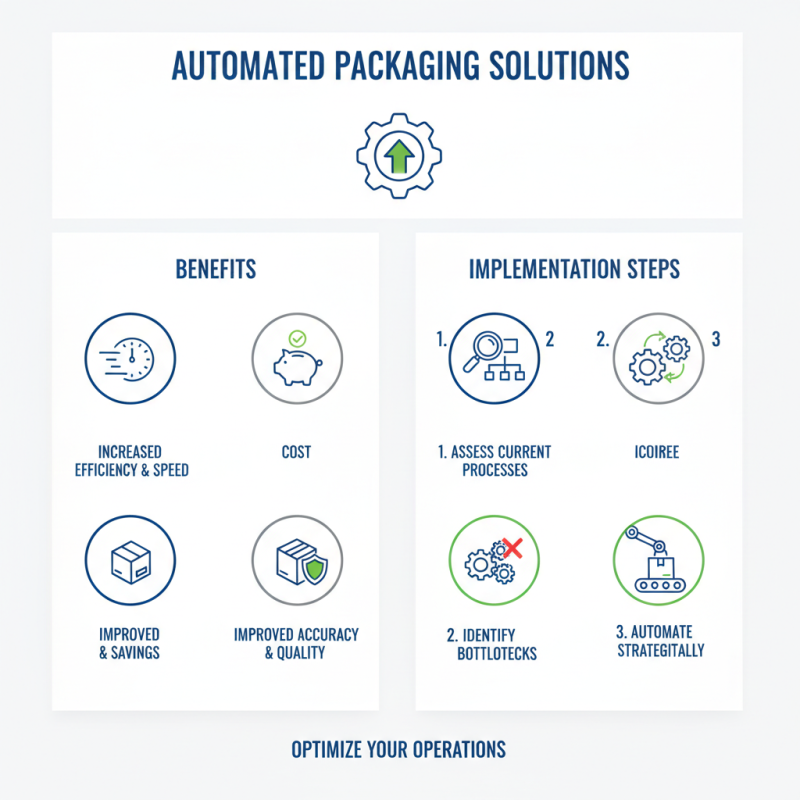
Implementing automated packaging solutions can greatly enhance efficiency in any operation. To get started, assess your current packaging processes. Identify bottlenecks that slow down production. This evaluation helps clarify where automation would be most beneficial.

Another important tip is to prioritize user-friendly technology. Employees need to adapt quickly to any new systems. Complicated machinery can lead to frustration and errors. Choose solutions that simplify the packaging process. This ensures smoother operations and fewer headaches down the line.

Additionally, regularly train your staff. Ongoing education keeps everyone updated on best practices. It also allows for immediate feedback on the automated systems in place. Encouraging open discussions about these systems can reveal areas for improvement. Not all solutions work for every business, and flexibility is crucial.

Common Challenges in Automated Packaging and How to Overcome Them

Automated packaging often faces various challenges. One major issue is system integration. Different machines may not communicate effectively. This can lead to inefficiencies. According to a report by the Association for Packaging and Processing Technologies, up to 25% of production downtime is due to integration problems. Addressing this requires careful planning and testing. Collaborate with equipment manufacturers early in the process. Ensure compatibility across all systems.

Another common challenge is maintaining package quality. Automation can compromise the integrity of products if not monitored closely. For instance, a study from the Packaging Machinery Manufacturers Institute found that 30% of manufacturers reported issues with damaged packages. Regular inspections and adjustments can help reduce this risk. Focus on training staff to recognize potential problems in the packaging line.

A lack of skilled labor also hinders efficient automation. Companies must invest in training programs to build a knowledgeable workforce. Data from the Bureau of Labor Statistics shows that demand for skilled labor in packaging is projected to grow by 7% over the next decade. Creating a culture of continuous improvement within teams can lead to innovative solutions. Emphasizing employee feedback is vital for long-term success.

10 Essential Tips for Efficient Automated Packaging Solutions

Tip Description Common Challenges Overcoming Strategies
1. Assess Your Needs Understand the specific requirements of your packaging process. Inadequate requirement analysis. Conduct a thorough needs assessment with all stakeholders.
2. Choose the Right Equipment Select machines that suit your packaging needs. Equipment mismatch and inefficiency. Research and consult with experts for optimal choices.
3. Invest in Quality Materials Use durable and suitable packaging materials. Quality issues leading to product damage. Select high-standard materials with reliable suppliers.
4. Streamline Workflow Optimize the layout of equipment and processes. Inefficient workflow causing delays. Analyze and redesign the layout for efficiency.
5. Implement Automation Gradually Introduce automation in stages to manage the transition. Overwhelming changes leading to disruptions. Plan a phased approach to automation implementation.
6. Regular Maintenance Ensure machines are well-maintained to avoid breakdowns. Equipment failures due to lack of maintenance. Establish a regular maintenance schedule and protocols.
7. Train Your Team Provide thorough training for operators and staff. Skill gaps among personnel. Invest in comprehensive training programs.
8. Monitor Performance Track and analyze the performance of packaging systems. Lack of visibility on process efficiency. Use data analytics tools to monitor performance metrics.
9. Foster Continuous Improvement Encourage a culture of ongoing optimization. Complacency in processes. Implement regular review sessions for process improvement.
10. Stay Informed on Trends Keep abreast of new technologies and best practices. Outdated methods and technology. Subscribe to industry publications and attend conferences.

Evaluating the Return on Investment for Automated Packaging Systems

Evaluating the return on investment (ROI) for automated packaging systems is crucial. A recent study found that 70% of companies saw increased productivity within a year of implementing automation. This significant uptick can be linked to reduced labor costs and enhanced efficiency. However, these gains often come with initial high costs.

Companies should analyze costs versus benefits closely. In many cases, the payback period for automated systems can range from six months to three years. A 2022 industry report indicated that automated systems could reduce packaging waste by 30%. This environmental factor contributes to cost savings. Yet, not all companies achieve these benefits. Operational challenges and workforce adaptability can hinder performance, suggesting a need for ongoing training.

Data shows that as many as 40% of organizations face implementation issues due to improper planning. Setting realistic goals and timelines is essential. Moreover, continuous evaluation of system performance can lead to adjustments, which enhance ROI further. Investing in the right technology matters, but so does ensuring team readiness and proper integration into existing workflows.

Evaluating the Return on Investment for Automated Packaging Systems