How to Choose the Right Lifting Cylinder?
A Lifting Cylinder may look like a simple steel tube, but its performance depends on a chain of engineering choices. Bore size determines force; stroke and mounting affect stability. Pressure, speed, duty cycle, and side loading matter too. Get one wrong, and a cylinder can bind, leak, or lift unevenly.
Market figures underline the scale of the equipment sector. Grand View Research estimated the global hydraulic-cylinder market at about US$14.66 billion in 2023, with projected growth through 2030. That figure covers hydraulic cylinders broadly, not lifting cylinders alone. It signals a large, varied market—not a reason to select a cylinder by price or catalogue rating. Andrew Parr, author of Hydraulics and Pneumatics, approaches fluid-power design through the needs of the application; paraphrased, the lesson is to match components to the work they must perform. This is not a verbatim quotation. A checked source for a direct specialist quote was not available, so none is invented.
This guide will help readers compare load capacity, stroke, retracted length, mounting style, materials, seals, and operating pressure. Start with the real load, including attachments and movement—not just the nameplate weight. Note the available space around the machine. Check how often the cylinder cycles, and whether the load can push sideways. Small details matter. A cylinder lifting a platform outdoors may face grit, rain, and repeated shocks; the same model indoors may see very different demands. Selection is rarely perfect on paper. Leave room to question assumptions, confirm supplier specifications, and seek qualified engineering review before installation.
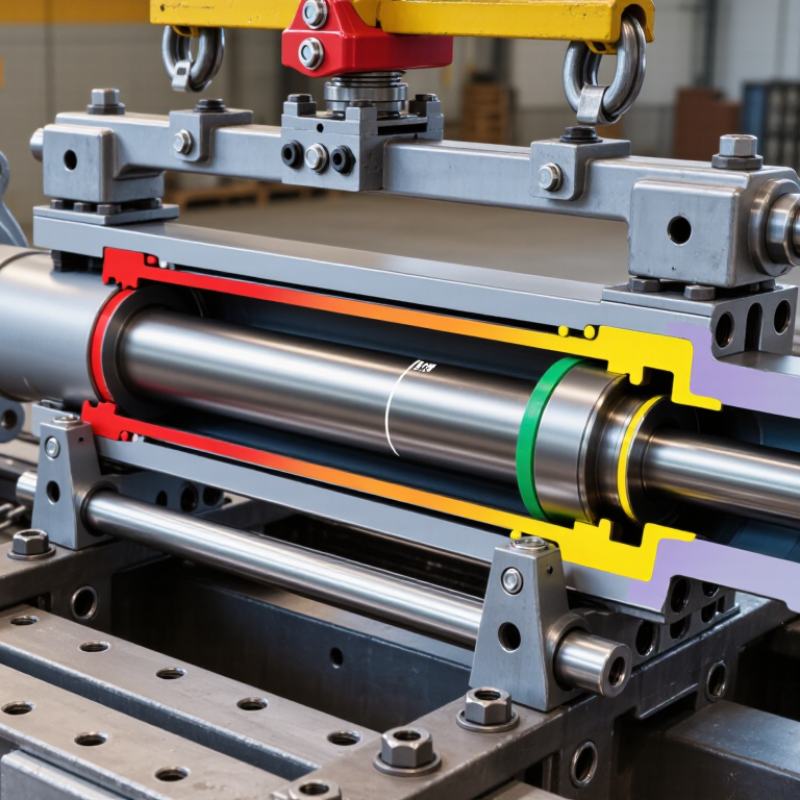
Define the Lifting Task and Operating Conditions
How to Choose the Right Lifting Cylinder?
Define the Lifting Task and Operating Conditions
Start by describing exactly what the cylinder must lift. Record the load, its center of gravity, the required travel, and where the cylinder can attach. A sketch helps. A 500-kilogram load may demand very different cylinder force depending on the linkage angle and mounting position. Calculate force throughout the lift, not just at the easiest point. Do not size a cylinder from load weight alone.
Next, define how the equipment will operate. Note lifting speed, cycle frequency, expected pauses, and available hydraulic pressure. Measure the space for both the retracted and extended cylinder, including room for pins and hoses. Check whether the cylinder’s force changes sharply as the linkage moves. A small angle change can matter.
Consider the environment, too. Dust, moisture, temperature swings, and vibration can affect seals and service life. Specify whether the load must remain raised during a pause, and assess suitable load-holding measures with a qualified designer. Keep side loads off the rod; guides or the machine structure should control movement. In practice, early measurements are sometimes wrong, and a first layout may need revision. That is worth catching before fabrication. Confirm calculations, mounting details, and ratings against the actual duty and equipment documentation.
Identify the Cylinder Type and Mounting Requirements
Identify the cylinder type before comparing bore size or stroke. Tie-rod cylinders suit many standard-duty machines and simplify seal service. Welded-body cylinders offer a compact profile, while mill-duty designs suit heavier applications. The mounting must match the load path: a flange mount resists straight-line force; a clevis or trunnion mount allows pivoting.
That detail matters. If the rod moves through an arc, a rigid mount can create side loading, accelerating wear on the rod, seals, and bearings.
Check the machine’s pressure, stroke, rod-end connection, and available space against the cylinder’s rated limits. ISO 6020-2:2015 specifies a 16 MPa medium-series cylinder interface, while ISO 6022:2006 covers 25 MPa heavy-duty cylinders. These are standard design ratings, not permission to exceed a manufacturer’s stated working pressure. Measure pin diameters and mounting-face dimensions, too; a few millimetres of mismatch can complicate installation.
Measure twice. I would also verify alignment across the full stroke, not only with the rod retracted.
A cylinder can fit neatly on a drawing and still bind when the machine frame flexes under load.
Calculate the Required Force, Stroke, and Speed
Choose a lifting cylinder from the load outward. Calculate force as pressure multiplied by effective piston area, then allow for friction, pressure losses, and uneven loading. For example, a 50 mm bore at 10 MPa produces about 19.6 kN of ideal extension force. A 20 mm rod reduces ideal retraction force to roughly 16.5 kN. These are theoretical figures, not safe working loads. ISO 4413:2010 provides safety requirements for hydraulic systems; confirm the design against actual operating conditions and the cylinder supplier’s rated limits. Measure twice.
Next, set stroke from the load’s full travel, including mounting geometry and any required clearance. Too little stroke leaves the load short; excessive stroke can add cost and increase instability. Estimate speed using flow divided by effective piston area. At 10 L/min, that 50 mm bore extends at approximately 85 mm/s, before losses. Check return flow and cushioning too. A long cylinder moving quickly may stop harder than expected. Slightly awkward, but real installations rarely match a perfect sketch.
Flow demand matters beyond the cylinder. The U.S. Department of Energy’s 2006 Improving Pumping System Performance sourcebook reports that pumping systems use nearly 20% of global electricity and 25–50% of energy in some industrial operations. That figure covers pumping systems, not cylinders specifically, but it shows why avoiding oversized flow demand matters. Recheck force, stroke, and speed under the heaviest load and cold-start conditions.
Check Pressure, Fluid, and Environmental Compatibility
How to Choose the Right Lifting Cylinder?
Check the cylinder’s pressure rating against the system’s maximum working pressure, including brief spikes during startup or when a load stops abruptly. The rating must also suit the pump, valves, hoses, and fittings; one weaker component can limit the whole setup. Compare actual operating pressure with the equipment documentation, not just the pump’s advertised output. Leave room for changing loads and operating conditions. Small details matter.
Fluid compatibility is just as important. Hydraulic oils and other approved fluids can affect seals, coatings, and internal parts differently, so confirm the cylinder materials match the fluid specified for your system. It can feel like a checkbox, but that assumption deserves a second look. Then consider the site: a cylinder near washdown spray, abrasive dust, salt air, or chemical vapors may need different protection from one used indoors. Check the expected temperature range too, since cold fluid may move slowly while heat can shorten seal life. A cylinder that fits on paper may still be a poor choice beside a hot machine or beneath a leaky roof. Verify the details with the technical documentation before installation.
Compare Safety Features, Standards, and Maintenance Needs
How to Choose the Right Lifting Cylinder?
Compare Safety Features, Standards, and Maintenance Needs
A lifting cylinder should suit the entire lifting setup, not just the required force. Check its rated capacity, stroke, mounting points, and operating pressure against the equipment and load. Look for pressure relief and load-holding features, but confirm where they sit in the hydraulic system. A cylinder alone may not prevent a load from descending if a hose fails. Small details matter.
Ask for documentation showing which technical standards apply to the cylinder and its intended use. Requirements vary by application and location, so verify them with a qualified supplier or engineer. I would not treat a certificate as proof that a cylinder fits your setup. Check model details and operating limits. That extra check can feel tedious.
Maintenance needs affect safety over time. Inspect the rod for scratches or corrosion, and watch for oil around seals and connections. Check hoses, pins, and mounting points for wear or looseness. Follow the service intervals in the equipment manual, and record repairs and inspections. If the cylinder moves unevenly, leaks, or makes unusual noises, stop using the equipment and have it assessed. Guessing can be costly.