Sourcing Grape Jelly wholesale worldwide requires more than comparing prices. Buyers must examine ingredients, texture, packaging, certifications, and delivery reliability. A supplier may offer an attractive quote, yet overlook important details. That mistake can become expensive.
This guide explains how to identify dependable manufacturers, trading companies, and regional distributors. It considers grape variety, sweetness, color, fruit content, pectin, and allergen controls. Buyers should request current specifications and production samples before placing large orders. A practical sample review should check flavor balance, spreadability, seal quality, and label accuracy. Small details matter.
Reliable sourcing also involves factory verification and document review. Useful records may include food-safety certificates, laboratory reports, traceability procedures, and recent audit results. Buyers should confirm minimum order quantities, production capacity, payment terms, shelf life, and export experience. Shipping conditions require equal attention. Glass jars need strong cartons, while plastic containers may reduce breakage. Incoterms, port selection, customs documents, and insurance should be agreed in writing.
Global purchasing is rarely perfect. Supplier websites can be outdated. Certificates may require independent verification. Even a successful sample cannot guarantee every future batch. That is why staged orders and quality inspections are sensible. Local import requirements must also be checked with qualified professionals. A trustworthy supplier welcomes clear questions and provides consistent answers. The goal is not simply to find cheap Grape Jelly. It is to build a dependable supply chain with measurable quality, transparent communication, and realistic risk controls. Some uncertainty remains. Good sourcing makes it visible.
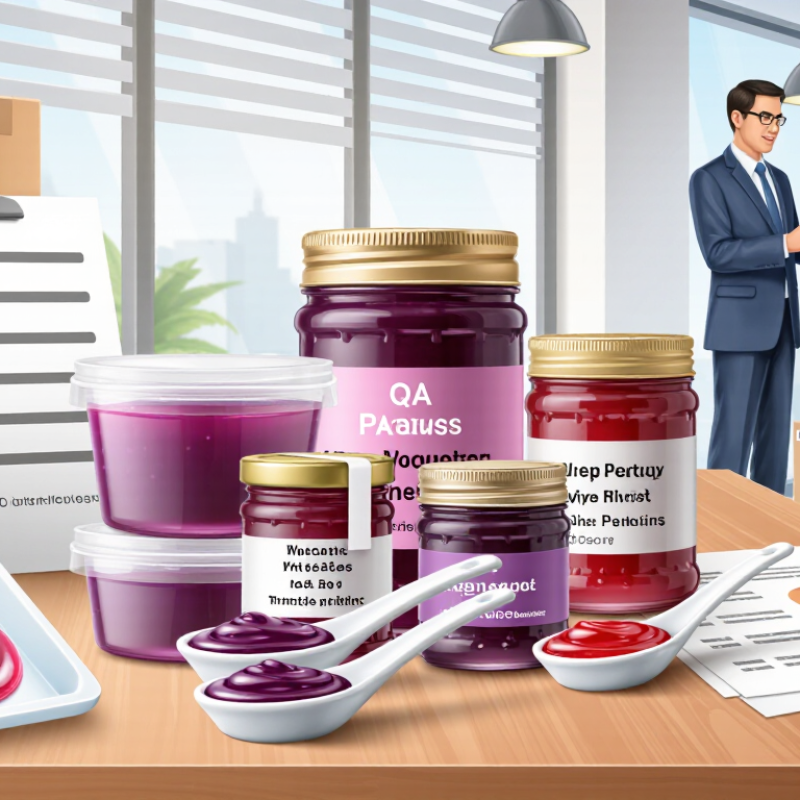
Wholesale grape jelly sourcing starts with measurable specifications, not attractive packaging. In the United States, 21 CFR Part 150.140 identifies grape jelly with a minimum of 65% soluble solids. Many buyers also request a pH near 3.0–3.5, stable gel strength, and consistent color. These values should be verified by an independent laboratory.
USDA Foreign Agricultural Service data estimated global grape production at roughly 78 million metric tons in 2024/25. This supports broad raw-material availability, but supply volume does not guarantee suitable jelly quality. Ask suppliers about grape variety, juice concentration, added sugar, pectin type, and cooking temperature. Request a recent certificate of analysis. Check Brix, pH, microbiological results, net weight, and water activity. Small details matter.
Packaging requirements vary by destination. Glass jars need impact testing and secure closures. Plastic containers may reduce freight weight, but heat resistance must be confirmed. Codex food-labeling guidance supports clear ingredient declarations, allergen statements, lot codes, and best-before dates. European buyers may also request nutrition data per 100 grams, while other markets prefer household portions. Shelf life often reaches 12–24 months, yet this depends on processing and storage. Do not trust a generic claim. I would not approve a shipment from one laboratory report alone. A retained sample, factory audit, and trial order provide stronger evidence. Mistakes still happen, especially when translated specifications hide different measurement methods.

Reliable grape jelly sourcing begins with verifying the manufacturer, not comparing prices. Grand View Research estimates the global jams, jellies, and preserves market will expand at roughly 3.5% annually through 2030. That growth attracts new suppliers, but not every factory has stable fruit sourcing or consistent processing controls.
Request a current HACCP or ISO 22000 certificate, a product specification, and a recent certificate of analysis. Check grape percentage, soluble solids, pH, preservatives, allergens, and microbiological limits. A dependable supplier should explain its batch coding and traceability within minutes, not days. Ask for production photos, filling-line capacity, minimum order quantity, and monthly output. Then compare these details with your forecast, packaging format, and destination requirements.
Sample testing is essential. Measure color, texture, sweetness, seal strength, and performance after heat exposure. The USDA Foreign Agricultural Service regularly highlights traceability and food-safety documentation as important factors in processed-food trade. UN Comtrade data also shows substantial international movement under HS 2007, covering jams, fruit jellies, and similar preparations. However, this code does not isolate grape jelly, so trade figures need careful interpretation. That limitation is easy to overlook. I would request two production batches, because one attractive sample can hide inconsistent pectin levels or uneven grape flavor. A long-term agreement should depend on inspection rights, complaint procedures, approved samples, and clearly stated delivery terms.
Sourcing grape jelly wholesale worldwide requires more than comparing the quoted carton price. I examine the landed cost, including freight, insurance, duties, and port handling. A low factory price can become expensive after shipping. Currency changes also affect the final margin. Request prices for the same jar size, fruit percentage, sweetness level, and packaging format. Otherwise, the comparison is misleading.
Minimum order quantities deserve careful attention. Some suppliers offer flexible trial orders, while others require full pallets or containers. Samples reveal more. I test texture, color, aroma, spreadability, and seal strength before discussing large volumes. Laboratory details matter too. Brix shows soluble solids, while pH supports consistency and safe processing. Microbiological reports should match the production batch, not an old sample. I once focused too heavily on price and underestimated storage space. That mistake reduced the real profit.
Reliable suppliers should provide current food safety documents, such as HACCP-based controls, ISO 22000 certification, and certificates required by the destination market. Certification alone does not guarantee excellent jelly. Audit the facility when possible, or use an independent inspection service. Check ingredient declarations, allergen controls, traceability codes, and shelf-life evidence. Product quality also includes clean labeling, accurate fill weights, undamaged cartons, and stable delivery temperatures when required. My comparisons are never perfect; supplier data can be incomplete, and testing adds cost. Still, documented evidence is more dependable than attractive promises.
| Sourcing Market | Indicative Bulk Price USD/kg, FOB or EXW | Typical MOQ | Common Wholesale Packaging | Typical Soluble Solids °Brix | Typical pH Range | Certification Availability | Key Quality Checks | Typical Lead Time |
|---|---|---|---|---|---|---|---|---|
| East Asia | $1.20–$2.30 | 500–1,000 kg | 20–25 kg pails; 200–250 kg drums; retail jars by request | 65–68 | 3.0–3.5 | HACCP, ISO 22000 or FSSC 22000; organic and halal options may be available | Brix, pH, viscosity, color, yeast and mold, preservative level, pesticide-residue compliance | 20–40 days after artwork and deposit approval |
| South Asia | $1.30–$2.50 | 500–1,000 kg | 5–25 kg food-grade pails; drums for industrial use | 65–68 | 3.0–3.6 | HACCP, ISO 22000, BRCGS or equivalent; halal and kosher options are commonly requested | Fruit or juice content, gel strength, water activity, microbiology, allergen controls, heavy metals | 25–45 days, depending on packaging and export documentation |
| Central and Eastern Europe | $1.80–$3.30 | 500–1,500 kg | 25 kg pails; 200 kg drums; glass jars and food-service tubs | 60–65 | 3.0–3.5 | IFS, BRCGS, FSSC 22000 or ISO 22000; EU organic certification where applicable | EU contaminant limits, pesticide residues, label compliance, texture, color stability, shelf-life testing | 15–35 days for standard products |
| Mediterranean Europe | $1.90–$3.40 | 500–1,000 kg | 20–25 kg pails; drums; retail and food-service formats | 60–67 | 3.0–3.6 | HACCP, IFS, BRCGS and ISO 22000; organic, halal and kosher options vary by facility | Grape variety, natural color, seed or skin particles, viscosity, microbial safety, sugar profile | 20–40 days, with longer timing during harvest or custom production |
| North America | $2.40–$4.80 | 500–2,000 kg | 20 kg pails; 200 kg drums; retail jars and institutional packs | 65–68 | 3.0–3.5 | Preventive Controls or HACCP; third-party food-safety audits; organic, kosher and halal options | FDA or destination-market compliance, nutrition facts, allergen statement, fill weight, seal integrity | 15–30 days for standard stock; 30–60 days for private-label packaging |
| Oceania | $2.70–$5.20 | 500–1,500 kg | 20–25 kg pails; drums; food-service tubs and jars | 65–68 | 3.0–3.5 | HACCP, ISO 22000 or equivalent; organic, halal and allergen-controlled production may be available | Food Standards Code compliance, microbiological limits, sugar content, viscosity, packaging migration and shelf life | 20–45 days, excluding ocean freight |
When sourcing grape jelly wholesale worldwide, food safety verification should begin before price negotiation. The WHO and FAO estimate that contaminated food causes about 600 million illnesses annually. That figure makes supplier checks practical, not cosmetic. Request a current HACCP plan, laboratory certificates, allergen controls, and full batch traceability. Review whether testing covers yeast, mold, pH, preservatives, and pesticide residues where relevant. A certificate alone is not proof. I would also compare its laboratory accreditation, sampling date, and product lot number.
Packaging must protect the jelly through long sea shipments and repeated handling. Inspect jar seals, cap torque, leakage resistance, pallet stability, and temperature exposure. Food-contact packaging should meet the destination market’s migration requirements. Label approval deserves equal attention. Check the ingredient order, nutrition panel, allergen statement, net quantity, lot code, best-before date, storage instructions, and required language. Codex Alimentarius provides useful international labeling principles, but national rules can differ sharply. A label accepted in one market may fail in another.
Tips: Ask for production photos and a retained sample. Match every document to the same lot. Confirm the importer-of-record arrangement before shipment. Review customs tariff classification, facility registration, prior-notice rules, and certificate requirements with a qualified broker. GS1 traceability guidance supports standardized product and lot identification, yet real warehouse practices can remain inconsistent. That weakness deserves honest checking. Start with a small trial shipment, record defects, and revise the supplier scorecard.
How to Source Grape Jelly Wholesale Worldwide?
Sourcing grape jelly wholesale worldwide requires more than comparing jar prices. The real work begins with shipping lanes, import rules, and supplier controls. Request a full product specification before requesting quotations. Include jar size, net weight, ingredients, allergen statements, shelf life, and case dimensions. Ask for production capacity and normal lead time. Small details matter. A pallet may contain 60 cases, yet port charges can sharply change the landed cost.
Confirm the likely HS classification with a licensed customs broker in the destination country. Do not rely only on supplier estimates. Requirements may include a commercial invoice, packing list, bill of lading, certificate of origin, and health documents. Check whether labels need local language, nutrition formats, date marking, or importer details. Build delivery terms around actual control. With FOB, the buyer manages main freight; with DDP, responsibilities require careful verification. DDP can look simple. However, tax treatment and clearance authority may still need review.
Before placing a large order, inspect a production sample and test seal integrity after transport simulation. Record batch codes, carton photos, and temperature exposure during transit. Use a written supplier scorecard covering response time, defect rates, document accuracy, and corrective action. A missed document can delay an entire container. Keep a backup supplier, but do not approve one without an audit or independent inspection. My early sourcing plans underestimated port congestion and overtrusted promised lead times. That mistake taught me to add buffer stock and milestone checks. Even good systems need revision.
A&B has become the leader in fresh packing and cleaning equipment for fruits and vegetables worldwide. We have achieved this by relentlessly working to produce new and innovative ideas, along with the best customer service on Earth combined with hard working, dedicated, loyal employees and the latest industrial manufacturing techniques. We are now proud to say that we manufacture The Fulcrum Fresh Harvester, this is a one of a kind Berry Harvester that was specifically designed to handle fresh pick blueberries.
732 W. Saint Joseph Street
Lawrence, MI 49064
Phone: 269-539-4700 Fax: 269-539-4705
sale@industrialpackagingmachines.com