Choosing the right Rust Cleaning Agent can feel simple until rust appears on a delicate tool, painted panel, or bathroom fitting. Different surfaces react differently. A strong formula may remove heavy corrosion quickly, yet it can dull finishes, irritate skin, or damage nearby materials. The best choice depends on the metal, rust depth, application area, and cleaning method.
In this guide, seven practical tips will help you compare rust removers with greater confidence. We will examine active ingredients, surface compatibility, contact time, ventilation, rinsing requirements, and protective aftercare. A product label matters. So does the condition of the object in front of you. A wire brush and a mild chelating cleaner may suit a small hand tool, while thick corrosion on outdoor steel may require a different approach. Always test a hidden spot. It takes minutes.
No product is perfect.
From hands-on maintenance experience, I have learned that speed can be misleading. A cleaner that works in five minutes may leave flash rust if the surface is not dried and protected properly. Some online recommendations also ignore coatings, drainage, or household ventilation. That is a serious gap. Reliable decisions require more than impressive before-and-after images. They require careful instructions, realistic expectations, and respect for the manufacturer’s safety guidance. This article keeps those details in view, helping you choose an effective, responsible, and surface-appropriate Rust Cleaning Agent.
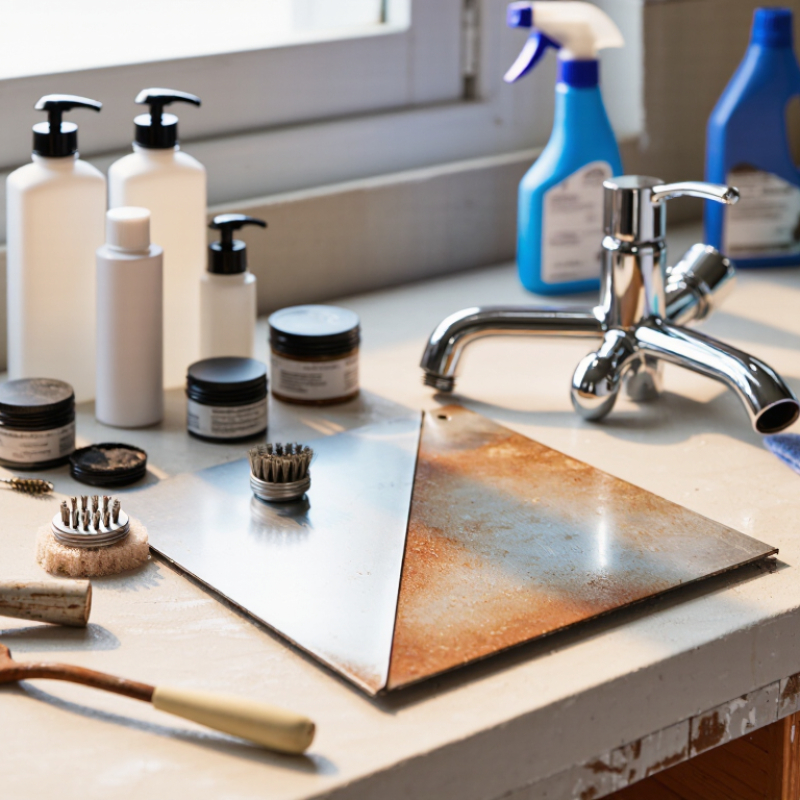
Rust is not one problem. Identify red rust, flash rust, pitting, or corrosion beneath a coating. Check the metal under bright light. A white cloth can reveal loose oxide and oily residue. ISO 9227 helps compare salt spray resistance through standardized NSS, AASS, or CASS testing. However, it does not define a universal “light” or “heavy” rust category. Acceptance limits require separate specifications.
That distinction matters. A cleaner suitable for thin flash rust may fail against deep pitting. Match the treatment to the substrate, rust depth, coating condition, and contamination. Acidic products can act quickly, but they may attack sensitive alloys. Alkaline cleaners often remove oil better. Read the technical data and verify the intended surface. Do not guess.
Test a small hidden area first. Note the dwell time, surface temperature, color change, and rinse quality. Use a clean nylon brush, not an aggressive tool that creates scratches. After drying, inspect pits and edges again. My early mistake was judging success by shine alone. Some surfaces looked clean but still held active corrosion in tiny cavities. Compare results with relevant ISO 9227 exposure evidence when available, while remembering that laboratory salt spray cannot reproduce every outdoor condition. Record the cleaner concentration and contact time. Small details matter.

7 Tips for Choosing the Best Rust Cleaning Agent?
Start with the substrate. Steel, galvanized metal, and aluminum react differently to cleaners. Acid agents, often based on mineral or organic acids, work quickly at low pH. They dissolve iron oxides, but may also etch metal or release hydrogen. Chelating agents bind iron ions instead of aggressively dissolving the surface. They usually offer better control on delicate parts. Phosphate agents convert or stabilize remaining rust through surface reactions. Their performance depends on pH, contact time, and surface preparation.
Compare pH and active chemistry, not labels alone. A pH below 3 may remove heavy rust quickly, while near-neutral chelators can reduce attack on sound steel. Always check concentration and inhibitor data. Measure, do not guess. The NACE IMPACT study estimated global corrosion costs at 2.5 trillion dollars annually, equal to about 3.4% of global GDP. That scale makes process control more than a workshop detail. It affects maintenance budgets and asset life.
Match the chemistry to rust thickness, temperature, and rinsing capacity. Thick scale may need acid treatment, followed by immediate rinsing and drying. Light flash rust may respond better to a chelator or phosphate treatment. Residue matters. Phosphate films can support later coating, but excessive deposits may weaken adhesion. Follow the safety data sheet and test a small area first. No product is universally best. I would also record pH before and after use, because bath chemistry changes during work. That step is easy to skip, and often worth reviewing. (NACE International, IMPACT Study; ISO 8501-1)
| Tip | Agent Type | Typical Active Chemistry | Indicative pH | How It Removes Rust | Best Applications | Main Advantages | Key Limitations and Precautions |
|---|---|---|---|---|---|---|---|
| 1 Match the pH to the rust level and substrate. | Mineral acids | Phosphoric acid, sulfamic acid, citric acid, or other formulated acids. | Approximately 1–3 (formulation-dependent) | Dissolves iron oxides through acid–base reactions and can convert some surface rust into more stable iron phosphate compounds when phosphoric acid is present. | Heavy rust, steel parts, tools, and industrial pre-treatment where rapid action is required. | Fast reaction, effective on thick oxide deposits, and available in many water-based formulations. | May attack bare steel, zinc, aluminum, concrete, and sensitive coatings. Use ventilation, chemical-resistant gloves, eye protection, and controlled contact time. |
| 2 Choose chelation when substrate protection is important. | Chelating agents | Citric acid, gluconates, EDTA-type compounds, or biodegradable aminopolycarboxylates. | Approximately 3–10 | Binds iron ions and helps keep dissolved iron in solution, selectively removing iron oxide without relying mainly on aggressive metal dissolution. | Precision cleaning, restoration, mixed-metal assemblies, and applications requiring lower attack on sound metal. | Generally slower and more controllable; often suitable for delicate parts and some mixed-metal systems. | Performance depends strongly on pH, temperature, concentration, and iron loading. Some chelators can increase wastewater treatment requirements. |
| 3 Use phosphate chemistry when short-term corrosion protection is useful. | Phosphate-based agents | Phosphoric acid, phosphate salts, and formulated phosphate conversion systems. | Approximately 2–5 | Dissolves or loosens iron oxides and may form an adherent iron phosphate conversion layer on suitable steel surfaces. | Rust removal before painting, coating preparation, and light-to-moderate corrosion treatment on carbon steel. | Can combine cleaning and conversion; may improve paint adhesion when the surface is properly rinsed and dried. | Does not replace a primer or durable coating. Residues must be controlled, and phosphate discharge may be regulated because it can contribute to eutrophication. |
| 4 Consider mild organic acids for light rust and household-scale work. | Mild organic acids | Citric acid, oxalic acid, or lactic-acid-based formulations. | Approximately 2–4 | Provides acidity and, in some cases, iron-binding groups that loosen and dissolve light iron oxide deposits. | Light surface rust, removable parts, maintenance cleaning, and applications where a lower-odor option is preferred. | Usually easier to handle than strong mineral acids and often compatible with controlled soaking processes. | Often slower on heavy scale. Oxalic acid can be harmful if swallowed or absorbed and still requires appropriate personal protective equipment. |
| 5 Check compatibility with the base metal and nearby materials. | Neutral or near-neutral chelating systems | Buffered gluconate, citrate, or aminopolycarboxylate systems with corrosion inhibitors. | Approximately 6–9 | Complexes dissolved iron and loosens oxide while reducing the acidity-driven attack associated with low-pH cleaners. | Mixed-metal equipment, maintenance departments, sensitive finishes, and parts with seals or adjacent nonferrous metals. | Lower risk of hydrogen-related concerns and substrate etching compared with strongly acidic cleaners, when properly formulated. | May require longer dwell time, agitation, or elevated temperature. Always verify compatibility with aluminum, zinc, copper alloys, rubber, and painted surfaces. |
| 6 Compare cleaning speed with the required surface finish. | Inhibited acid cleaners | Low-pH acid combined with wetting agents, surfactants, and corrosion inhibitors. | Approximately 1–3 | Rapidly dissolves iron oxides; inhibitors help reduce, but do not eliminate, attack on exposed base metal. | Time-sensitive maintenance, heavily rusted carbon-steel components, and controlled immersion or spray cleaning. | High productivity and improved wetting compared with an unformulated acid solution. | Inhibitors have limits and can be affected by temperature, concentration, and contamination. Do not assume inhibition makes the product safe for every alloy. |
| 7 Evaluate the complete process, not only the active ingredient. | Any selected chemistry with a validated post-treatment | Cleaner, water quality, surfactants, inhibitors, rinse additives, and a final corrosion-protection step. | Depends on system | The active chemistry removes or converts rust, while rinsing and drying prevent residues from accelerating flash rust. | All applications, especially components that will be painted, stored, assembled, or exposed to humidity. | Improves repeatability, coating performance, storage life, and overall corrosion resistance. | Rinse thoroughly where required, verify surface pH, dry promptly, manage wastewater according to local rules, and test a small area before full-scale use. |
Note: The pH ranges are indicative only. Actual values and performance vary with concentration, buffering, temperature, contact time, contamination, and the complete product formulation. Always consult the safety data sheet and perform a compatibility test before use.
Choosing a rust cleaning agent requires more than checking removal speed. ASTM G31/G31M emphasizes controlled immersion testing, specimen preparation, exposure time, temperature, and solution monitoring. These principles help compare cleaners against the actual metal, not just a dramatic before-and-after photograph.
Use seven practical checks. Identify the substrate, coating, and nearby fasteners first. Then review pH, chloride content, temperature limits, and recommended contact time. Test a small hidden area with a clean steel coupon. Record mass loss before and after exposure. ASTM G31 encourages measurable corrosion-rate calculations, which reveal damage that visual inspection can miss. Keep the cleaner, rinse water, and drying method consistent. Small differences matter.
The NACE IMPACT study estimated global corrosion costs at about 2.5 trillion dollars annually, equal to roughly 3.4% of global GDP. That figure explains why compatibility deserves attention. A strong acid may remove rust quickly, yet leave flash rust, hydrogen-related concerns, or a roughened surface. Alkaline products can also affect aluminum, zinc, painted steel, and elastomers. Not every laboratory result predicts field performance. That is the uncomfortable part. Real surfaces contain scratches, welds, salts, and trapped moisture. Repeat the test when possible, inspect the surface under magnification, and document changes after 24 to 72 hours. A cleaner that performs well today may create tomorrow’s corrosion problem.
7 Tips for Choosing the Best Rust Cleaning Agent
Tip 1: Read the Safety Data Sheet before opening the container. Focus on Sections 2, 8, and 10. These sections reveal hazards, exposure controls, and chemical stability. Tip 2: Check the ingredients and required protective equipment. Strong acids may damage skin, eyes, and nearby metal surfaces. Do not trust a mild smell. Odor is not a reliable safety measure.
Tip 3: Compare the product’s VOC content with applicable local limits. VOC rules can differ by location, industry, and application method. Tip 4: Review OSHA exposure limits for listed chemicals. Then confirm whether workplace ventilation can maintain safe concentrations. A small workshop may need local exhaust ventilation, not only an open door. Tip 5: Select controls in this order: substitution, engineering controls, work practices, and personal protective equipment. Gloves alone are rarely enough.
Tip 6: Confirm emergency details in the SDS, including eye contact, spills, storage, and disposal guidance. Keep an eyewash station within immediate reach. Tip 7: Test the cleaner on a hidden rusted area first. Observe discoloration, pitting, residue, and vapor release. I have found that a product performing well on bare steel may harm painted edges. That assumption can fail. Record the test conditions, including temperature, contact time, and ventilation. Then ask a qualified safety professional to review uncertain exposure controls before regular use.
7 Tips for Choosing the Best Rust Cleaning Agent
Tip 1: Start with the manufacturer’s test data, not the strongest formula. Test results should show concentration, dwell time, temperature, and rust severity. These details reveal how the agent performed under controlled conditions. In my workshop experience, a stronger solution often created more residue, not better results. Small details matter.
Tip 2: Match the concentration to the metal and corrosion level. Light surface rust may need a diluted solution, while deep scale can require a longer dwell time. Never assume more chemical means faster cleaning. Apply the recommended amount to a small hidden area first. Check for staining, pitting, or surface dullness. I once ignored this step and regretted it.
Tip 3: Treat dwell time as a measured process. Use a timer, and keep the surface evenly wet. Manufacturer data may specify different times for steel, coated parts, or mixed metals. Do not let the product dry unless testing instructions allow it. A dry film can make rinsing difficult.
Tip 4: Rinse thoroughly with clean water after treatment. Pay attention to seams, threads, and narrow grooves where residue hides. Some materials need immediate drying to prevent flash rust. Compressed air can help remove trapped moisture, but ventilation remains essential. Record the concentration and contact time used. These notes improve repeatability and expose weak assumptions in your process.
A&B has become the leader in fresh packing and cleaning equipment for fruits and vegetables worldwide. We have achieved this by relentlessly working to produce new and innovative ideas, along with the best customer service on Earth combined with hard working, dedicated, loyal employees and the latest industrial manufacturing techniques. We are now proud to say that we manufacture The Fulcrum Fresh Harvester, this is a one of a kind Berry Harvester that was specifically designed to handle fresh pick blueberries.
732 W. Saint Joseph Street
Lawrence, MI 49064
Phone: 269-539-4700 Fax: 269-539-4705
sale@industrialpackagingmachines.com