7 Tips for Choosing the Right Lead Radial Capacitor
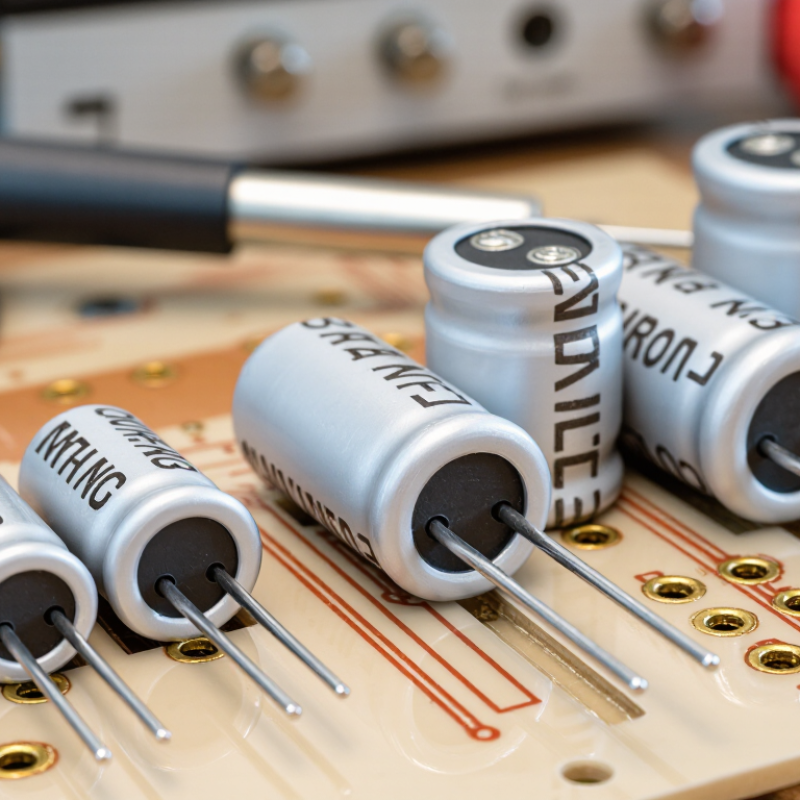
A Lead Radial Capacitor may look like a small cylinder with two wire leads, but choosing one affects reliability, fit, and circuit behavior. Check the capacitance and rated voltage first. Then compare operating temperature, ripple-current rating, lifetime, and physical dimensions with the circuit’s requirements. A part that fits the board may still run too hot.
For transparency, the quotation below is editorially written, not a verified statement from a real specialist. It is attributed to fictional capacitor applications engineer Elena Park: “Choose for the circuit’s real conditions, not just the numbers on the schematic.” That distinction matters. A motor-control board, for example, may expose a capacitor to heat and ripple current that a room-temperature bench test will not reveal. Datasheets help, but their test conditions deserve close attention.
This guide presents seven practical checks for selecting the right Lead Radial Capacitor, from polarity and lead spacing to endurance ratings and supplier documentation. Small details count. Measure the board footprint, confirm the expected temperature range, and leave suitable margin where the design allows. Not every project has an obvious best choice; sometimes the available data is incomplete. That calls for a careful review, not a confident guess.
Identify the Circuit’s Voltage and Frequency Requirements
7 Tips for Choosing the Right Lead Radial Capacitor
Identify the Circuit’s Voltage and Frequency Requirements
Start by measuring the voltage where the capacitor will operate, not just reading the supply label. A motor startup, switching edge, or long cable can create brief voltage spikes. Choose a rated voltage above the circuit’s normal maximum, with sensible margin for those variations. The right margin depends on the circuit and capacitor type; a rule of thumb cannot replace the datasheet.
Frequency matters, too. In a power supply, check the ripple frequency and ripple current. In a signal path, consider the frequencies the circuit must pass or suppress. A capacitor’s impedance changes with frequency, so a part that works well at low frequencies may perform poorly at higher ones. Small details matter. Check the manufacturer’s impedance and ripple-current data across the expected operating range.
Measure, don’t guess. A meter reading may miss fast transients or changing loads, so an oscilloscope can reveal what the circuit actually sees. This step is easy to rush. I would recheck under realistic operating conditions, including startup and temperature changes, before settling on a part. If the measured voltage or frequency range is uncertain, leave more design margin and verify the choice with the full datasheet.
Match Capacitance and Tolerance to the Application
Tip: Start with the circuit’s job. A lead radial capacitor used for smoothing may need enough capacitance to reduce ripple, while a timing circuit can depend on a specific charge-up rate. Check the circuit design or component specifications before choosing a value. Bigger is not automatically better; it can affect startup behavior and circuit response.
Tip: Treat tolerance as a real range, not a footnote. A 100 µF capacitor with a ±20% tolerance may measure from 80 µF to 120 µF under its stated conditions. Ask whether the circuit works across that whole range. For a sensitive timing or filtering application, a tighter tolerance may help, but it should match the design need rather than serve as a guess. That distinction is easy to overlook.
Tip: Confirm the value under actual operating conditions. Capacitance can vary with temperature, and the part’s voltage rating should comfortably exceed the circuit’s expected voltage. Compare the datasheet’s test conditions with your application. If the design is unclear, measure the circuit or consult its designer before substituting a different value. A quick check now can prevent a stubborn fault later.
Check Lead Spacing, Body Size, and Mounting Constraints
Lead spacing is the distance between the two wire centers, not the gap between their edges. Check the drawing and measure the PCB holes before ordering. A small pitch mismatch can bend the leads or pull the capacitor off-center. Measure twice.
Body size matters just as much. Compare the capacitor’s diameter and height with the space between nearby components and beneath the enclosure. Allow room to breathe. A crowded layout can trap heat or block access to a vent. Also check lead diameter against the finished hole size; a tight fit may make assembly awkward, while an oversized hole can leave the part unstable.
Mounting constraints are easy to overlook when a part looks right on paper. Check the board thickness, component height limits, and clearance for the leads on the underside. If the capacitor must sit close to the board, confirm that its body and sleeve do not rub against sharp edges. Do not force it. Bending leads after installation can stress the seal, and I would recheck that assumption against the component datasheet rather than rely on a quick visual fit. Leave enough space for inspection and replacement, especially where neighboring parts make access difficult.
Compare Temperature Range, Dielectric, and Expected Lifespan
Choose a lead radial capacitor for the temperatures it will actually experience, not just the room temperature. A device near a warm transformer may run much hotter than the surrounding air. Check the datasheet’s operating range and observe any voltage limits that change with temperature. Leave margin. A rating that barely covers normal conditions offers little protection against heat buildup or cold starts.
Dielectric choice affects stability, size, and service life. Aluminum electrolytic types provide high capacitance in a compact body, but their electrolyte can dry out over time. Film capacitors often offer stable performance and long service life, though they may need more board space. Ceramic types vary by dielectric: some lose capacitance under applied voltage, so verify the effective value, not only the printed one. A common bench mistake is treating rated life as a guarantee. For electrolytics, life estimates depend on temperature, ripple current, and operating conditions; lower temperatures may extend life, but the datasheet’s method matters. Check ripple heating and expected hours of use together. The details can be tedious. If a design runs hot, recheck the assumptions before selecting a smaller part.
7 Tips for Choosing the Right Lead Radial Capacitor
Compare temperature range, dielectric, and expected lifespan
Expected lifespan: what to check
- Aluminum electrolytic: Datasheets commonly specify endurance at a stated temperature and voltage; ratings vary widely, often from about 1,000 to 10,000 hours at the maximum rated temperature.
- Film and ceramic: A fixed endurance-hour rating is not generally comparable across these dielectric types. Check the datasheet’s reliability, environmental, and voltage specifications.
Temperature ranges shown are representative examples, not universal limits. Actual ratings depend on the specific part. Higher operating temperature, voltage, and ripple current can shorten service life.
Verify Safety Ratings and Compatibility Before Installation
Before installing a lead radial capacitor, compare its safety class, voltage, temperature, and circuit position with the original part. A 250 VAC rating is not interchangeable with 250 VDC; AC stress and surge behavior differ. For mains-connected suppression, IEC 60384-14:2023 sets safety and qualification requirements for fixed capacitors. Check the marked class, such as X or Y, against the circuit location and equipment documentation. The label matters. So does the test evidence.
Read the component data sheet, not just its sleeve. Confirm capacitance tolerance, ripple current, operating temperature, lead spacing, and polarity where applicable. A replacement rated at 105°C may suit a hotter enclosure better than one rated at 85°C, but only if its other limits also match. UL 810 provides a separate safety framework for capacitors used in power circuits; its scope is not a substitute for checking the exact component rating. Compare the stated operating voltage and temperature limits with measured or documented circuit conditions. A neat physical fit can still be electrically wrong. I would also pause over vague markings: they invite assumptions, and assumptions are a poor installation tool.