What is a Wafer Roll Machine and How Does It Work?
A Wafer Roll Machine is an essential device in the food industry. It produces wafer rolls, a popular treat enjoyed worldwide. This machine has the ability to create thin, crispy wafers that are rolled into delicious shapes. Many consumers love these unique snacks for their light texture and sweet taste.
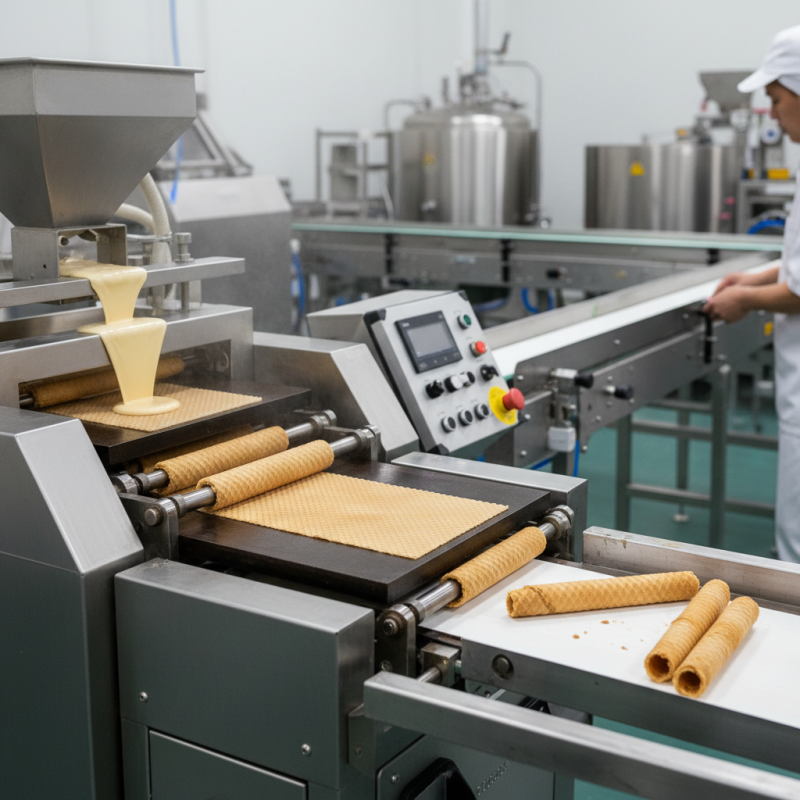
The process of using a Wafer Roll Machine is fascinating. Ingredients are mixed and poured onto the machine’s heated surface. As the batter cooks, it transforms into golden wafers. These wafers are then carefully rolled into cylinders. This journey from batter to snack is quite magical. There is room for improvement, as not every batch comes out perfectly. Sometimes, the rolls may crack or lack the desired crispiness. Understanding these challenges can lead to better designs and processes.
The Wafer Roll Machine plays a significant role in production lines. Its efficiency can save time and increase output. Yet, mastering the machine requires skill and practice. Knowing how to adjust settings is crucial for crafting the perfect wafer roll. Each creation offers a chance to innovate and perfect techniques, making the journey of production exciting.
What is a Wafer Roll Machine?
A wafer roll machine is an essential piece of equipment in the snack food industry. It creates delightful wafer rolls that are both crispy and tasty. The process begins with a batter made from basic ingredients like flour, sugar, and water. This mixture is spread onto a hot plate and cooked until golden brown.
Once cooked, the hot wafer is removed and placed on a forming module. The machine shapes it into a roll. This stage is fascinating. The wafer is pliable and must be handled quickly. It’s crucial to achieve the perfect curve without cracks. Each machine operates differently, but precision is key. Any deviation can lead to waste and inconsistency.
Despite its efficiency, the wafer roll machine is not without challenges. Adjustments may be needed to accommodate different batter consistencies. Operators must monitor temperatures closely. A small error in heat levels can ruin the batch. It’s a delicate balance of heat, timing, and technique to produce the perfect wafer roll. This process requires a keen eye and experience, making it both rewarding and demanding.
The History and Evolution of Wafer Roll Machines
The history of wafer roll machines dates back to the early 20th century. Initially, simple manual machines dominated the landscape. These machines had limited capacity and functionality. Over time, the demand for wafer products grew. In the 1940s, advancements led to semi-automatic machines. These innovations improved production speed. Reports show that global wafer production reached 3.5 million tons in 2020, signifying significant growth.
The evolution continued through the 1980s and 1990s, with the introduction of fully automated machines. These machines could produce thousands of wafer rolls per hour. They also incorporated technology for precision and consistency. A 2021 industry report highlighted that automation increased production efficiency by 30%. Yet, challenges remain. Many factories still use outdated equipment. This reliance can lead to quality control issues and higher labor costs.
Today, the wafer roll machine industry faces the pressure to innovate continuously. Sustainability is now at the forefront. Reports suggest that companies must reduce waste and energy use. The need for eco-friendly processes complicates development. Thus, manufacturers grapple with balancing efficiency and environmental responsibility.
Key Components of a Wafer Roll Machine
A wafer roll machine is essential for producing thin, crispy wafer rolls. Understanding its key components can illuminate how this machinery operates efficiently. The main parts include the baking plates, a batter dispenser, and a cooling unit. Each component plays a unique role in creating perfect wafer rolls.
The baking plates are heated surfaces where the batter is poured. They are crucial for achieving the desired texture. Without proper heat distribution, the wafers may turn out uneven and unsatisfactory. A batter dispenser ensures the right amount is applied. If the batter is too thick or thin, it can ruin the final product. This part requires careful calibration.
After baking, the wafer rolls need cooling. The cooling unit prevents them from becoming soggy. However, achieving the ideal cooling temperature is often tricky. Too quick can lead to cracks, and too slow can make them lose crispiness. Therefore, the delicate balance during cooling is key to quality. Each component must work harmoniously, as a malfunction in one can affect the entire process.
What is a Wafer Roll Machine and How Does It Work? - Key Components of a Wafer Roll Machine
| Component | Function | Material Used | Maintenance Frequency |
| Mixing Chamber | Mixes batter ingredients | Stainless Steel | Daily |
| Conveyor Belt | Transports batter to cooking zone | Food-grade PVC | Weekly |
| Cooking Plates | Cooks the wafer | Aluminum with non-stick coating | Monthly |
| Cooling System | Cools the freshly baked wafers | Plastic & Metal Components | Every 6 months |
| Roller Mechanism | Presents the wafer into rolls | Carbon Steel | Annually |
How a Wafer Roll Machine Operates: Step-by-Step Process
A wafer roll machine creates delicious, thin rolls that can be filled with various sweet or savory ingredients. Understanding its operation can enhance efficiency. The process begins with the preparation of the batter mix, which typically includes flour, sugar, and water. This mixture is poured onto a heated surface.
Once the batter sizzles, it spreads evenly, forming a thin layer. After a few moments, it starts to cook. Operators should monitor the heat closely; too high can burn the batter, while too low may not cook it properly. When ready, a spatula lifts the wafer gently.
Now comes an essential step: rolling. The hot wafer is carefully wrapped around a cylindrical mold. This needs precision. If the roll breaks, it's a waste. Leaving room for improvement, many operators learn through trial and error.
Tip: Always experiment with different batter recipes. You might discover unique flavors that your customers will love.
After rolling, the wafers cool down and harden. It's important to store them properly to maintain crispness.
Tip: Keep the temperature controlled and monitor humidity levels in the storage area to prevent sogginess.
Being attentive to these details ensures the best product. Each machine offers unique challenges, and thoughtful adjustments can make a significant difference.
Applications and Benefits of Using Wafer Roll Machines
Wafer roll machines have versatile applications across various industries. These machines produce thin, crispy wafer rolls that are popular snacks. They can be found in confectioneries, bakeries, and even restaurants. The machine's design allows for efficient production and consistent quality. A well-made wafer roll machine can enhance output while ensuring minimal waste.
Using wafer roll machines offers several benefits. They increase production speed, making it easier to meet high demands. With precise temperature control and consistent design, the wafers maintain an enjoyable texture and flavor. However, not all machines deliver the same quality. Some may require constant adjustments, which can be a challenge for operators.
Moreover, the machines can be adaptable. They can create various flavors and fillings, allowing for custom products. Some users might struggle with machine maintenance, leading to unexpected downtime. While they promise efficiency, understanding the machine's needs is essential. Users often report a learning curve in mastering the optimal settings for different recipes. Despite potential setbacks, the rewards of creativity and innovation in wafer production are significant.