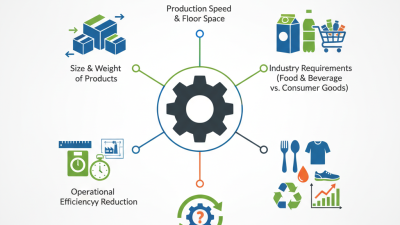
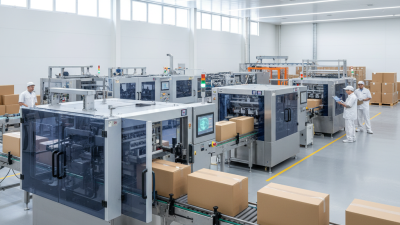
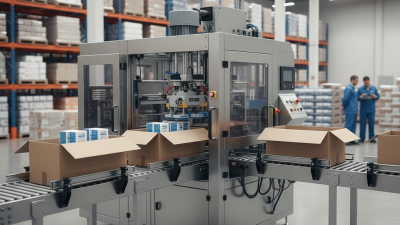
Case packing sits at a critical point between production speed and shipment readiness. A reliable case packer can place products accurately, reduce manual handling, and protect cartons during transport. However, machine performance depends on product shape, packing pattern, changeover frequency, and available floor space.
Industry data shows why this equipment attracts serious investment. PMMI’s 2024 State of the Industry report placed U.S. packaging machinery shipments above $10 billion in 2023, reflecting continued demand for automated systems. The International Federation of Robotics reported 541,302 industrial robots installed worldwide in 2023. These figures do not measure case packing alone, but they reveal a clear manufacturing direction. Automation is no longer limited to large factories.
This guide examines ten leading case packer manufacturers through practical and technical criteria. These include machine flexibility, throughput, servo control, sanitation design, integration support, and after-sales service. Public company information, technical documentation, industry reports, and customer-use evidence support the comparison. Still, no ranking is flawless. A high-speed machine may be unsuitable for a small bakery with frequent product changes. A lower-cost model may create hidden maintenance expenses.
Real-world details matter. Operators notice jam recovery time, tool-free adjustments, carton access, and the clarity of the control screen. Procurement teams notice spare-parts availability and commissioning support. The best supplier is not always the largest one. It is the manufacturer whose equipment fits the line, workforce, products, and future plans. Expect useful differences, not a perfect winner.
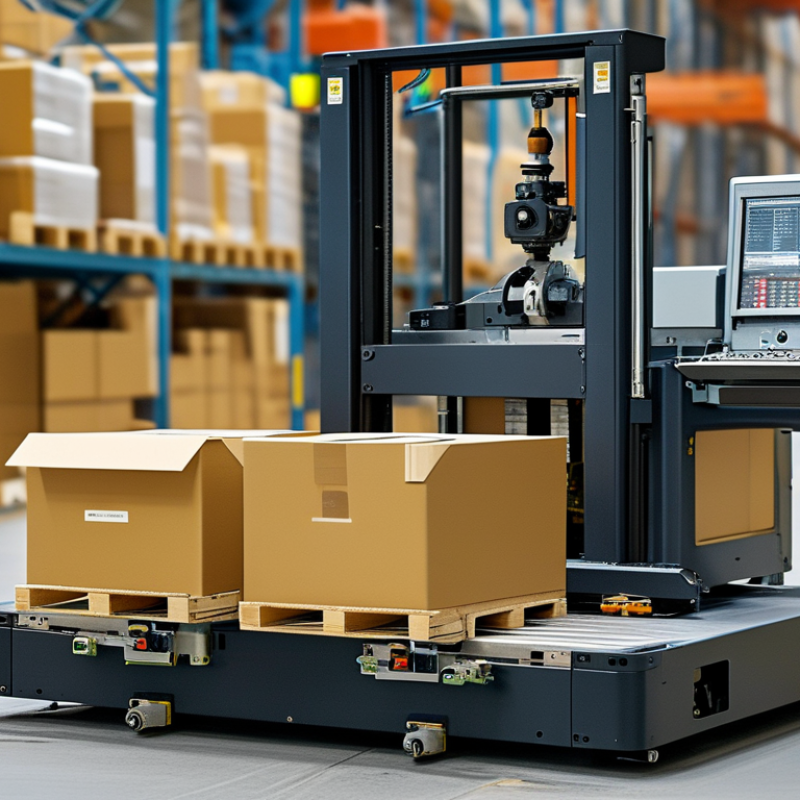
Case packers are machines that place finished products into shipping cases, cartons, or trays. They connect the filling line with storage and distribution. Some systems load products intermittently. Others run continuously at higher speeds. Their role includes product grouping, case loading, flap folding, and sealing. These steps reduce manual handling and improve packing consistency.
A reliable case packer should match the product, case size, and factory layout. Engineers usually examine loading accuracy, changeover time, safety features, cleaning access, and service support. Servo controls can manage delicate products more gently. Sensors can detect missing items or poorly formed cases. However, no machine solves every packaging problem. A fast packer may expose weak cartons, uneven products, or poor upstream timing. A specification sheet can hide these practical limits. Testing with real products remains essential when comparing the top 10 case packer manufacturers.
Tips: Request a live trial with your actual products and cases. Measure rejected packs, not only speed. Check how quickly operators can adjust guides and settings. Ask for maintenance records, spare-part lead times, and training details. Small delays matter.
Look closely at the case opening process. A carton that twists by a few millimeters can stop the line. Compact equipment may save floor space, yet restrict future expansion. Experienced packaging teams also review noise, access points, and cleaning routines before purchase. These details often influence daily reliability more than impressive output figures.
Selecting a case packer manufacturer requires more than comparing brochures or quoted speeds. PMMI’s 2024 State of the Industry report valued U.S. packaging machinery shipments at approximately $10.6 billion in 2023. This scale reflects strong demand, but it also increases supplier differences. Evaluate actual throughput, carton accuracy, changeover time, and product handling. Ask for factory trial data using your cases, products, and line speeds. A polished demonstration can still mislead.
Integration deserves close attention. A reliable manufacturer should connect the case packer with conveyors, robots, vision systems, and warehouse controls. The International Federation of Robotics reported 541,302 industrial robot installations worldwide in 2023. Automation is expanding quickly. However, more automation can create more maintenance points. Request clear communication protocols, spare-parts availability, remote diagnostics, and technician response times. Check whether operators can adjust recipes without specialized programming skills.
Total cost matters more than the purchase price. Measure energy use, compressed-air demand, reject rates, labor requirements, and planned maintenance. The best supplier should provide documented uptime from comparable installations, not only laboratory results. I would also inspect an operating customer site when possible. One weakness remains easy to overlook: manufacturers may promise flexibility without testing difficult packaging formats. Require acceptance criteria in writing, including changeover minutes, fault recovery, and sustained production output. Industry reports are useful evidence, but your own product trial should carry greater weight.
The top 10 case packer manufacturers are better judged by technology and market focus than by shipment volume alone. Robotic suppliers lead flexible lines, using vision systems, servo arms, and quick-change tooling. Wraparound specialists serve beverage, food, and household goods plants with compact footprints. RSC case packers remain practical for high-speed distribution cartons. They are not identical machines.
PMMI’s 2024 State of the Industry report identifies labor shortages as a major packaging investment driver. This supports demand for automatic loading, remote diagnostics, and simpler changeovers. The leading ten manufacturers therefore include specialists in robotic packing, intermittent-motion systems, continuous-motion systems, integrated end-of-line cells, and modular equipment. Their market focus differs sharply. Some target small food producers, while others build heavy-duty systems for global logistics centers.
Smithers forecasts continued growth in connected packaging operations, while Mordor Intelligence places the broader packaging machinery market on a roughly 5% annual growth path in current projections. These figures do not guarantee every case packer will succeed. Total cost still depends on carton quality, operator training, maintenance access, and actual product variation. A machine may advertise 30 cases per minute, yet unstable cartons can reduce that figure on the factory floor. That detail is easy to overlook. Procurement teams should compare tested speeds, changeover minutes, reject rates, safety controls, and service coverage. The strongest manufacturer is often the one that fits the plant, not the one with the fastest brochure.
Choosing the top 10 case packer manufacturers requires more than comparing machine speed. A fast system can still disappoint if changeovers are slow or support is weak. In real production areas, operators value clear controls, guarded access, and reliable carton handling. These details often matter more than impressive brochure figures.
Automation separates the leading manufacturers. Servo-driven pickers, vision checks, and recipe-based controls can reduce manual adjustments. However, advanced automation needs trained technicians and dependable spare parts. Flexibility is equally important. The strongest suppliers offer adjustable lanes, tool-free changeovers, and formats for bottles, cans, pouches, or trays. Some machines perform beautifully with one package but struggle with irregular products. That limitation deserves attention.
Service can decide the final purchase. Experienced manufacturers provide application testing, installation guidance, remote diagnostics, and practical operator training. Response time matters during a packed production shift. Food, beverage, personal care, and household goods each create different demands. Hygienic construction suits food lines, while compact footprints help facilities with limited floor space. High-volume beverage plants may prioritize speed and accumulation control. Smaller producers often need affordable flexibility instead.
A ranking is never perfect. Plant conditions vary. I would compare factory trials, total ownership cost, safety documentation, and references from similar operations. The best case packer is not always the most automated model. It is the machine that remains stable, serviceable, and adaptable after months of daily use.
| Rank | Manufacturer Profile | Primary Automation Architecture | Typical Speed (Cases/Min.) |
Flexibility | Common Case Styles | Changeover Capability | Service Coverage | Typical Industry Applications | Best Fit |
|---|---|---|---|---|---|---|---|---|---|
| 01 | High-Speed Robotic Top-Load Profile | Servo-controlled pick-and-place robotics | 20–60 | Very High | RSC, tray, display-ready | Recipe-based; tool-less options | Global commissioning and remote support | Food, beverage, personal care, household products | High-volume lines with frequent SKU changes |
| 02 | Flexible Robotic Side-Load Profile | Multi-axis robotic loading | 10–40 | Very High | RSC, HSC, wraparound | Fast product and pattern changeover | Regional and international service networks | Snacks, bakery, frozen food, e-commerce goods | Mixed-product and mixed-case operations |
| 03 | Intermittent-Motion Top-Load Profile | Servo indexing with automated product collation | 12–35 | High | RSC, tray, partitioned cases | Stored recipes with guided adjustments | Factory-trained technicians and spare-parts programs | Pharmaceuticals, cosmetics, food, consumer goods | Medium-speed lines requiring controlled placement |
| 04 | Continuous-Motion Wraparound Profile | Continuous-motion collating and wrapping | 25–70 | Medium–High | Wraparound, tray, RSC | Mechanical and recipe-based setup | Strong line-integration and maintenance support | Beverage, dairy, canned food, household chemicals | Long production runs and high throughput |
| 05 | Compact Horizontal Load Profile | Servo-driven horizontal loading | 8–30 | High | RSC, tray, shelf-ready | Quick-change guides and digital recipes | Local installation with remote diagnostics | Bakery, confectionery, snacks, pet food | Plants with limited floor space |
| 06 | Vertical Drop-Load Profile | Controlled vertical loading and indexing | 10–40 | Medium–High | RSC, open-top, tray | Manual-assisted or automated changeover | Application engineering and operator training | Bottled products, cans, jars, rigid containers | Products that tolerate controlled vertical loading |
| 07 | Wraparound Case-Packing Profile | Automatic carton forming, loading, and gluing | 15–55 | Medium | Wraparound and tray | Format-part replacement and recipe storage | Preventive maintenance and parts support | Beverage, food, home care, industrial products | Efficient secondary packaging with reduced corrugated use |
| 08 | Heavy-Duty Industrial Load Profile | Servo indexing with reinforced mechanical handling | 5–25 | Medium | RSC, bulk case, pallet-ready case | Manual format adjustments with guided settings | On-site service, safety audits, reliability programs | Building materials, industrial components, chemicals | Large, heavy, or irregular products |
| 09 | Pharmaceutical Hygienic-Design Profile | Servo robotics with inspection and serialization interfaces | 8–30 | High | RSC, tray, partitioned case | Validated recipes and documented setup procedures | Validation documentation, training, and lifecycle support | Pharmaceuticals, medical devices, health products | Regulated production requiring traceability |
| 10 | Entry-Level Modular Automation Profile | Modular pneumatic and servo-assisted systems | 5–20 | Medium | RSC, tray, open-top case | Manual-assisted, low-complexity changeover | Local technical support and standard spare parts | Small food producers, contract packers, general manufacturing | Lower-volume operations seeking labor reduction |
Note: Speed ranges are typical industry ranges for comparable case-packing configurations. Actual performance depends on product dimensions, case format, loading pattern, packaging material, line layout, and required changeover conditions.
Selecting the right case packer manufacturer begins with your actual production conditions, not a sales brochure. Measure carton dimensions, product weight, line speed, and available floor space. A machine that handles one carton size may struggle with frequent changeovers. Ask whether the proposed system can manage your packaging materials without excessive adjustments.
Review the manufacturer’s engineering process carefully. Request layout drawings, cycle-time data, utility requirements, and factory acceptance testing details. Reliable suppliers explain tolerances clearly and document every assumption.
Speak with comparable users about uptime, maintenance response, spare-parts access, and operator training. A polished demonstration is useful, but it does not prove long-term performance. Watch the changeover process. It should feel controlled, not improvised.
Consider the complete ownership cost. Include installation, software updates, tooling, preventive maintenance, and energy use. Check how the case packer connects with conveyors, inspection equipment, and existing controls. The supplier should provide clear manuals and practical troubleshooting guidance. Safety guarding and emergency systems also require careful review. Avoid choosing the lowest quotation too quickly. A cheaper machine can create hidden labor costs later. Even experienced teams can overlook cleaning access or future product changes. A small pilot run may reveal awkward loading points, unstable cartons, or unrealistic speed claims. These details often matter more than impressive headline capacity.
A&B has become the leader in fresh packing and cleaning equipment for fruits and vegetables worldwide. We have achieved this by relentlessly working to produce new and innovative ideas, along with the best customer service on Earth combined with hard working, dedicated, loyal employees and the latest industrial manufacturing techniques. We are now proud to say that we manufacture The Fulcrum Fresh Harvester, this is a one of a kind Berry Harvester that was specifically designed to handle fresh pick blueberries.
732 W. Saint Joseph Street
Lawrence, MI 49064
Phone: 269-539-4700 Fax: 269-539-4705
sale@industrialpackagingmachines.com