Why Choose a Livestock Medical Syringe for Animal Care?
Caring for livestock requires more than medication. It requires calm handling, accurate dosing, and equipment that supports safe daily routines. A Livestock Medical Syringe can help producers deliver vaccines, antibiotics, and other approved treatments with better consistency. Its value appears in small details: a clear barrel, a steady plunger, a comfortable grip, and a needle connection that fits securely.
Dr. Temple Grandin, a leading livestock-handling expert, has said, “The best handling systems are designed around the animal’s behavior.” This principle applies directly to syringe selection. A practical syringe should reduce unnecessary restraint and help handlers work with steady, controlled movements. When a calf shifts suddenly, a balanced design can improve control. When several animals need treatment, reliable calibration can reduce dosing mistakes and wasted time.
Small details matter.
However, a Livestock Medical Syringe is not a complete solution. It cannot replace veterinary guidance, proper hygiene, staff training, or accurate treatment records. Selecting the wrong size may create discomfort or make dosing difficult. Reusing equipment carelessly can also increase health risks. These points deserve honest attention.
The right choice depends on animal size, treatment volume, injection method, frequency of use, and cleaning requirements. Some farms may prefer a reusable syringe for routine work. Others may need a disposable option for specific health protocols. The decision should follow veterinary advice and product instructions.
This guide examines why a Livestock Medical Syringe can support more dependable animal care, while recognizing its limits. Good equipment helps. Good judgment matters more.
What Is a Livestock Medical Syringe?
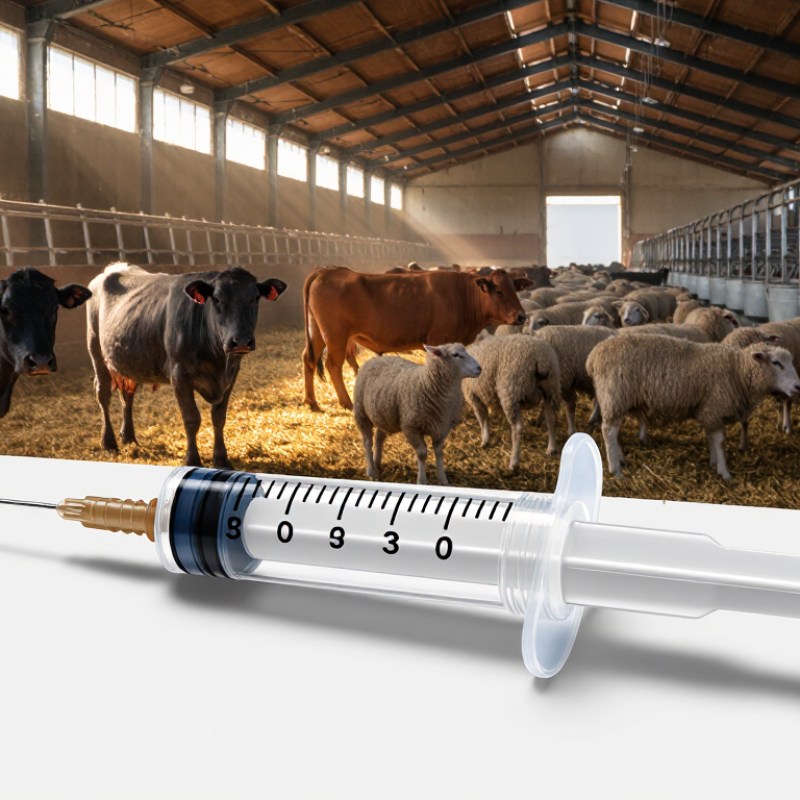
A livestock medical syringe is a hand-operated device used to deliver measured medication, vaccines, or fluids to farm animals. It usually includes a barrel, plunger, tip, and a compatible needle. The barrel shows the dose, while the plunger pushes liquid through the needle. Some syringes hold one dose, and others can be adjusted for repeated treatments. The correct type depends on the animal, medicine, route, and prescribed volume.
Small details matter. Before use, a trained handler should check the syringe for cracks, sticky movement, and unclear markings. The liquid should look as expected, without unexpected particles or color changes. Hold the animal calmly and use clean equipment. Poor restraint can cause injury, wasted medicine, or an inaccurate dose. It is easy to think a larger syringe is more efficient. That assumption can be wrong. A smaller, clearly marked syringe may provide better control for low-volume treatments.
Veterinary directions should guide needle selection, injection location, storage, and disposal. Never reuse equipment unless approved cleaning and sterilization procedures allow it. Keep treatment records, including the animal, date, dose, and response. This simple habit supports traceability and helps identify problems early. A syringe is not a substitute for professional judgment. Even experienced handlers can misread a scale or overlook a damaged seal. Checking twice is sensible.
Why Choose a Livestock Medical Syringe for Animal Care?
Livestock medical syringes are designed to deliver measured medication efficiently and safely to animals. Choosing the correct capacity helps reduce dosing errors, while the appropriate needle size should always be selected according to the animal species, injection route, medication viscosity, and veterinary guidance.
Chart explanation: Common nominal syringe capacities used in animal care range from 1 mL to 60 mL. Smaller syringes support more precise measurement for low-volume doses, while larger syringes are useful when a greater medication volume is prescribed.
How Livestock Medical Syringes Support Animal Health
Livestock medical syringes play an important role in daily animal care. They help deliver vaccines, prescribed medicines, and fluids with controlled accuracy. In farm work, that control matters. A calf may need only a small measured volume, while an adult animal requires more. Using the same approach for every animal can create dosing errors. Species, weight, age, and treatment instructions should guide each injection. Veterinary advice remains essential.
A dependable syringe supports animal health through clean, repeatable handling. Clear measurement markings help workers check the dose before contact. Smooth operation reduces sudden movement, which can lessen stress and accidental injury. Needles must match the animal, medicine, and injection route specified by a veterinarian. After use, equipment should follow local veterinary and waste procedures. Small details matter here. Cleaning reusable equipment is important, but overconfidence can be risky. Not every syringe is designed for repeated sterilization. This is where I would pause and verify the instructions.
On a working farm, records make syringe use more reliable. Write down the animal identification, date, product, dose, route, and operator. A quick note can reveal missed treatments or unexpected reactions. Watching the animal afterward adds another layer of care. Swelling, discomfort, fever, or unusual behavior should be reported promptly to a veterinarian. The tool is simple. The responsibility is not.
Key Features for Safe and Accurate Treatment
A livestock medical syringe supports safer, more accurate treatment when every milliliter matters. Its clear barrel helps handlers check the dose, while a smooth plunger reduces sudden movement. This matters when treating cattle, sheep, goats, or pigs under field conditions. A secure needle connection can also prevent leaks during restraint. Use the smallest practical needle size for the medication and animal. Match the syringe capacity to the dose, rather than using a large barrel for convenience. Smaller measurements are easier to read. They are not always easier to deliver.
Accurate dosing also supports responsible antimicrobial use. The World Organisation for Animal Health reported a 13% decline in antimicrobial use in animals between 2017 and 2019, adjusted for animal biomass, in its global report. Careful measurement helps prevent underdosing, overdosing, and unnecessary repeat injections. Before treatment, inspect the barrel, plunger, needle, and packaging. Keep equipment clean, dry, and protected from dust. Follow the medicine label and veterinary instructions for storage, injection site, withdrawal periods, and disposal. A calm animal still needs proper restraint. A rushed injection can bend a needle or place medication incorrectly. Record the animal, dose, time, route, and operator. Records expose mistakes, although people sometimes forget them during busy mornings. That weakness deserves attention. Calibration checks and staff training should be routine, not occasional.
Choosing the Right Syringe for Different Livestock
Why Choose a Livestock Medical Syringe for Animal Care?
Choosing the Right Syringe for Different Livestock
A livestock medical syringe supports accurate dosing, cleaner handling, and safer animal care. The right model depends on species, treatment volume, and injection method. Calves may need small, clearly marked syringes for measured doses. Adult cattle often require stronger barrels and larger capacities. Goats and sheep usually benefit from lightweight syringes that fit comfortably in one hand.
Poultry care requires special attention. Their smaller body size demands precise measurements and gentle handling. A narrow needle may reduce tissue damage when recommended by a veterinarian. For thicker solutions, a wider needle can improve flow. However, wider is not always better. Needle length, gauge, and injection site must match the animal and treatment instructions.
Good equipment should have visible graduations, a smooth plunger, and a secure needle connection. Disposable syringes help reduce contamination risks when used once. Reusable equipment needs proper cleaning, disinfection, and inspection. I have seen rushed dosing create unnecessary problems. A quick check can prevent them. Confirm the volume before each use. Check for cracks, blocked needles, or unclear markings.
Different animals also require different handling pressure. A restless pig may need a firmer grip, while a young lamb needs slower movement. Keep treatment records, including the animal, dose, date, and route. Veterinary guidance remains essential, especially when symptoms are unclear or several animals are affected.