Why Is a Lightning Arrester Important? This question matters wherever electrical equipment faces storms, switching surges, or unstable power conditions. A Lightning Arrester provides a controlled path for excessive voltage. It directs dangerous surge energy toward ground before that energy reaches transformers, control panels, motors, or sensitive electronics.
Dr. Martin A. Uman, a respected lightning researcher, wrote, “Lightning is a capricious, unpredictable phenomenon.” That observation explains why ordinary insulation cannot provide complete protection. A surge may enter through an overhead line, a cable shield, or a nearby grounding system. The damage can appear as a burned terminal, cracked insulation, or unexplained equipment failure several hours later. A properly selected arrester responds quickly, limits the voltage, and then returns to normal operation.
In practical installations, protection depends on more than installing one device. Voltage rating, discharge capacity, response behavior, grounding resistance, conductor length, and coordination with upstream protection all matter. A short connection to a reliable grounding network often makes a visible difference. Poor installation can weaken an otherwise high-quality product.
The details are easy to underestimate.
Standards such as IEC 60099-4 and IEEE guidance support safer selection and testing, but field conditions still require judgment. Soil conditions change. Systems age. New equipment may create unexpected surge paths. Therefore, a Lightning Arrester should be viewed as part of a complete protection strategy, not as a guaranteed shield. It reduces risk; it does not eliminate every failure. That limitation deserves honest attention.
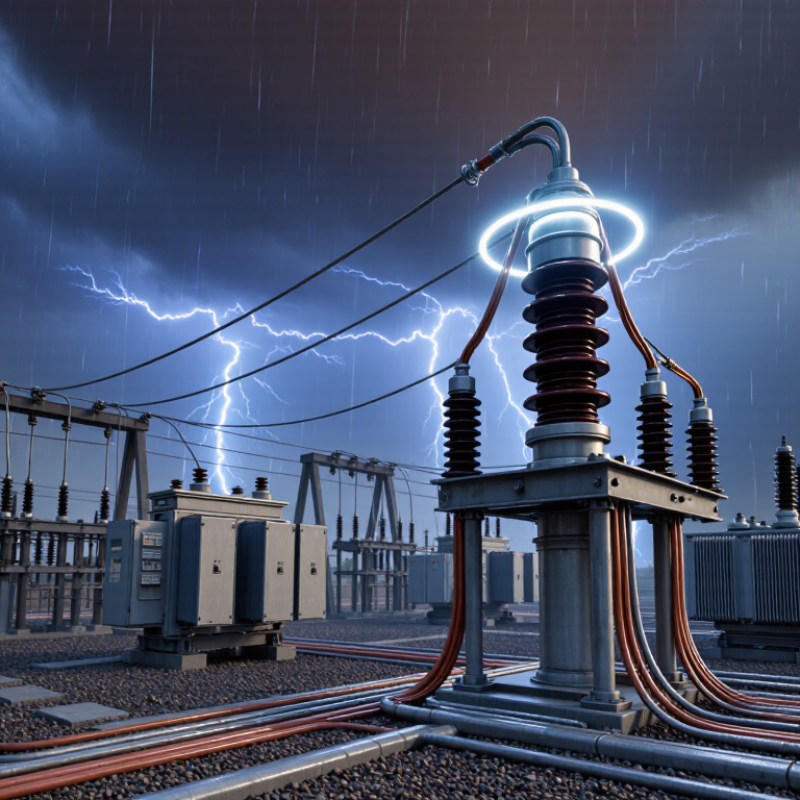
A lightning arrester is a protective device that limits dangerous voltage surges in electrical systems. It normally stays inactive during everyday operation. When lightning or switching creates a sudden surge, the arrester provides a low-resistance path to ground. The excess energy then moves away from sensitive equipment, such as transformers, control panels, and communication devices.
Most modern arresters use metal-oxide varistors. These components change their electrical behavior when voltage rises sharply. In normal conditions, they carry only a tiny leakage current. During a surge, they conduct heavily for a brief moment. The device does not attract lightning. It reduces the voltage that reaches connected equipment.
Correct installation matters as much as the arrester itself. Short, straight connections reduce unwanted inductance. A poor grounding path can leave dangerous voltage at the equipment terminals. During site inspections, technicians should check loose connections, cracked housings, moisture marks, and signs of overheating. An arrester can look normal and still have weakened protection after repeated surges.
It is easy to overestimate this device. One arrester cannot protect every circuit in a building. Protection often needs coordination between service entrances, distribution panels, and sensitive loads. Local electrical rules and manufacturer specifications should guide selection and testing. I would not trust a replacement based on appearance alone. Surge ratings, system voltage, grounding conditions, and temporary overvoltage capability all deserve careful review.

A lightning arrester protects electrical equipment from sudden overvoltage caused by lightning or switching events. It is installed in parallel between energized conductors and the grounding system. Under normal voltage, its internal metal-oxide elements offer very high resistance. Almost no current flows through the arrester.
When a surge arrives, the arrester changes behavior within microseconds. Its resistance drops sharply. Surge current then moves toward ground instead of passing through sensitive equipment. The arrester limits the voltage to a safer residual level. Fast action matters.
Protection depends on more than the arrester itself. Short, straight connecting wires reduce unwanted inductive voltage. A properly bonded grounding path gives surge energy a controlled route. The device must also match the system voltage, expected exposure, and installation category. A service entrance may need stronger protection than a small control panel.
Coordination matters. One device may not protect every circuit. Additional protection can be installed near computers, sensors, or communication equipment. Inspection is often overlooked. Heat, repeated surges, and loose connections can reduce performance without obvious warning. A status indicator may help, but it cannot replace testing.
No arrester is magic. It cannot prevent every failure. Poor grounding can weaken an otherwise suitable design. This is where many installations fall short. Reviewing cable routes, bonding points, and maintenance records can reveal risks that a simple product selection misses.
Why Is a Lightning Arrester Important?
A lightning arrester helps prevent severe damage from sudden voltage surges. These surges can enter through overhead lines, underground cables, or nearby electrical systems. The arrester redirects excessive energy safely toward the ground. Without that path, the surge may travel through a building’s wiring.
The damage can be immediate and expensive. A transformer may overheat, crack, or stop working. Circuit boards can burn within seconds. Motors may suffer insulation breakdown, causing unexpected shutdowns. In homes, a surge can destroy routers, refrigerators, security systems, and other connected equipment. In industrial settings, one failure may halt production and spoil temperature-sensitive materials.
Small details matter. A loose ground connection can reduce protection dramatically. Corroded conductors may also leave a dangerous gap in the discharge path. Electrical safety standards generally require suitable grounding, correct device ratings, and regular inspection by qualified professionals. An arrester does not stop lightning itself. It only limits part of its electrical impact, and no protection system is perfect. That limitation is easy to overlook. Technicians should check for heat damage, aging components, and repeated surge exposure after severe storms. A properly selected arrester cannot repair weak wiring, poor bonding, or neglected maintenance. Those problems still need attention.
Why Is a Lightning Arrester Important?
Where Lightning Arresters Are Installed
Lightning arresters are installed where electrical surges can enter or spread through a system. The utility service entrance is a common location. Here, the device connects between energized conductors and the grounding system. It helps divert high-voltage energy before it reaches indoor equipment.
They are also placed near transformers, switchgear, distribution panels, and large motors. A transformer yard may use arresters on the incoming high-voltage side. Sensitive control panels may need additional surge protection on the low-voltage side. Communication cables, rooftop equipment, solar arrays, and generator connections can also require protection. Placement should follow the equipment layout, not a convenient guess.
Short grounding paths matter.
During field inspections, technicians often check conductor length, connection tightness, and signs of heat damage. An arrester installed far from the protected equipment may still function, but its protection can become less effective. Coordination between service-entry and downstream devices is important, especially in large buildings with several electrical zones.
No single installation plan suits every site. Soil conditions, cable routes, system voltage, and local electrical requirements change the decision. A drawing may look complete and still miss a vulnerable communication line. That is an easy mistake to overlook. Regular inspections also deserve attention, because damaged arresters may remain unnoticed until the next major surge.
| Installation Location | Common Arrester Application | Equipment Protected | Main Risk Addressed | Important Installation Principle |
|---|---|---|---|---|
| Overhead distribution lines | Line-mounted surge arrester | Conductors, insulators, crossarms, and connected distribution equipment | Lightning-related flashover and temporary overvoltage stress | Connect the arrester between the energized conductor and a low-impedance ground path. |
| Utility service entrance | Service-entrance surge arrester | Main switchgear, service conductors, and building electrical systems | Surges entering from the utility network or nearby lightning strikes | Install as close as practical to the service entrance, with short and straight connecting conductors. |
| Medium-voltage switchgear | Metal-oxide surge arrester | Switchgear, busbars, circuit breakers, and protection relays | Insulation damage caused by steep-front switching or lightning surges | Select the continuous operating voltage and energy rating for the system grounding arrangement. |
| Transformer high-voltage terminals | Transformer surge arrester | Power-transformer windings, bushings, and insulation system | Impulse voltage reaching transformer insulation | Place the arrester near the transformer terminal to reduce lead inductance and residual voltage. |
| Substation incoming lines | Station-class surge arrester | Incoming line insulation, transformers, buswork, and substation apparatus | High-energy lightning currents and traveling-wave overvoltages | Coordinate arrester protective levels with the insulation withstand ratings of connected equipment. |
| Low-voltage distribution panels | Type 1 or Type 2 surge protective device | Panelboards, branch circuits, control systems, and connected loads | Residual surges and internally generated switching transients | Verify compatibility with the system voltage, earthing method, short-circuit rating, and backup protection. |
| Industrial motor control centers | Industrial surge protection device | Variable-speed drives, motor controllers, PLCs, and control power supplies | Switching transients from motors, contactors, and power-electronic equipment | Use coordinated protection and separate sensitive control wiring from high-current conductors where possible. |
| Photovoltaic array and inverter circuits | DC-side and AC-side surge protection | Solar modules, DC cabling, inverters, and AC distribution equipment | Induced lightning surges on long outdoor conductors | Protect both DC and AC circuits when required, and coordinate bonding with the site lightning-protection system. |
| Telecommunications and data lines | Signal-line surge protector | Modems, network equipment, communication interfaces, and signaling devices | Common-mode and differential-mode surges on metallic communication conductors | Match the protector to the signal type, operating bandwidth, nominal voltage, and grounding arrangement. |
| Building automation and instrumentation circuits | Control and instrumentation surge protector | Sensors, controllers, fire-alarm interfaces, and monitoring equipment | Transient voltages transferred through long field wiring | Install protection at cable entry points and maintain an equipotential bonding network. |
Why it matters: A lightning arrester provides a controlled path for surge current to ground and limits the voltage across electrical insulation and connected equipment. Proper selection, grounding, coordination, and installation are essential for effective protection.
Why Is a Lightning Arrester Important?
How to Select and Maintain a Lightning Arrester
A lightning arrester limits dangerous voltage surges before they damage transformers, control panels, and sensitive equipment. Selection begins with the system’s maximum continuous operating voltage, not only its nominal voltage. Choose an arrester with a suitable MCOV rating for the network’s grounding conditions. An incorrectly rated unit may conduct continuously or fail during a temporary overvoltage. Check the expected discharge current, energy capability, and protection level against the equipment’s insulation rating. Short, straight connections also matter. Long or sharply bent conductors can add inductive voltage during a fast surge.
Installation quality deserves equal attention. The arrester should sit close to the equipment it protects, with a low-impedance path to ground. Inspect terminals, bonding points, and cable insulation during scheduled maintenance. Look for cracks, swelling, contamination, loose hardware, or signs of overheating. A surge counter, leakage-current monitor, or thermal indicator can support inspection, but none replaces visual and electrical checks. Keep records of test dates and abnormal readings.
Do not rely on appearance alone.
Environmental conditions change maintenance needs. Coastal salt, industrial dust, moisture, and repeated storms can accelerate deterioration. After a major lightning event, isolate the circuit safely and inspect the arrester according to qualified procedures and applicable standards. Replacement intervals should follow measured condition, manufacturer instructions, and site risk. A checklist helps, but it can create false confidence. Ground resistance, bonding continuity, and coordination with upstream protection still require technical judgment.
A lightning arrester diverts surge current to ground and limits transient overvoltage at protected equipment. The chart shows a representative 8/20 μs impulse current waveform normalized to a 10 kA peak, a standard reference used when evaluating surge arrester performance.
For selection, verify the arrester’s continuous operating voltage, nominal discharge current, energy capability, temporary overvoltage rating, and grounding arrangement. During maintenance, inspect the housing, connections, leakage-current indication, and signs of thermal or mechanical damage.
A&B has become the leader in fresh packing and cleaning equipment for fruits and vegetables worldwide. We have achieved this by relentlessly working to produce new and innovative ideas, along with the best customer service on Earth combined with hard working, dedicated, loyal employees and the latest industrial manufacturing techniques. We are now proud to say that we manufacture The Fulcrum Fresh Harvester, this is a one of a kind Berry Harvester that was specifically designed to handle fresh pick blueberries.
732 W. Saint Joseph Street
Lawrence, MI 49064
Phone: 269-539-4700 Fax: 269-539-4705
sale@industrialpackagingmachines.com