Why Is Potassium Iodide Important for Global Buyers?
Potassium Iodide is a small-volume chemical with outsized importance across healthcare, nutrition, and laboratory supply chains. Global buyers use it in pharmaceutical manufacturing, thyroid-related public health programs, analytical testing, and selected industrial processes. Its value depends on purity, consistency, and documented origin—not simply the lowest quoted price.
The USGS Mineral Commodity Summaries 2024 identifies Chile and Japan as leading iodine producers. This concentration makes iodine-based products sensitive to mining conditions, energy costs, freight delays, and export restrictions. The Iodine Global Network’s 2023 Global Scorecard reports that about 88% of households worldwide consume adequately iodized salt. That figure highlights iodine’s public health role, while also showing that access remains uneven. WHO guidance continues to support universal salt iodization where iodine deficiency is a public health concern.
Commercial forecasts from Grand View Research and MarketsandMarkets indicate continued demand growth for iodine-related pharmaceutical and specialty chemical applications. However, forecasts are not facts. Methodologies differ, and potassium iodide demand can shift quickly after regulatory changes or emergency procurement. Buyers should therefore verify each supplier’s certificate of analysis, assay result, moisture level, trace-metal profile, packaging integrity, and batch traceability. Pharmacopeial compliance may also matter for pharmaceutical-grade material.
Small details matter.
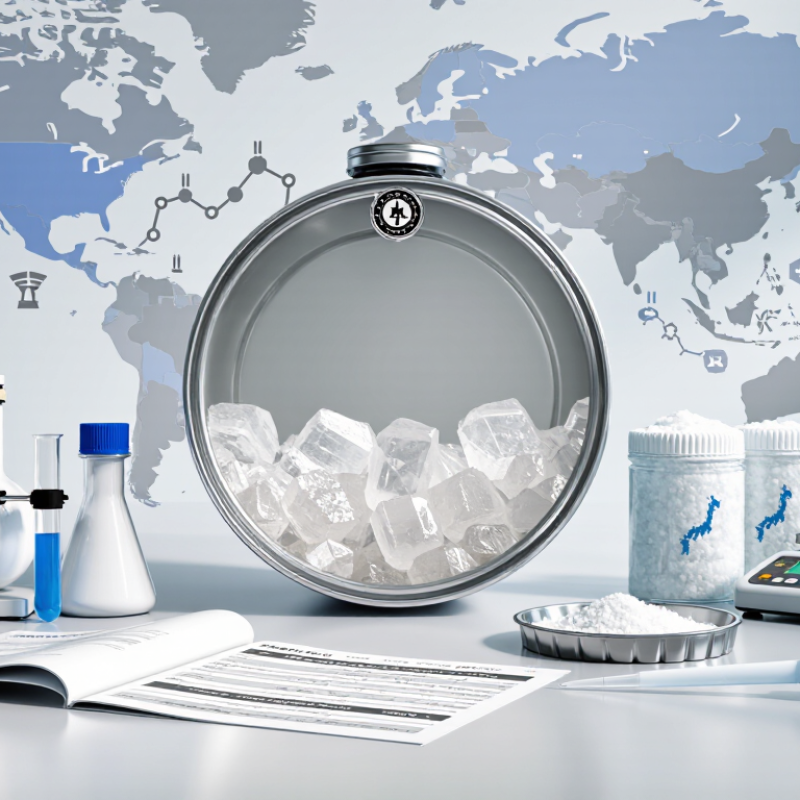
A sealed drum, clear labeling, and stable storage conditions can protect product quality during long-distance transport. Yet specifications alone do not guarantee dependable supply. Buyers need audited manufacturers, realistic lead times, transparent documentation, and contingency sources. This is where procurement becomes less theoretical. Potassium Iodide remains important because it connects global health needs with highly disciplined chemical sourcing.
What Is Potassium Iodide and How Does It Work?
Potassium iodide, or KI, is a stable salt made from potassium and iodine. It usually appears as white crystals or fine powder. When dissolved, it separates into potassium and iodide ions. The iodide can support normal thyroid iodine needs under controlled conditions.
Its best-known emergency role is thyroid protection during specific radioactive iodine incidents. The thyroid absorbs iodine naturally. Taking KI at the correct time can saturate the gland with non-radioactive iodide. This may reduce radioactive iodine uptake. However, KI does not block other radiation types. It is not a general radiation shield. Medical or government guidance is essential.
For global buyers, quality depends on more than the chemical name. Check assay, moisture, heavy metals, particle size, packaging, and traceability. A reliable certificate of analysis should match the delivered batch. Storage also matters. Keep material sealed, dry, and away from excessive heat or light. The supply chain is rarely perfect, and paperwork alone cannot replace independent testing.
Tips: Confirm the required grade before purchasing. Ask about applicable pharmacopeial or industrial standards. Review the batch number, shelf life, and transport conditions. Avoid assuming that a lower price means better value.յակ
Why Is Potassium Iodide Important for Global Buyers? - What Is Potassium Iodide and How Does It Work?
| Data Dimension | Key Information | Why It Matters to Global Buyers |
|---|---|---|
| Substance Identity | Potassium iodide (KI) is an inorganic ionic compound composed of potassium ions and iodide ions. | Clear substance identification supports regulatory review, customs documentation, technical purchasing, and quality control. |
| CAS Registry Number | 7681-11-0 | A globally recognized chemical identifier that helps reduce confusion during international sourcing and import procedures. |
| Chemical Formula | KI | The simple formula allows buyers to distinguish potassium iodide from other iodine-containing compounds. |
| Molar Mass | 166.00 g/mol | Important for formulation calculations, laboratory preparation, dosage calculations, and analytical testing. |
| Elemental Iodine Content | Approximately 76.45% by mass, calculated from the relative atomic masses of iodine and potassium iodide. | Useful when calculating iodine concentration in nutritional, laboratory, pharmaceutical, or industrial formulations. |
| Physical Appearance | White or colorless crystalline solid; it is generally odorless. | Appearance is a practical first-line check during receiving inspection, although laboratory testing is required for confirmation. |
| Water Solubility | Highly soluble in water; published reference values are approximately 1,400 g/L at 25°C, with values varying by test method and source. | High solubility supports the preparation of concentrated aqueous solutions and enables efficient handling in many formulations. |
| Melting Point | Approximately 681°C under standard reference conditions. | Provides an important thermal parameter for storage assessment, process design, and material compatibility reviews. |
| Density | Approximately 3.1 g/cm³ for the solid material. | Helps buyers estimate packaging volume, transport loads, and storage-space requirements. |
| How It Works in the Body | Iodide is absorbed by the thyroid gland and used to produce thyroid hormones. A sufficiently large amount of stable iodide can temporarily reduce thyroid uptake of radioactive iodine. | Explains its role in nuclear-emergency preparedness, while emphasizing that it is not a general radiation antidote. |
| Emergency Thyroid Blocking | For public-health emergencies, potassium iodide should be taken only when instructed by public-health or emergency authorities. A commonly referenced adult dose is 130 mg KI; age-specific guidance applies to children and infants. | Emergency-use products require strict labeling, dosing instructions, official authorization, and suitable distribution planning. |
| Protection Limitation | Potassium iodide protects the thyroid from radioactive iodine exposure only. It does not protect against external radiation or other radioactive materials. | Accurate claims are essential for compliant product communication and responsible emergency procurement. |
| Common Applications | Used in pharmaceutical and medical preparations, laboratory chemistry, analytical work, photography-related chemistry, and selected industrial processes. | Different applications may require different purity grades, documentation packages, packaging formats, and regulatory approvals. |
| Quality Parameters to Request | Assay, identification, iodate or iodide-related impurities, heavy metals, moisture or loss on drying, appearance, particle size, and microbiological results where applicable. | A detailed specification and certificate of analysis help buyers compare materials objectively without relying on brand or supplier reputation alone. |
| Packaging Considerations | Use tightly closed, moisture-resistant packaging that protects the solid from humidity, contamination, and excessive light exposure. | Appropriate packaging helps preserve quality during international transport, customs delays, and warehouse storage. |
| Storage Conditions | Store in a cool, dry, well-ventilated area in a tightly closed container, following the supplier’s safety data sheet and specification. | Controlled storage reduces the risk of moisture uptake, contamination, caking, and quality deterioration. |
| Regulatory and Transport Review | Import, export, pharmaceutical, food, chemical, and emergency-stockpile requirements vary by country and intended use. | Global buyers should verify local permits, product classification, labeling, safety data, customs codes, and end-use restrictions before ordering. |
| Procurement Priority | Confirm intended use, required grade, assay, packaging size, documentation, delivery conditions, and applicable national regulations before purchase. | A structured purchasing review improves supply continuity, reduces compliance risks, and supports consistent product performance. |
Note: Technical values may vary slightly according to temperature, test method, purity, and reference source. Buyers should confirm the latest specification, Safety Data Sheet, certificate of analysis, and applicable local regulations before use or import.