Top 10 Automated Packaging System Types for Global Buyers

Global buyers are examining more than machine speed when selecting an automated packaging system. They are assessing labor availability, product protection, changeover time, energy use, data visibility, and after-sales support. A carton line may run smoothly in one factory, yet struggle elsewhere because of unstable power, limited floor space, or inconsistent product dimensions.

Jeff Burnstein, former president of the Association for Advancing Automation, said, “Robots are not going to take your job, but a person using a robot will take your job.” His observation applies strongly to modern packaging operations. Automation works best when trained employees understand the equipment, review performance data, and respond to faults quickly. Technology alone cannot repair poor maintenance habits.

This guide examines ten major automated packaging system types used by international manufacturers and distributors. The selection includes primary, secondary, and end-of-line solutions. Examples include filling machines, labeling systems, cartoners, case packers, palletizers, and robotic handling units. Each type offers different advantages, costs, and integration challenges.

The “best” system is not universal. It depends on package format, production volume, materials, hygiene requirements, and local service capacity. Buyers should request factory acceptance tests, spare-parts plans, operator training, and clear performance measurements. Safety and compliance claims also require jurisdiction-specific verification.

Some facilities need full automation. Others need one dependable upgrade. That distinction matters. A carefully scoped system can reduce repetitive work, improve consistency, and protect products without forcing a factory into unnecessary complexity. This overview has limits, but it provides a practical starting point for comparing systems with greater confidence.

Top 10 Automated Packaging System Types for Global Buyers

What Automated Packaging Systems Are and How They Work

Automated packaging systems combine mechanical equipment, sensors, software, and safety controls. They prepare, fill, seal, label, inspect, and move products with limited manual handling. Common configurations include filling machines, cartoners, case packers, palletizers, and robotic pick-and-place cells. Each system solves a different packaging task.

A typical line begins with product feeding and container detection. Sensors confirm position, size, and presence before each operation. A filler measures the product, while a sealing unit closes the package with controlled pressure or heat. Cameras may check labels, seals, and print quality. Accepted packages continue forward; rejected ones move into a separate collection area. In real installations, speed is not everything. Poor product flow, uneven materials, or incorrect sensor settings can stop an impressive line. Even experienced teams sometimes underestimate changeover time.

Tips: Define product sizes, materials, output targets, and cleaning needs before selecting equipment. Request test runs with actual packaging samples. Check whether operators can reach controls safely and adjust settings without complex tools. Leave space for maintenance access. A compact layout may look efficient, but it can make repairs slow and uncomfortable. Record inspection results and downtime from the first production shift. These details often reveal weaknesses that factory demonstrations do not show.

Top 10 Automated Packaging System Types for Global Buyers

Representative nominal throughput for commonly used automated packaging systems. Actual performance depends on product characteristics, package size, material, machine configuration, and line integration.

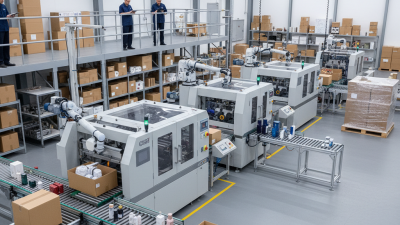
Automated packaging lines typically combine several of these systems, such as forming, filling, sealing, case handling, labeling, palletizing, and stretch wrapping, to reduce manual handling and improve packaging consistency.

The Ten Main Types of Automated Packaging Systems

The Ten Main Types of Automated Packaging Systems

Automated packaging systems generally fall into ten practical types. Form-fill-seal machines create pouches from rollstock, then fill and seal them. Cartoning systems erect cartons, insert products, and close flaps. Filling-and-capping lines handle liquids, powders, or small components. Labeling systems apply information at controlled speeds. Robotic pick-and-place units transfer irregular products without excessive contact. Small details matter.

Case packers load retail units into shipping cases. Palletizing systems build stable layer patterns, while depalletizers feed empty containers into production lines.

Wrapping machines secure cases or pallets for transport. Checkweighing and vision inspection systems verify weight, codes, seals, and visible defects.

These ten types often operate as one connected line, not ten isolated machines.

Investment is growing alongside factory automation. The International Federation of Robotics recorded 541,302 industrial robot installations worldwide in 2023, showing strong demand for repeatable handling and packing tasks. Grand View Research estimates the global automated packaging machine market will expand at about 6.8% annually through 2030.

These figures indicate opportunity, but they do not guarantee a quick payback. A buyer should test changeover time, product fragility, floor space, cleaning access, and local service capability. A high-speed machine may disappoint when formats change every hour. The boundary between “automatic” and “semi-automatic” is also not always neat. Run real product trials, record stoppages, and question optimistic throughput claims. That distinction matters.

How Packaging Systems Match Products and Production Requirements

Top 10 Automated Packaging System Types for Global Buyers

Automated packaging systems must match the product, package, and production target. The ten common types include filling, auger dosing, liquid filling, counting, weighing, form-fill-seal, cartoning, case packing, palletizing, and labeling systems. Each type solves a different process problem. A powder may need an auger filler and dust control. A fragile snack may need gentle weighing and soft-drop handling. Bottles often require liquid filling, capping, and label alignment. Cartoning and case packing suit stable products with regular dimensions. Palletizing supports high-volume shipping and consistent stacking.

Production requirements also shape the correct choice. Check speed, fill accuracy, package material, cleaning time, floor space, and operator access. A machine rated for 120 packs per minute may slow down with sticky products or uneven containers. Changeover design matters when several sizes share one line. In real factory assessments, the lowest purchase price is rarely the lowest operating cost. Energy use, spare parts, training, and rejected packs can change the result. Some recommendations remain provisional until product trials confirm them. That part is often overlooked.

Tips: Test the actual product, not a substitute. Measure package variation before selecting tooling. Ask for cleaning and changeover demonstrations. Leave space for maintenance access. Also, review safety controls and documentation with qualified local professionals.

Key Performance Factors Global Buyers Should Compare

Top 10 Automated Packaging System Types for Global Buyers

Key Performance Factors Global Buyers Should Compare

Global buyers should compare systems by measurable performance, not impressive showroom speed. The ten common types include form-fill-seal, cartoning, case packing, palletizing, labeling, wrapping, filling, capping, checkweighing, and inspection systems. Each solves a different production constraint.

Throughput is only one starting point. Measure sustained output, not a short demonstration. Compare overall equipment effectiveness, changeover time, reject rates, and compressed-air consumption. A line producing 120 packs per minute may lose value if format changes take 90 minutes. Keep this practical.

The International Federation of Robotics reported 541,302 industrial robots installed worldwide in 2023. This signals wider automation adoption, but it does not guarantee a suitable packaging investment. Buyers should request factory acceptance data, verified uptime, and service response targets. The Smithers market outlook expects global packaging demand to surpass one trillion US dollars by 2028, increasing pressure to improve labor efficiency and material control. Total cost matters more than purchase price. Include spare parts, software updates, operator training, energy use, and integration work. Sustainability also needs evidence. Compare film consumption, lightweighting capability, recyclable-material compatibility, and product damage. These details often expose hidden costs.

Do not trust every quoted efficiency figure. Product shape, humidity, operator skill, and maintenance discipline can change results. Trial runs using real materials are essential. A modest system with reliable changeovers may outperform a faster machine that frequently stops. Data source: International Federation of Robotics, World Robotics 2024; Smithers, The Future of Packaging to 2028.

Top 10 Automated Packaging System Types for Global Buyers - Key Performance Factors Global Buyers Should Compare

Comparison of common automated packaging system types using typical operating ranges for industrial applications.

No. Automated Packaging System Type Typical Throughput Primary Package Format Common Product Applications Typical Changeover Time Automation and Integration Level Indicative Footprint Key Performance Factors to Compare
1 Vertical Form-Fill-Seal System 30–120 bags per minute Roll-film pillow, gusseted, or block-bottom bags Grains, powders, snacks, frozen foods, pet food, and non-food granules 20–60 minutes Medium to high
Can integrate with multihead weighers, auger fillers, checkweighers, and metal detectors.
Approximately 3–8 m² Seal quality, film tracking, dosing accuracy, dust control, material compatibility, and accessible cleaning design.
2 Horizontal Form-Fill-Seal System 40–200 packs per minute Three-side or fin-sealed pillow packs Bakery products, confectionery, medical disposables, hardware, and household goods 15–45 minutes Medium to high
Suitable for in-line feeding, printing, vision inspection, and robotic loading.
Approximately 5–12 m² Product handling stability, sealing temperature control, film utilization, registration accuracy, and feeder synchronization.
3 Premade Pouch Filling and Sealing System 20–100 pouches per minute Stand-up, flat, zipper, and spouted premade pouches Liquid foods, sauces, powders, snacks, pet treats, cosmetics, and detergents 30–90 minutes High
Can include pouch denesting, filling, nitrogen flushing, sealing, coding, and inspection.
Approximately 6–14 m² Pouch pick reliability, fill accuracy, seal contamination control, zipper handling, and format flexibility.
4 Cartoning System 30–300 cartons per minute Folding cartons with tuck-in or glued closures Pharmaceuticals, personal care products, food, household goods, and consumer products 20–60 minutes High
Supports product insertion, leaflet feeding, serialization interfaces, coding, and vision checks.
Approximately 8–20 m² Carton erection reliability, insertion accuracy, glue or tuck performance, reject handling, and line-speed stability.
5 Case Packing System 8–40 cases per minute Corrugated shipping cases Bottled beverages, packaged foods, personal care items, and industrial products 30–90 minutes High
May integrate with robotic pick-and-place units, case erectors, sealers, and palletizers.
Approximately 15–40 m² Case pattern accuracy, product orientation, corrugated-board tolerance, adhesive or tape performance, and uptime.
6 Tray Forming and Tray Sealing System 20–100 trays per minute Rigid trays with lidding film or overwrap Fresh food, meat, seafood, ready meals, produce, and medical products 30–75 minutes Medium to high
Can include gas flushing, vacuum functions, weighing, leak detection, and labeling.
Approximately 8–25 m² Tray rigidity, sealing temperature, modified-atmosphere control, leak rate, hygiene design, and film performance.
7 Bottle Filling, Capping, and Labeling Line 30–600 containers per minute Bottles, jars, cans, and other rigid containers Beverages, sauces, cosmetics, pharmaceuticals, chemicals, and household liquids 30–120 minutes High
Usually combines rinsing, filling, capping, labeling, coding, inspection, and conveyor control.
Approximately 20–80 m² Fill-volume accuracy, container handling, cap torque, hygienic design, label placement, and liquid foaming control.
8 Shrink-Wrapping and Multipack System 15–80 multipacks per minute Film-wrapped bundles or shrink-wrapped trays Beverage multipacks, tissue products, household goods, printed materials, and industrial components 20–60 minutes Medium to high
Can integrate with collators, film wrappers, heat tunnels, conveyors, and printed-film registration.
Approximately 10–30 m² Bundle collation, film consumption, tunnel temperature uniformity, pack integrity, and energy usage.
9 Robotic Pick-and-Place Packaging System 30–180 picks per minute Trays, cartons, cases, pouches, and display packs Food, consumer goods, pharmaceuticals, electronics, and mixed-SKU products 30–120 minutes Very high
Uses vision systems, servo motion, programmable recipes, and machine-to-line communication.
Approximately 12–35 m² Robot payload, reach, pick rate, vision accuracy, gripper suitability, SKU changeover, and safety integration.
10 Automated Palletizing and Stretch-Wrapping System 10–40 cases per minute Palletized cases, bags, cartons, or bundled products Food and beverage, chemicals, building materials, logistics, and general manufacturing 30–120 minutes Very high
Can include conveyors, layer forming, robotic palletizing, slip-sheet handling, wrapping, and pallet labeling.
Approximately 25–100 m² Payload, pallet pattern stability, layer accuracy, stretch-film usage, safety zoning, and warehouse-system connectivity.

Note: Throughput, footprint, and changeover figures are typical industrial ranges rather than guaranteed specifications. Actual performance depends on product characteristics, package dimensions, filling method, material properties, labor standards, local electrical requirements, and the selected line configuration.

Installation, Compliance, and Supplier Selection Across Markets

Automated packaging systems include filling, weighing, counting, sealing, labeling, cartoning, case packing, palletizing, wrapping, and inspection units. Each type creates different installation demands. A compact filling line may need clean utilities, stable flooring, and controlled product flow. A palletizer requires stronger foundations, guarded movement zones, and clear operator access. Small details matter.

Across markets, compliance should be checked before equipment shipment. Electrical ratings, machine guarding, emergency stops, labeling rules, and documentation can vary by region. Buyers should request risk assessments, wiring diagrams, validation records, and user manuals in suitable languages. Food, pharmaceutical, and cosmetic applications may require stricter hygiene controls. Local inspection is still wise. Paperwork alone is not enough.

Tips: Compare suppliers using measurable criteria, not attractive demonstrations. Ask for installation timelines, spare-parts availability, remote support hours, and technician qualifications. Confirm whether the supplier or buyer handles permits, site preparation, training, and final acceptance testing. A factory test can expose sensor errors, but it cannot reproduce every site condition. I have seen projects delayed by uneven floors and missing compressed-air capacity. That is an avoidable lesson, although not every failure is predictable. Leave space for maintenance, future format changes, and operator feedback. Supplier references from similar climates and production volumes are more useful than generic global claims.