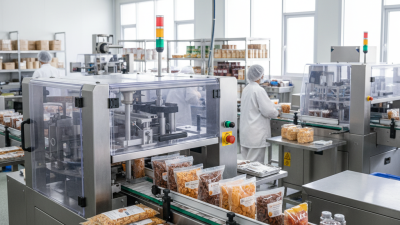
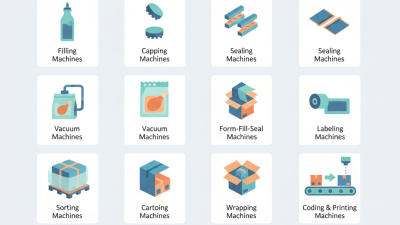
A packaging machine for small business is not simply a smaller factory machine. It is equipment that fills, seals, labels, wraps, or protects products with controlled speed and repeatable quality. For a small bakery, this might mean a tabletop heat sealer beside cooling trays. For a cosmetics workshop, it could be a semi-automatic liquid filler and capper.
The need is growing. PMMI’s 2024 State of the Industry report highlights labor shortages, automation, and operational efficiency as continuing packaging priorities. Its findings suggest that smaller companies are also examining automation, although their budgets and floor space remain limited. Smithers’ report, The Future of Packaging: Long-Term Strategic Forecast to 2028, connects packaging development with sustainability, material reduction, and improved product protection. These trends make machine selection more complicated than choosing the fastest model.
A practical buyer should assess product viscosity, package size, daily output, cleaning requirements, changeover time, and operator training. A machine that fills 30 containers per minute may be unsuitable if it creates frequent spills or requires difficult adjustments. That detail matters. Food and cosmetic operations should also verify suitable materials, hygienic design, and applicable safety requirements before purchase.
The best starting point is often a semi-automatic system with adjustable settings. It can reduce repetitive work while preserving useful human inspection. However, automation is not always economical. Maintenance, compressed air, electricity, spare parts, and downtime can change the real cost. This article explains how a packaging machine for small business works, which machine types fit different products, and where optimistic equipment claims deserve careful questioning.
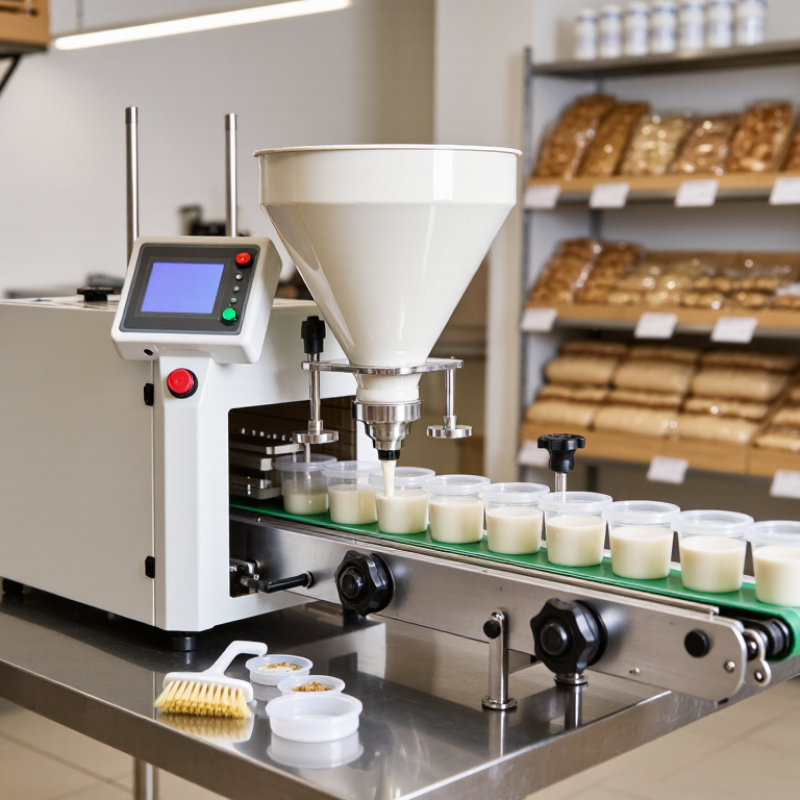
A small-business packaging machine is equipment that prepares products for sale with less manual handling. It may fill pouches, seal trays, cap bottles, label cartons, or wrap finished goods. The machine’s core functions are dosing, forming, sealing, coding, inspection, and controlled discharge. Not every unit performs every task.
For a bakery, this could mean a compact pouch filler that measures 250 grams of flour, seals the film, and prints a batch code. A small cosmetics workshop might use a semi-automatic liquid filler and tabletop labeler. Operators still load materials and check seals. The machine supports people; it does not remove every production decision. That distinction matters.
Grand View Research valued the global packaging machinery market at about USD 50.55 billion in 2022 and forecast a 4.7% CAGR through 2030. This growth reflects demand for faster, more consistent, and flexible packaging operations. PMMI industry reports also identify labor availability and automation investment as continuing pressures for processors. Yet a faster machine is not always better. It may waste film, require costly changeovers, or overwhelm a small team with maintenance tasks. A practical choice matches output volume, package size, product sensitivity, and available floor space. Start modestly. Measure downtime, material loss, cleaning time, and rejected packs before upgrading.
A packaging machine for a small business turns repeated manual tasks into a controlled production routine. Its value depends less on speed alone and more on stable feeding, accurate filling, clean sealing, and simple maintenance. Operators still matter because product texture, package size, and working conditions can change during the day.
The process usually has five essential operating stages. Stage one is product feeding, where materials move from a hopper or tray into the machine. Sensors help regulate the flow and prevent empty packs. Stage two prepares the package by opening, forming, or positioning film, pouches, boxes, or containers. Small adjustments matter here. Stage three measures and dispenses the product. Weighing systems or volume controls support consistent portions, although sticky or irregular products may require frequent checking. Stage four seals the package using heat, pressure, adhesive, or another suitable method. Poor temperature control can create weak seals. Stage five inspects, codes, and releases the finished pack. It may check weight, seal quality, date information, and package position.
In daily use, operators should record stoppages and rejected packs instead of relying on memory. That evidence helps identify feeder jams, sensor errors, or sealing changes. Cleaning is also part of automation, not an optional extra. A machine can run quickly and still produce waste. That is the uncomfortable lesson. Small businesses should test real products before choosing settings, because laboratory results rarely reflect every shift, batch, or operator.
A practical operating model for small-business packaging automation, covering the product flow from loading through final inspection and discharge.
| Operating Stage | Primary Purpose | Typical Equipment or Mechanism | Key Inputs | Typical Small-Business Range | Automation Checks and Outputs |
|---|---|---|---|---|---|
| 1. Product Feeding and Orientation | Delivers products in a steady, correctly aligned flow so the next stage can operate without manual placement. | Infeed conveyor, hopper, vibratory feeder, rotary table, or manual loading station with guided lanes. | Bulk or pre-counted products, product trays, conveyor guides, and the selected feeding configuration. | Approximately 10–60 products per minute, depending on product shape, size, and feeding method. | Sensors detect product presence and spacing. The system can stop the line when products are missing, jammed, or incorrectly positioned. |
| 2. Package Forming or Container Presentation | Creates or presents the package that will hold the product, such as a pouch, carton, tray, bottle, or tub. | Pouch-forming jaws, carton erector, tray denester, bottle unscrambler, or container indexing conveyor. | Rollstock film, flat cartons, empty trays, bottles, tubs, or other preformed containers. | Approximately 15–40 forming or presentation cycles per minute for common compact systems. | Photoelectric sensors and position controls verify material registration, container presence, and correct package alignment. |
| 3. Product Measuring and Filling | Places the correct quantity of product into each package while maintaining consistent weight, volume, or count. | Volumetric cup filler, auger filler, liquid pump, piston filler, net-weigh filler, multihead weigher, or counting system. | Product, target fill setting, dosing tooling, recipe parameters, and package-ready signal. | Commonly 10–50 fills per minute; actual performance depends on product characteristics and required accuracy. | Load cells, timers, counters, or level sensors check the fill process. Out-of-range doses may be rejected or trigger an alarm. |
| 4. Package Sealing or Closing | Closes the package to protect the contents from leakage, contamination, moisture, air, or accidental opening. | Heat-sealing jaws, continuous band sealer, induction sealer, lidding station, capper, carton tuck-in unit, or adhesive closure. | Filled package, sealing film, lid, cap, carton flap, adhesive, and programmed temperature or torque settings. | Approximately 15–60 packages per minute, with speed determined by package size and closure technology. | Temperature, pressure, dwell time, cap presence, or torque can be monitored. A weak, open, or missing closure is identified for correction or rejection. |
| 5. Coding, Inspection, and Discharge | Adds traceability information, verifies package quality, and transfers finished packs to collection, secondary packing, or shipping. | Inkjet or thermal coding unit, label applicator, vision camera, checkweigher, metal detector, reject device, and discharge conveyor. | Lot code, production date, best-before information, label data, acceptance limits, and finished packages. | Approximately 10–60 packages per minute; inspection speed must match the slowest upstream operation. | Systems can verify code readability, label position, package weight, seal appearance, foreign-metal detection, and product presence before discharge. |
| Operating note: Actual throughput, filling accuracy, sealing performance, and inspection capability vary with product properties, package dimensions, material specifications, operator loading, changeover time, and local safety requirements. The ranges above are typical planning values for compact or semi-automatic small-business systems rather than guaranteed production rates. | |||||
A packaging machine for a small business is usually a compact system that prepares products for sale. The right choice depends on product texture, container shape, production volume, and operator skill. A useful assessment begins with the filling machine. Liquid products may need piston or pump fillers, while powders often require auger or gravity systems. Thick creams can behave unpredictably. Test samples before purchasing.
Sealing machines close pouches, cups, bottles, or cartons. Heat sealers suit many flexible materials, but temperature and pressure must be adjusted carefully. Weak seals may leak during transport. Labeling machines apply front, back, wraparound, or tamper-evident labels. Small operations often start with semi-automatic labeling, especially when container sizes change frequently. Coding machines print batch references, dates, or product information on the package. Clear codes support traceability and reduce costly recalls.
Keep the workflow simple. A filler that runs faster than the sealer can create bottlenecks. Likewise, an advanced labeler may waste money if workers still load containers by hand. Cleaning access, changeover time, spare parts, and operator training deserve equal attention. These details are easy to overlook. A machine may perform well during a demonstration but struggle with dusty rooms or uneven containers. Record actual output during a short trial, then compare it with your daily demand and quality checks.
A packaging machine prepares products for filling, sealing, labeling, or final dispatch. For a small business, practical throughput usually ranges from 10 to 120 packages per minute. The correct speed depends on product shape, package size, material, and operator involvement. Speed is not everything.
A tabletop machine may handle 10–30 packages per minute with careful manual loading. This rate suits small batches, specialty products, and frequent product changes.
Semi-automatic equipment can often reach 30–70 packages per minute. It may require one operator to position containers or inspect seals.
Fully automatic systems can approach 80–120 packages per minute under stable conditions. However, real output is often lower than the advertised maximum. Brief stops, material changes, and rejected packages reduce hourly production.
Tips: Measure your busiest hour before choosing equipment. Test the actual product and packaging material. Watch for jams, uneven fills, weak seals, and awkward operator movements. Leave some capacity for growth, but avoid paying for unused speed. A machine running at 60 packages per minute may be more practical than one rated at 120. It can be easier to adjust, clean, and monitor. I would also record downtime for several days. Early estimates are often too optimistic. Reliability matters when every package must look consistent.
For a small business, machine capacity means saleable packs per hour, not the speed shown in a brochure. Measure three factors: availability, performance, and quality. Their product is Overall Equipment Effectiveness, or OEE.
The OEE Foundation’s published benchmark guidance places 85% OEE at world-class performance. Many plants operate near 60%. Below 40% is often considered poor. These figures are useful, but not perfect.
Consider a machine rated at 60 packs per minute. A seven-hour shift offers 25,200 theoretical packs. At 85% OEE, the expected output is about 21,420 good packs.
This calculation includes changeovers, stoppages, slower running, rejects, and rework. It gives owners a more honest capacity estimate. A packaging industry survey published by PMMI also identifies labor availability and equipment uptime as continuing operational pressures. A shiny machine may still miss its target.
Tips:
Track OEE by product and shift. Record every stop, even a two-minute film jam. Separate planned cleaning from unexpected downtime. Check good packs, not total packs. Review the data weekly. Small samples can mislead. One unusually smooth shift does not prove capacity. Your first OEE target might be 65%, not 85%. Improve it gradually, and question the measurement when results look too convenient.
A&B has become the leader in fresh packing and cleaning equipment for fruits and vegetables worldwide. We have achieved this by relentlessly working to produce new and innovative ideas, along with the best customer service on Earth combined with hard working, dedicated, loyal employees and the latest industrial manufacturing techniques. We are now proud to say that we manufacture The Fulcrum Fresh Harvester, this is a one of a kind Berry Harvester that was specifically designed to handle fresh pick blueberries.
732 W. Saint Joseph Street
Lawrence, MI 49064
Phone: 269-539-4700 Fax: 269-539-4705
sale@industrialpackagingmachines.com