Why Choose a Raspberry Harvester for Efficient Harvesting?
Raspberry harvesting is delicate, seasonal, and physically demanding. Ripe berries can soften within hours, especially under warm field conditions. A Raspberry Harvester offers a more consistent way to collect fruit while reducing pressure on seasonal labor.
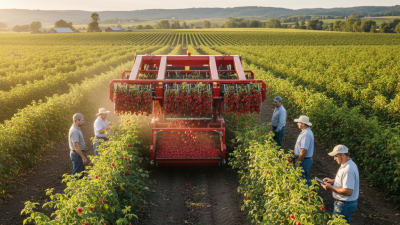
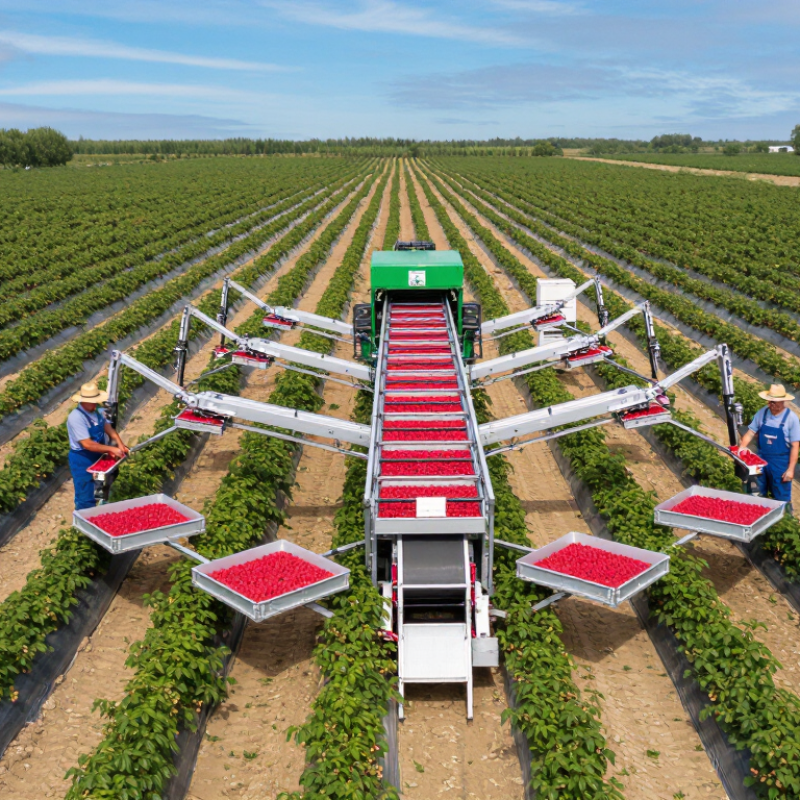
Agricultural engineer Dr. Manoj Karkee has stated, “Automation is not simply about replacing labor; it is about improving the whole production system.” This principle applies strongly to modern raspberry production. A well-adjusted Raspberry Harvester can move through rows at a controlled speed, separate berries from canes, and guide fruit into shallow containers. Operators can monitor conveyor movement, field losses, and fruit quality during the workday.
The advantages are practical. Harvesting becomes more predictable. Workers may face less repetitive bending and reaching. Farms can also respond faster when large sections reach peak ripeness. That timing matters.
However, the machine is not a perfect answer. Poorly maintained equipment may bruise berries or leave ripe fruit behind. Uneven rows can reduce performance. Wet foliage creates another challenge. Growers still need trained operators, careful settings, and regular inspection.
That is the part many promotions overlook.
Choosing a Raspberry Harvester should depend on cultivar, planting system, field size, and target market. Fresh-market fruit demands gentler handling than processing fruit. A machine that performs well on one farm may disappoint on another. Reliable results come from field trials, measured losses, and honest maintenance records. Efficiency matters, but usable fruit matters more.
Raspberries do not wait for a convenient harvest day. Their ripening window is narrow, often requiring picking every two to three days. The University of California Agriculture and Natural Resources recommends frequent harvesting because overripe berries soften quickly and lose market value. A missed round can leave red fruit hanging beside damaged fruit, complicating quality control.
Labor pressure makes this schedule harder. The USDA National Agricultural Statistics Service reported an average wage of 16.62 dollars per hour for U.S. field workers in November 2023. That figure excludes recruitment, transport, supervision, and replacement costs. A raspberry harvester can move through uniform rows while workers focus on crop checks and delicate fruit handling. Soft-catching systems, adjustable conveyors, and field containers help reduce bruising during repeated passes. Timing still matters. Poorly adjusted equipment may shake immature berries loose or scrape canes.
The USDA Economic Research Service identifies labor availability as a continuing constraint for labor-intensive specialty crops. Mechanization offers useful consistency, but it is not a perfect substitute for judgment. Operators must inspect fruit firmness, weather damage, and canopy density before changing settings. Machines also perform unevenly in wet fields or irregular plantings. That weakness deserves attention. A two-day picking cycle may improve recovery, yet careless speed can create more waste than it prevents. In practice, the strongest results come from combining machine harvesting with trained field observation.
Why Choose a Raspberry Harvester for Efficient Harvesting?
Seasonal labor shortages can turn ripe raspberries into serious financial losses. When fruit ripens quickly, farms may need many workers within a narrow window. Mechanical harvesting helps reduce this pressure. A raspberry harvester can cover several rows with a smaller operating crew. Workers can then focus on sorting, quality checks, machine monitoring, and field preparation.
The economic value depends on more than labor reduction. A grower should compare purchase costs, fuel use, maintenance, training, and expected harvesting hours. Field experience shows that machine performance improves when rows are even and fruit maturity is consistent. Harvest timing matters greatly. Overripe berries may suffer more damage during mechanical collection. Careful settings and regular inspections can protect product quality.
Human judgment still matters.
Mechanical systems do not remove every labor challenge. Operators need practical training and clear safety procedures. Seasonal workers may also need new roles instead of disappearing from the operation. In some farms, this shift improves productivity and reduces exhausting repetitive work. In others, the investment may be difficult to justify because fields are small or uneven. That limitation deserves honest attention. A harvester is not a perfect answer, but it can provide dependable capacity when labor availability changes suddenly. Careful records from each season can reveal whether the machine truly lowers costs and supports consistent delivery.
Why Choose a Raspberry Harvester for Efficient Harvesting?
Harvest efficiency depends on more than machine speed. A trained hand picker may collect roughly 4–8 kilograms of raspberries per hour, depending on fruit density and weather. Picking is selective and gentle, but labor availability can change every day. Wet leaves, heat, and uneven ripening often reduce hourly output. Timing matters.
A mechanical harvester can move several hundred kilograms per hour under suitable field conditions. It shakes ripe berries into collection trays while workers monitor quality and remove debris. The difference becomes clear during a short harvest window. One machine may replace many picking stations, reducing repeated passes through the same row. It is not magic. Setup time, row spacing, terrain, and operator skill affect real capacity.
However, machine capacity should not be measured only by kilograms collected. A damaged berry may lose more value than a slower hand-picked berry. Machine harvesting usually suits fruit intended for processing, while fresh-market crops may require careful selective picking. I would compare saleable kilograms per labor hour, not the largest number on a machine sheet. That comparison exposes an uncomfortable detail: high throughput can still create waste when fruit is overripe, poorly supported, or harvested too aggressively. Small field tests, weighing both usable and rejected fruit, provide more reliable evidence than estimates alone.
| Harvesting Method | Typical Picking Capacity (kg/person-hour or kg/machine-hour) |
Labour Required per Hour |
Expected Output per Hour |
Labour Hours per 1,000 kg |
Typical Use |
|---|---|---|---|---|---|
| Hand picking | 2–4 kg per picker-hour | 20 pickers | 40–80 kg | 250–500 | Best for fresh-market fruit requiring careful selection and gentle handling. |
| Hand picking | 2–4 kg per picker-hour | 40 pickers | 80–160 kg | 250–500 | Suitable for larger fresh-fruit blocks when sufficient seasonal labour is available. |
| Self-propelled raspberry harvester | 500–1,500 kg per machine-hour | 2–4 operators | 500–1,500 kg | 1.3–8 | Generally used for processing-grade or mechanically suitable raspberry varieties. |
| Machine harvesting advantage | Approximately 6–19× higher hourly output* | 2–4 operators | Compared with 80 kg/hour hand picking | Reduced labour demand | Helps maintain harvest timing when fruit ripens quickly or seasonal labour is limited. |
|
Planning basis: The figures are practical benchmark ranges rather than guaranteed field results. Actual capacity depends on cultivar, crop yield, row spacing, fruit ripeness, field condition, weather, operator skill, machine settings, and whether the crop is intended for fresh sale or processing. The comparison assumes 2–4 kg per picker-hour for hand harvesting and 500–1,500 kg per machine-hour for a mechanically harvestable crop.
*Hourly-output comparison: 500–1,500 kg per machine-hour divided by 80 kg per hour for a 40-person hand-picking crew. |
|||||
A raspberry harvester earns its value when it protects ripeness, not merely speed. The key measure is ripe-berry recovery above 95 percent, verified through field sampling. Before entering a row, I inspect fruit firmness, cane spacing, and weather. These details change machine behavior. Dry berries release differently from rain-softened fruit. A setting that works at sunrise may bruise fruit by noon. Small changes matter.
Start with gentle shaking and raise frequency gradually. Excessive vibration strips green berries and damages canes. Match forward speed to crop density, so ripe fruit reaches conveyors without piling. Keep drop heights low. Use clean, cushioned contact surfaces and steady airflow for leaf removal. Air that is too strong can carry light berries away. I check a 100-berry sample every block, recording ripe, underripe, bruised, and missed fruit. This creates evidence instead of relying on appearance.
When ripe recovery falls below 95 percent, adjust one setting at a time. Test frequency, then travel speed, then airflow. Changing everything together hides the cause. Operators should inspect fruit beneath plants and along conveyor edges. Missed berries often reveal poor alignment or timing. The target is useful, but not universal. Cultivar, soil moisture, and berry temperature can shift it. I have seen careful crews chase a perfect number and create more bruising. Quality control needs judgment, repeated measurements, and the humility to slow down.
Choosing a raspberry harvester starts with the crop, not the machine brochure. Firm summer-bearing varieties often tolerate mechanical shaking better than soft, delicate fruit. Berry maturity should also be reasonably even across each row. Mixed ripening can increase bruising and require repeated passes. Before purchasing, inspect cane spacing, fruit attachment, and ripe berry percentage. A small field test reveals more than a sales estimate.
Trellis design strongly affects harvesting performance. Narrow rows, sturdy posts, and consistent wire height allow predictable machine contact. A harvester built for one-sided access may struggle with double-sided trellises. Measure row width, turning space, soil conditions, and irrigation clearance. A few centimeters matter. I have seen suitable equipment perform poorly because the trellis was treated as an afterthought. That mistake is expensive to correct.
Field capacity means more than advertised acres per hour. Include loading delays, fruit transfers, cleaning, operator changes, and wet-weather interruptions. A smaller machine may work better when fields are divided or access is limited. End use also changes the selection. Fresh-market berries need gentle handling and rapid cooling, while processing fruit may accept slightly more softness. Neither option is automatically better. Review damage rates, labor availability, cooling distance, and actual harvest timing from your own fields. The first estimate may be wrong. That is useful information.
A&B has become the leader in fresh packing and cleaning equipment for fruits and vegetables worldwide. We have achieved this by relentlessly working to produce new and innovative ideas, along with the best customer service on Earth combined with hard working, dedicated, loyal employees and the latest industrial manufacturing techniques. We are now proud to say that we manufacture The Fulcrum Fresh Harvester, this is a one of a kind Berry Harvester that was specifically designed to handle fresh pick blueberries.
732 W. Saint Joseph Street
Lawrence, MI 49064
Phone: 269-539-4700 Fax: 269-539-4705
sale@industrialpackagingmachines.com