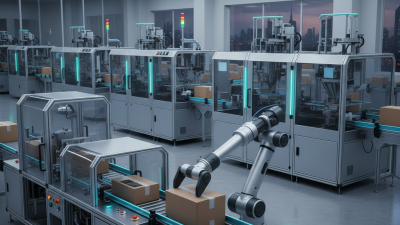
In 2026, automated packaging is no longer limited to large factories with unlimited budgets. Food, beverage, pharmaceutical, cosmetic, and household-product manufacturers are adopting smarter equipment to control labor costs, improve consistency, and protect throughput. PMMI’s 2024 State of the Industry report identifies labor availability, automation investment, and changing production requirements as important packaging machinery drivers. These pressures are visible on real production floors. A single operator may monitor a vertical form-fill-seal machine, inspect seals, and replenish film during one shift.
The market is also becoming more demanding. Grand View Research reports continued growth in packaging automation, supported by e-commerce, product variety, and manufacturing efficiency needs. Meanwhile, the International Federation of Robotics continues to document rising robot adoption across industrial sectors. This matters when buyers compare robotic palletizers, case packers, cartoners, filling machines, labeling systems, and flexible packaging equipment. Each machine solves a different bottleneck. None solves every line.
A reliable buying decision requires more than comparing advertised speeds. Buyers should examine changeover time, cleanability, spare-part access, software compatibility, safety systems, and operator training. A machine rated for 120 packs per minute may perform differently with dusty powder, sticky sauce, fragile bottles, or irregular cartons. That detail is often missed. Even experienced teams can overvalue speed and undervalue maintenance support. This guide reviews the best automated packaging machine types for 2026, using practical selection criteria and evidence from recognized industry reports. The goal is not to promote one universal solution. It is to help buyers match equipment with products, labor realities, floor space, and long-term production plans.
Packaging automation starts with a realistic view of OEE. An overall equipment effectiveness score above 85% is a strong benchmark, not a universal promise. It combines availability, performance, and quality. A line may run quickly yet lose OEE through long changeovers, minor stops, or rejected seals.
During a plant review, check the shift records beside the machine. A full reject bin can reveal more than a dashboard. Watch how operators replace film, clear sensors, and adjust guides. These small delays often reduce availability. Measure several weeks, not one impressive production day. The target may need revision.
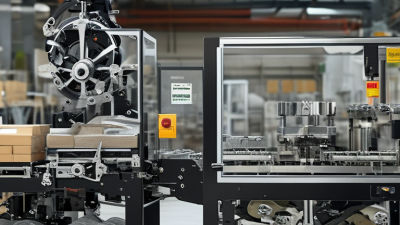
Core machine classes include filling and sealing systems, form-fill-seal machines, cartoners, case packers, labeling units, and palletizing equipment. Select the class according to product shape, package material, speed, and changeover frequency. A compact filler may suit varied products, while a case packer needs stable case dimensions and consistent upstream flow.
Ask for measurable evidence: changeover time, fault history, spare-part access, reject rates, and training requirements. Integration also matters. Conveyors, printers, inspection devices, and warehouse systems must exchange reliable signals. I have seen efficient machines underperform because upstream feeding was uneven. Automation is not automatically efficient. It becomes valuable when the complete line is balanced, monitored, and maintainable.
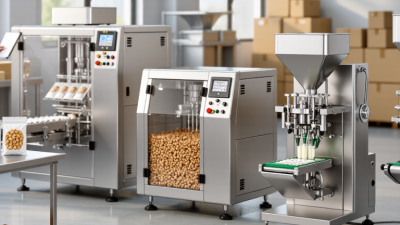
Choosing a primary packaging machine in 2026 requires more than comparing advertised speed. VFFS machines form, fill, and seal bags vertically, making them practical for powders, granules, and many snack products. HFFS machines move film horizontally and suit products needing gentler handling or shaped pouches. The package geometry matters.
Filling speed can reach 200 PPM in carefully controlled applications. However, that number is not a universal production result. Product density, particle size, film stiffness, and seal temperature can reduce actual output. A machine running at 160 PPM with fewer rejected bags may outperform a faster line. This is where buyer judgment matters.
During equipment trials, request measured results using your product, film, and target fill weight. Check weight variation, seal strength, changeover time, and cleaning access. Small details matter. A narrow access door can slow daily maintenance. A complicated recipe change can create avoidable setup errors.
VFFS equipment often saves floor space and supports multiple bag formats. HFFS systems can provide stronger presentation and precise pouch control, but they may require more installation area. Filling systems should match the material, not merely the headline speed. Auger fillers, volumetric cups, and multihead weighers behave differently under real conditions. Some specifications look excellent on paper. They still need verification on the factory floor.
Primary Packaging Machines: VFFS, HFFS, and Filling Speeds Reaching 200 PPM
Vertical form-fill-seal machines commonly operate at approximately 30–120 packages per minute, while horizontal form-fill-seal systems can reach approximately 40–200 packages per minute. Premade pouch systems typically operate at approximately 20–80 packages per minute. Actual output depends on product characteristics, package size, filling method, sealing requirements, and the number of lanes.
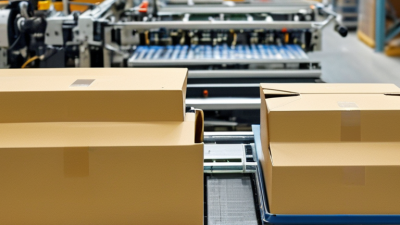
Cartoners and case packers are strong choices for secondary packaging at 30–60 cases per minute. This equals 1,800–3,600 cases hourly, before planned stops, changeovers, and minor jams. Cartoners erect cartons, insert products, and close flaps with controlled compression. Case packers then load sealed cartons into shipping cases, reducing repetitive manual handling.
A neat 60-case claim can mislead. PMMI’s 2024 State of the Industry report identifies labor availability, productivity, and automation investment as continuing packaging priorities. Buyers should therefore test complete line performance, not only the machine’s nameplate speed. Check carton dimensions, product orientation, case patterns, adhesive curing, and reject handling. Small variations matter. A poorly matched infeed can reduce a fast packer to half its expected output.
For a reliable purchase, request a factory acceptance test using real products and packaging materials. Record sustained output, changeover time, jam frequency, and operator interventions. Packaging Machinery Manufacturers Institute guidance also emphasizes safety, maintainability, and workforce usability when evaluating automated equipment. Servo-controlled cartoners suit frequent format changes, while robotic or intermittent-motion case packers can handle mixed product patterns. However, robotic loading may require more integration and programming expertise. That trade-off deserves attention. Total cost includes spare parts, training, compressed air, and downtime—not only the quoted machine price. A cautious calculation is usually better than an impressive promise.
Robotic end-of-line packaging can reduce manual labor by 20–40% in suitable production environments. Actual savings depend on line speed, product variety, shift patterns, and existing staffing. A careful site study matters more than a headline percentage.
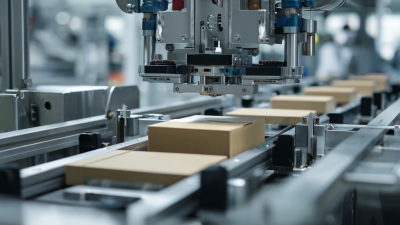
A typical system uses a case conveyor, vision sensors, and a robotic arm with a product-specific gripper. It can lift cartons, build stable layers, and change pallet patterns through programmed recipes. Flexible palletizing is valuable when a factory handles mixed case sizes or frequent order changes. Operators can select a new pattern from the control panel instead of rebuilding the station.
Small details decide performance. Slippery cartons may need softer gripping pressure. Uneven cases can disturb a full layer. Safety fencing, access doors, and emergency stops also require practical validation. It still needs judgment. Not always.
From hands-on packaging evaluations, the strongest results come after testing real cartons at full production speed. A laboratory demonstration may look perfect, while dust, damaged boxes, or rushed changeovers expose weaknesses. Maintenance teams should inspect grippers, sensors, and conveyor alignment regularly. Training should include recovery from jams, recipe checks, and safe restart procedures. A robot can reduce repetitive lifting, but it does not remove every task. In some facilities, labor savings are lower during the first months because teams are still learning the equipment. That uncomfortable gap deserves measurement, not marketing language.
2026 Best Automated Packaging Machine Types for Buyers
Choosing the right automated packaging machine starts with the product, not the catalogue. Vertical form-fill-seal systems suit granular foods, while premade-pouch machines support delicate products and varied formats. Cartoning and case-packing equipment fit downstream automation. Throughput must reflect real conditions, including changeovers, cleaning, film replacement, and minor stoppages. Speed is not everything. A machine rated for 120 packs per minute may deliver far less during a demanding shift.
Total cost of ownership includes purchase price, utilities, tooling, spare parts, training, sanitation time, and planned maintenance. Food-contact surfaces should be easy to inspect, clean, and drain. Ask for documented hygienic design details and measurable acceptance tests. Safety also requires careful review. ISO 13849 compliance should cover risk assessment, safety functions, performance levels, validation, and fault monitoring. Do not accept a certificate without checking its scope. A small documentation gap can delay commissioning.
Tips: Compare verified output, not advertised speed. Request a trial using your actual product, packaging material, and target format. Record waste, seal quality, changeover minutes, and operator interventions. Include sanitation staff in the evaluation; they often notice awkward access points first. Leave room for uncertainty. Forecasts are rarely perfect, and an underestimated product change can make an efficient machine expensive. Document every assumption.
Buyer Selection Criteria: Throughput, Total Cost of Ownership, Food Safety, and ISO 13849 Compliance
| Machine Type | Typical Packaging Applications | Typical Throughput | Automation Level | Relative TCO Profile | Food-Safety Design Considerations | ISO 13849 Selection Considerations | Typical Changeover |
|---|---|---|---|---|---|---|---|
| Vertical Form-Fill-Seal (VFFS) | Powders, granules, snacks, frozen foods, fresh produce, and other products packed in pillow, gusseted, or quad-seal bags. | 30–120 bags/min, depending on product, bag format, and number of lanes. | High; commonly integrates weighers, auger fillers, multihead scales, checkweighers, and metal detectors. | Medium Efficient for high-volume bag production; tooling and film usage affect lifetime cost. |
Use stainless-steel product-contact areas, sloped surfaces, tool-less access, suitable seals, and cleanable frame geometry. | Guarding, interlocked doors, emergency stops, and access-risk assessment should be engineered to the required Performance Level under ISO 13849-1. | 15–45 minutes for common bag sizes; longer when forming tubes, dosing systems, or film paths are changed. |
| Horizontal Form-Fill-Seal (HFFS) | Bars, biscuits, bakery products, medical disposables, hardware, and individually wrapped food products. | 40–300 packs/min; multi-lane systems can exceed single-lane output. | High; supports automatic film tracking, registration control, product infeed, and reject handling. | Medium–High Strong output potential, but sealing jaws, tooling, and format parts influence maintenance cost. |
Prioritize hygienic conveyors, minimized product accumulation, food-grade lubricants, controlled sealing temperatures, and accessible cleaning zones. | Evaluate nip points, sealing-jaw hazards, cutter protection, lockable isolators, and validated safety functions according to the required PLr. | 20–60 minutes, depending on product length, film width, sealing configuration, and infeed change parts. |
| Premade Pouch Packing Machine | Stand-up pouches, zipper bags, spouted pouches, liquid products, sauces, pet food, snacks, and ready-to-eat foods. | 20–100 pouches/min, depending on pouch size, filling method, and number of stations. | High; often includes pouch opening, filling, sealing, coding, inspection, and reject modules. | Medium–High Lower film-forming requirements but higher pouch material cost and more handling stations. |
Require hygienic filling zones, drainable surfaces, contamination controls, clean-in-place provisions where appropriate, and seal-integrity inspection. | Assess risks around pouch grippers, indexing mechanisms, filling valves, sealing stations, and automatic access doors; verify safety validation records. | 20–45 minutes for common pouch formats; liquid products may require additional cleaning and sanitation time. |
| Cartoning Machine | Folding cartons for food, pharmaceuticals, personal care products, and multipack consumer goods. | 30–400 cartons/min, depending on intermittent or continuous motion and carton design. | High; can combine product loading, leaflet insertion, carton closing, coding, and serialization interfaces. | Medium Good labor efficiency; carton magazines, change parts, and glue systems affect operating cost. |
Use cleanable product-contact surfaces, controlled compressed air, appropriate adhesive management, and foreign-material inspection. | Guard carton magazines, glue units, folding sections, and product-loading mechanisms; calculate safety functions for the actual machine configuration. | 15–60 minutes, depending on carton dimensions, product loading method, and the number of format parts. |
| Case Packer | Secondary packaging of bottles, cans, cartons, pouches, trays, and flexible bags into shipping cases. | 10–80 cases/min, with product counts and case style influencing output. | High; typically uses robotic or servo-controlled loading, case forming, sealing, and automatic product collation. | Medium–High Reduces manual case packing but requires conveyors, controls, guarding, and planned preventive maintenance. |
Separate primary-product areas from corrugated dust where possible; maintain clean transfer points and inspect damaged packaging materials. | Consider robot reach, automatic case-forming hazards, conveyor pinch points, access gates, and safe torque-off functions where applicable. | 30–90 minutes for case dimensions, pack patterns, or product changes; recipe management can reduce setup errors. |
| Robotic Pick-and-Place Cell | High-speed loading of trays, cartons, pouches, bottles, flow-wrapped products, and mixed product arrangements. | 30–200 picks/min, depending on robot type, payload, vision requirements, and pick pattern. | Very high; integrates robotics, vision, conveyors, recipes, and coordinated motion control. | High initial Low–Medium operating Flexible automation can reduce labor and support multiple SKUs. |
Use hygienic grippers, validated product-contact materials, controlled air quality, washable conveyor surfaces, and protection against product damage. | Robot-cell risk assessment should address reachability, restart prevention, protective devices, collaborative-operation claims, and validated safety control performance. | 10–40 minutes with recipe-driven tooling; gripper changes and vision calibration may extend setup time. |
| Tray Sealing Machine | Fresh meat, seafood, produce, ready meals, bakery products, and modified-atmosphere or vacuum-skin packaging. | 10–100 trays/min, depending on tray cavities, gas flushing, and sealing technology. | Medium–High; commonly combines denesting, filling, gas management, sealing, labeling, and inspection. | Medium–High Utilities, sealing tooling, gas consumption, and sanitation requirements significantly affect TCO. |
Prioritize hygienic design, washdown compatibility, condensate management, drainability, seal-area cleanliness, and validated gas or vacuum parameters. | Protect sealing plates, denesting mechanisms, film cutting areas, and automatic lid or tooling movement with appropriately validated safety functions. | 20–60 minutes; tooling, tray dimensions, film rolls, gas recipes, and sanitation requirements influence the duration. |
| Palletizing Robot or Automated Palletizer | End-of-line stacking of cases, bags, trays, cartons, and bundled products onto pallets or slip sheets. | 5–30 cases/min, depending on case weight, pallet pattern, and robot or gantry configuration. | Very high; integrates conveyors, layer forming, pallet dispensing, slip-sheet handling, and warehouse interfaces. | High initial Low labor cost Best suited to stable, repetitive end-of-line operations. |
Control corrugated dust, protect finished packs from impact, maintain cleanable conveyor zones, and separate pedestrian traffic from product flow. | Use perimeter guarding, interlocked gates, area scanners where justified, safe speed or torque functions, and documented validation of safety-related control systems. | 30–120 minutes for pallet dimensions, layer patterns, product sizes, or tooling changes. |
| Stretch Wrapper | Stabilizing pallet loads of cases, cartons, bags, drums, and mixed shipping units for storage or transportation. | 20–80 loads/hour, depending on film application, pallet height, and wrapping cycle. | Medium–High; automatic film cutting, top-sheet placement, conveyors, and load detection are common options. | Low–Medium Usually lower complexity than robotic palletizing; film consumption is a major operating-cost factor. |
Keep packaging material free from contamination, manage loose film waste, and maintain clear separation between clean product zones and shipping areas. | Protect rotating turntables, film carriages, conveyors, and automatic cutters using guards, interlocks, emergency stops, and validated control functions. | 10–30 minutes for film type, load dimensions, wrap recipe, and conveyor configuration. |
| Labeling and Print-and-Apply System | Applying labels, barcodes, date codes, lot codes, and logistics information to products, cases, or pallets. | 30–300 products/min, depending on label position, print resolution, and verification requirements. | Medium–High; can include vision inspection, barcode verification, reject systems, and production-data connectivity. | Low–Medium Relatively modest mechanical complexity; consumables, downtime, and data integration affect TCO. |
Use suitable inks, adhesives, and label materials; prevent label fragments and ensure hygienic access to product-facing areas. | Assess applicator pinch points, moving tamp pads, conveyor interfaces, access covers, and safe reset behavior during roll replacement or jam clearing. | 5–20 minutes for roll replacement and recipe changes; mechanical repositioning may require additional time. |
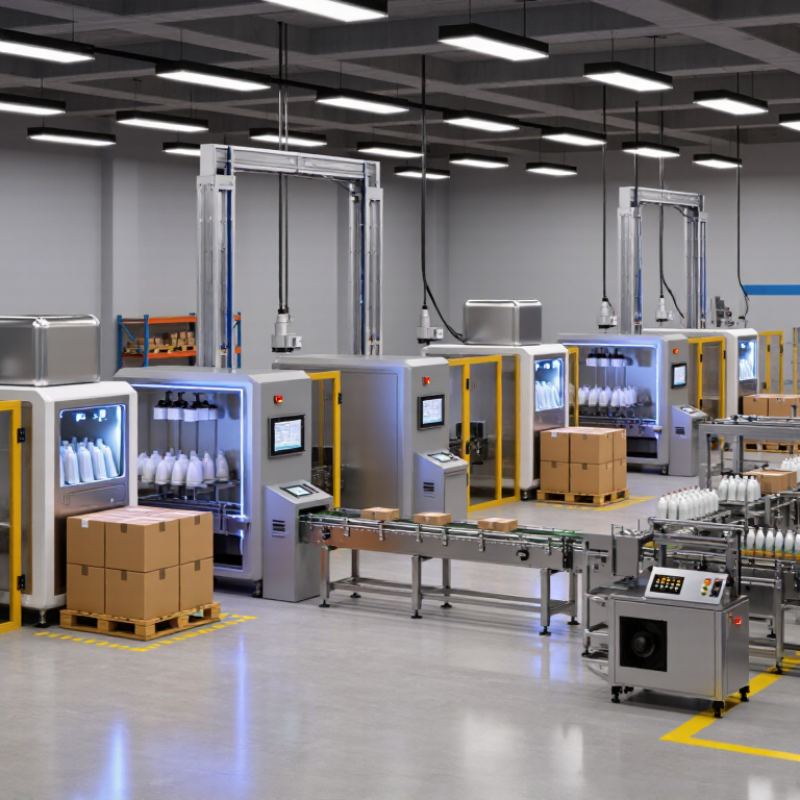
A&B has become the leader in fresh packing and cleaning equipment for fruits and vegetables worldwide. We have achieved this by relentlessly working to produce new and innovative ideas, along with the best customer service on Earth combined with hard working, dedicated, loyal employees and the latest industrial manufacturing techniques. We are now proud to say that we manufacture The Fulcrum Fresh Harvester, this is a one of a kind Berry Harvester that was specifically designed to handle fresh pick blueberries.
732 W. Saint Joseph Street
Lawrence, MI 49064
Phone: 269-539-4700 Fax: 269-539-4705
sale@industrialpackagingmachines.com