What Are the Top Filling Machine Types in 2026?
Choosing the right filling machine in 2026 will depend on more than speed. Product viscosity, container shape, hygiene demands, and production volume will influence every decision. A small cosmetics producer may need a precise piston filler. A beverage plant may prefer an advanced volumetric or flow-meter system. Powder manufacturers often require auger fillers, while liquid medicines demand controlled, sanitary equipment.
Filling lines are becoming smarter. Sensors can monitor fill levels, detect container movement, and reduce product waste. Servo-driven systems also support faster changeovers between bottle sizes. Still, automation is not always the best answer. A complex machine may increase training time, maintenance costs, and operational mistakes. That part deserves honest attention.
Packaging machinery consultant Robert A. Henry explains, “The best filling machine is the one that matches the product, the process, and the people.” His point remains practical. Operators still matter. Cleaning access still matters. A polished touchscreen cannot solve poor material compatibility or unstable product flow.
This guide examines the top filling machine types expected to shape 2026 purchasing decisions. It compares piston, gravity, pump, overflow, auger, net-weight, and monoblock systems. Each section will connect machine design with real production conditions, including sticky creams, foaming liquids, dry powders, and fragile containers. The goal is not to name one universal winner. There is none. Instead, the discussion will identify where each technology performs well, where it struggles, and which questions buyers should ask before investing.
How Filling Machines Work and How Their Performance Is Compared
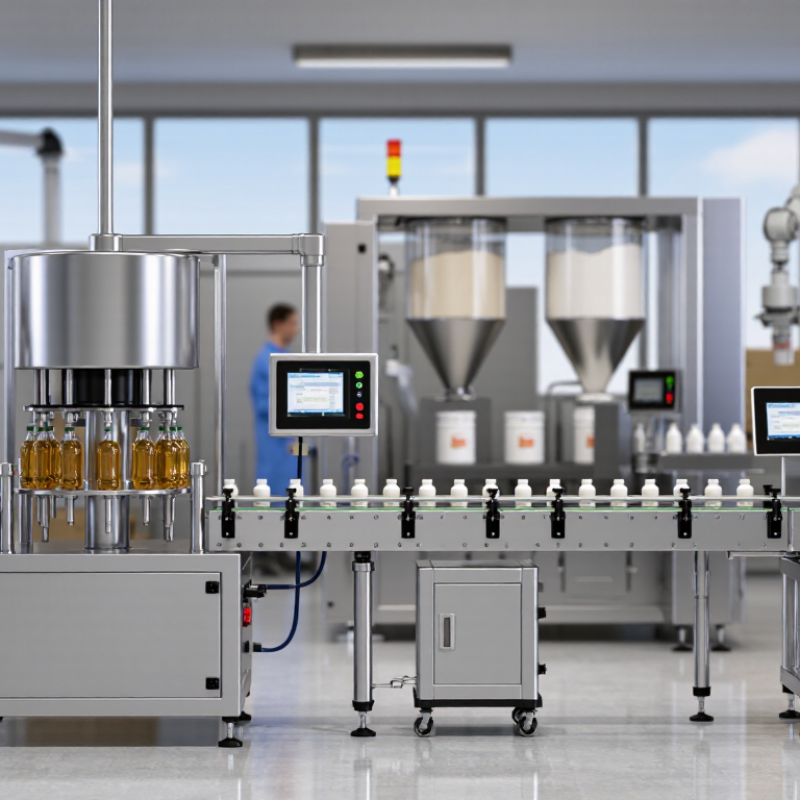
In 2026, filling machine selection depends less on popularity and more on product behavior. Gravity fillers suit thin liquids, while piston fillers handle sauces, creams, and variable viscosities. Peristaltic systems work well for sensitive liquids because the product contacts only the tubing. Powder products usually require auger filling, with vibration control to improve consistency.
A filling machine uses a measured volume, weight, or time-based cycle. The container enters, the nozzle opens, and a pump or dosing mechanism delivers the product. Sensors confirm container position and reduce spills. During testing, operators should record fill accuracy, speed, changeover time, cleaning effort, and rejected containers. A machine producing 80 containers per minute may underperform if its reject rate reaches 6 percent.
Measure the real output.
Performance comparisons need practical trials, not catalogue figures. Test the machine with the actual container, temperature, viscosity, and production speed. Check ten-minute startup behavior and longer runs, because accuracy may drift as product pressure changes. We once treated average fill weight as sufficient evidence; it was not. Variation between individual containers exposed a calibration problem. Energy use, operator access, maintenance intervals, and integration with capping equipment also affect ownership costs. A simple design can be more reliable, although it may offer fewer automated adjustments.
What Are the Top Filling Machine Types in 2026? — How Filling Machines Work and How Their Performance Is Compared
A practical comparison of common filling technologies based on operating principle, suitable products, filling accuracy, speed, and cleaning requirements.
| Filling Machine Type | How It Works | Best-Suited Products | Typical Filling Range | Typical Speed* | Typical Accuracy* | Main Performance Strength | Key Limitation | Cleaning and Changeover |
|---|---|---|---|---|---|---|---|---|
| Gravity Filler | Product flows from an elevated tank into containers under gravity. Timed filling valves control the amount delivered. | Low-viscosity liquids such as water, solvents, light oils, and liquid detergents. | Approximately 50 mL–20 L per container | 10–60 containers per minute | About ±1%–2% of fill volume | Simple and economical | Performance depends strongly on liquid viscosity, foam, and stable product level. | Generally easy to clean; suitable for products with limited residue. |
| Overflow Filler | Each container is filled through a recirculating nozzle until the liquid reaches a preset level. Excess liquid returns to the supply tank. | Thin, foaming liquids such as shampoos, household cleaners, sauces, and personal-care liquids. | Approximately 100 mL–5 L per container | 10–50 containers per minute | About ±0.5%–1% of fill volume | Consistent visual fill level | Not ideal for highly viscous, particulate, or shear-sensitive products. | Moderate cleaning effort because the product circuit commonly includes return lines. |
| Piston Filler | A piston draws a measured product volume into a cylinder and discharges it into the container. Stroke length controls the dose. | Medium- to high-viscosity products such as creams, pastes, gels, sauces, honey, and lotions. | Approximately 10 mL–20 L per container | 10–80 containers per minute | About ±0.5%–1% of fill volume | Strong volumetric control | Moving seals and pistons can wear when products contain abrasive particles. | Moderate to difficult; product-contact components may require dismantling. |
| Servo Piston Filler | An electronically controlled servo motor drives the piston and stores programmable filling profiles for precise dosing. | Viscous, thick, or high-value products requiring repeatable volumes and flexible recipes. | Approximately 10 mL–20 L per container | 15–100 containers per minute | About ±0.25%–0.75% of fill volume | High repeatability and recipe flexibility | Higher purchase cost and greater control-system complexity than pneumatic systems. | Moderate; quick-release sanitary parts can reduce changeover time. |
| Peristaltic Filler | Rotating rollers compress flexible tubing and move a measured amount of product without direct contact with a pump chamber. | Pharmaceutical, cosmetic, sterile, and shear-sensitive liquids; suitable for small batches. | Approximately 0.1 mL–5 L per container | 5–50 containers per minute | About ±0.5%–1% of fill volume | Low cross-contamination risk | Tubing is a wear component and may not suit abrasive or very thick products. | Very easy; tubing can often be replaced or sterilized without cleaning the pump head. |
| Gear or Lobe Pump Filler | A positive-displacement pump transfers product through a controlled number of pump revolutions or flow-meter feedback. | Oils, creams, syrups, sauces, and other medium- to high-viscosity liquids. | Approximately 5 mL–20 L per container | 10–100 containers per minute | About ±0.5%–1.5% of fill volume | Good for continuous product transfer | Temperature and viscosity changes can affect dosing consistency. | Moderate; pump, hoses, and valves require thorough flushing or disassembly. |
| Auger Filler | A rotating screw meters dry product by controlling screw revolutions and product feed into the container. | Powders and fine granules such as flour, spices, milk powder, detergents, and nutritional powders. | Approximately 1 g–5 kg per container | 10–60 containers per minute | About ±1%–2% of target weight | Effective for free-flowing powders | Dust, bridging, bulk-density variation, and poor flowability can reduce accuracy. | Moderate; screw, hopper, and dust-control parts need regular cleaning. |
| Net-Weight Filler | The container or a weigh hopper is placed on load cells. Product flow stops when the programmed target weight is reached. | Granules, powders, pellets, large portions, and products with variable bulk density. | Approximately 50 g–25 kg per container | 10–80 containers per minute | About ±0.1%–0.5% of target weight | Accurate weight-based dosing | Load cells require stable equipment, vibration control, and correct calibration. | Moderate; dry-product contact parts are generally accessible for cleaning. |
| Volumetric Cup Filler | Adjustable cups capture a preset volume of free-flowing solid product and discharge it into containers. | Rice, grains, seeds, candy, snacks, nuts, and other uniform free-flowing solids. | Approximately 10 g–2 kg per container | 20–120 containers per minute | About ±1%–3% of target weight | High throughput and simple operation | Weight varies when particle size, shape, moisture, or bulk density changes. | Easy to moderate; cups and chutes are normally removable. |
Note: The figures are typical engineering ranges rather than guaranteed machine specifications. Actual performance depends on the number of filling heads, container size and shape, product temperature, viscosity, foaming behavior, particle characteristics, dose size, automation level, and operator settings. “Containers per minute” refers to approximate single-product-line throughput under stable production conditions.
Related Posts
-
What Are the Top Filling Machine Suppliers Worldwide?
-
Why Choose an Automatic Filling Machine?
-
How to Choose the Right Filling Machine for Your Packaging Needs
-
How to Choose the Best Automatic Bag Filling Machine for Your Business Needs
-
Best Bag Filling Machine Options for Efficient Packaging Solutions?
-
Top Bag Filling Machines for Efficient Global Business Needs?