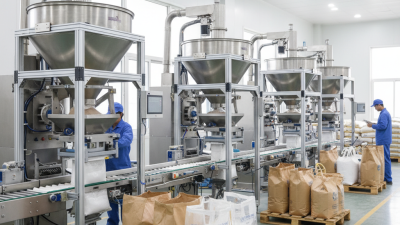
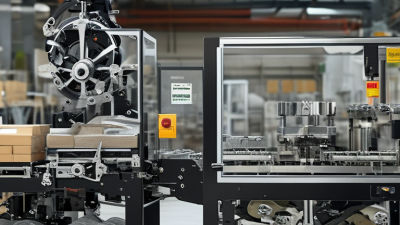
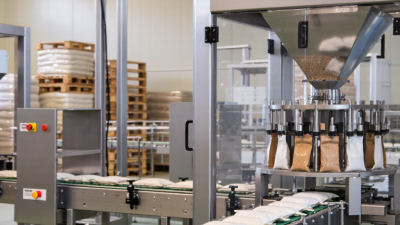
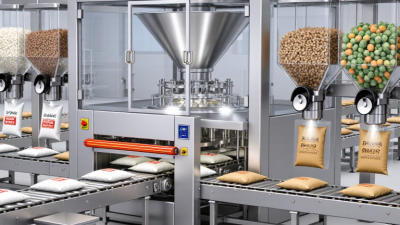
Choosing the best bag packing machine in 2026 starts with the product, not the sales brochure. Powder, granules, snacks, and fragile parts behave differently at the filling point. A machine that handles dry rice neatly may struggle with dusty seasoning or irregular pieces. Watch a real product test. Look for clean seals, steady fill weights, and bags that leave the line without leaning or wrinkling.
Packaging machinery specialist Jordan Lee offers this practical reminder: “The right machine is the one that protects product quality while fitting the pace and limits of the actual line.” Treat that as a buying principle, not a universal ranking. Compare the bag styles, target output, changeover time, operator access, and cleaning needs you expect in daily use. Ask suppliers to run your product in your packaging material, then review the results in person. A polished demonstration can hide awkward adjustments.
Small details matter. Can an operator reach the film roll safely? Are common wear parts easy to identify? How long does a format change really take? Not every buyer needs automation at every stage. Sometimes the sensible choice is less impressive on paper. This guide compares machine types, key features, and practical trade-offs to help identify a bag packing machine that suits your product and production conditions. There may be no perfect match. That is worth admitting before signing.
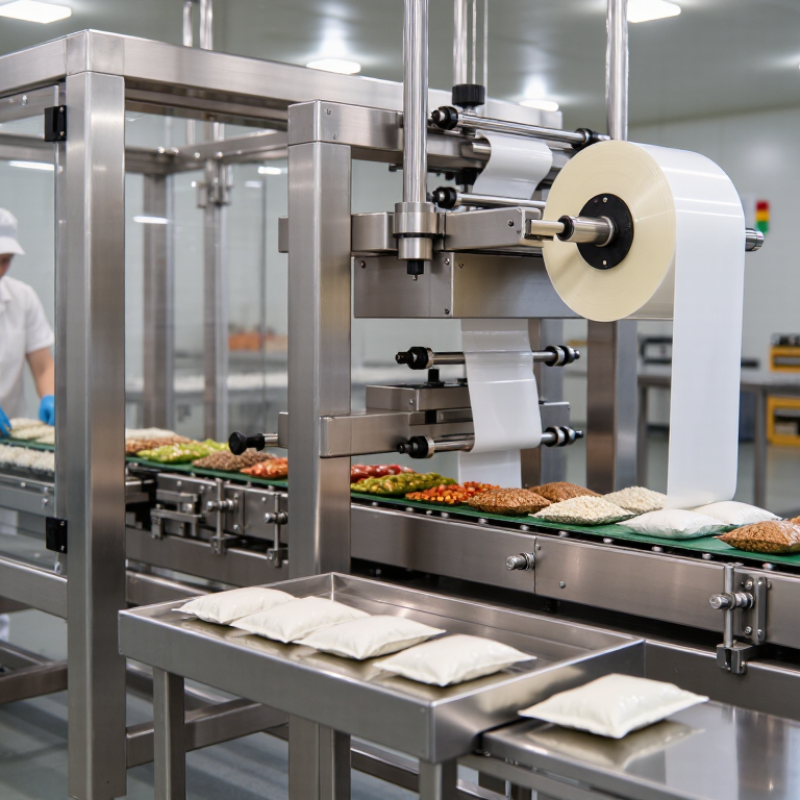
A bag packing machine measures, fills, and closes products in bags. Depending on its design, it may handle pre-made pouches or form bags from a roll of film. Typical components include a product feeder, weighing or dosing system, bag holder, sealing jaws, and controls. The sequence is simple to picture: a measured portion drops into an open bag, then heat or pressure seals its top. Small details matter.
The machine’s format should match the product and bag material. Granules may need a different dosing method from powders, which can cling to surfaces or create dust around the filling point. Operators also check seal strength, fill accuracy, changeover time, and cleaning access. A fast machine is not automatically the right one. In practice, product samples and trial runs reveal issues that specification sheets can miss.
For context, MarketsandMarkets’ 2023 Packaging Machinery Market report estimated the global market at $45.1 billion in 2023 and projected $59.2 billion by 2028. That figure covers packaging machinery broadly, not bag machines alone, but it reflects sustained investment in automated packaging. Real production lines still have imperfect moments: a pouch may wrinkle, or a setting may need adjustment. That is why performance should be assessed with the actual product, bag, and operating conditions.
A bag packing machine converts packaging material and product into sealed, repeatable packs. In a vertical form-fill-seal system, a film roll unwinds and passes over a forming collar. The film becomes a tube, then a vertical seal closes its edge. A dosing unit drops product into the open bag. Heated jaws seal the top and often create the next bag’s bottom. A cutter separates each pack. It is a precise rhythm, but not magic.
Sensors track film position and product flow. A controller adjusts timing, temperature, and fill weight; operators still need to check seals and clear jams. Powders may use an auger, while granular foods often use a multihead weigher. Premade-pouch machines work differently: they open a pouch, fill it, then seal it. PMMI’s 2023 State of the Industry report estimated U.S. packaging machinery shipments at about $10.5 billion that year, reflecting substantial investment in these systems. PMMI’s Future of Packaging and Processing report also points to labor constraints and automation as industry priorities. A neat process diagram hides real messiness: sticky product, wrinkled film, or a poorly set seal can stop a line. The right settings depend on the bag material, product, and required output.
Bag packing machines vary by bag style, product, and production speed. Vertical form-fill-seal machines create bags from a roll of film, fill them, and seal them upright. They suit powders, grains, and small pieces, such as rice or hardware parts. Horizontal flow wrappers move products along a belt and wrap them in film. They work well for bars, trays, and other items that keep their shape. The finished pack often resembles a pillow.
Premade pouch machines fill and seal bags that already have zippers, gussets, or shaped edges. They offer flexible presentation, but pouch handling can slow a line if sizes change often. Open-mouth baggers fill larger sacks with bulk materials. Some models use a scale and clamp to control each fill. Vacuum systems remove air before sealing, which can help protect products that need reduced oxygen exposure. No type fits every job. Even a capable machine may struggle with dusty product or uneven bag film.
Choosing a bag-packing machine in 2026 starts with the bag, product, and real production conditions—not a headline speed. Test the machine with your actual film, fill weight, and seal requirements. Watch how it handles dusty product, soft bags, and small changes in bag dimensions. Small details matter.
A quoted speed can look impressive and still mislead. Ask for sustained output during a full shift, including changeovers and routine cleaning. Check whether operators can adjust recipes without specialist support, and whether the machine connects cleanly with your filler, checkweigher, and downstream equipment. The International Federation of Robotics’ World Robotics 2024 report counted 4.28 million industrial robots operating worldwide in 2023, up 10% from 2022. That growth makes integration worth checking, even for a mostly manual packing line.
Data access and maintainability matter, too. The 2024 State of Smart Manufacturing report surveyed 1,560 manufacturers across 17 countries; 95% had invested or planned to invest in AI and machine learning within five years. Ask what machine data is available, how faults are shown, and whether common wear parts can be replaced quickly. Then compare changeover time, cleaning access, energy use, and service response—not just purchase price. I would still treat supplier demos cautiously; a tidy test run is not a whole production week.
The best choice depends on the product, bag style, target output, and available space. The production rates below are indicative ranges; actual output varies with product characteristics, bag dimensions, filling method, and operator or line setup.
| Machine type | Suitable applications | Common bag formats | Indicative output | Key advantages | Points to check |
|---|---|---|---|---|---|
| Manual or benchtop sealer with separate filling | Small batches, trials, and products with frequent recipe changes | Premade heat-sealable pouches and bags | Operator-dependent; generally suited to low-volume work | Low initial complexity, compact footprint, simple operation | Labor requirement, seal consistency, and whether filling accuracy is adequate |
| Semi-automatic weigh-and-fill system | Dry granules, powders, seeds, and other free-flowing products | Premade bags, filled manually or with an assisted sealer | Often about 5–20 fills per minute, depending on product and operator | Can improve portion consistency without requiring a fully automated line | Dust control, target weight, product flow, and the separate sealing step |
| Premade-pouch packing machine | Retail products needing a finished pouch, such as snacks, powders, or liquids | Premade stand-up, flat, zipper, or spouted pouches, subject to machine configuration | Commonly around 20–60 pouches per minute on automated systems | Supports a range of pouch styles; can integrate filling, sealing, and optional gas flushing | Pouch dimensions, zipper or spout handling, changeover parts, and fill-system compatibility |
| Vertical form-fill-seal (VFFS) machine | High-volume packing of snacks, grains, powders, and other products suited to vertical handling | Pillow bags, gusseted bags, and selected block-bottom styles, depending on configuration | Often about 30–120 bags per minute; product and bag format can reduce the rate | Forms bags from roll film and can combine forming, filling, and sealing in one line | Film compatibility, product feeding, seal quality, bag dimensions, and film-change time |
| Horizontal form-fill-seal (HFFS) machine | Products that are easier to load horizontally, including bars, kits, and shaped items | Pillow packs and selected pouch styles formed from roll film | Varies widely; commonly used for medium- to high-speed applications | Suited to controlled placement of individual or grouped products | Product orientation, infeed design, pack length, and required sealing pattern |
| Vacuum bagging system | Products where air removal is part of the packaging requirement, such as some foods or components | Vacuum-compatible premade bags | Cycle-based; chamber size, evacuation time, and loading determine throughput | Removes air from the bag before sealing when the product and process allow | Bag barrier properties, product sensitivity, chamber capacity, and vacuum level |
| Feature | Why it matters | Questions to ask |
|---|---|---|
| Product and filling method | Powders, liquids, granules, and irregular solids behave differently during dosing and bag filling. | Can the machine handle the product’s flow, fragility, temperature, and target fill quantity? |
| Bag material and seal quality | Film structure and seal conditions affect package integrity and compatibility with the product. | Has the machine been tested with the intended film, thickness, and seal requirements? |
| Output at the required quality | Published maximum speeds may not reflect sustained production with the actual product and bag. | What verified output can be achieved with the intended product, bag size, and acceptable reject rate? |
| Changeover and adjustment | Frequent changes in bag size or product can increase downtime. | How long do format changes take, and which parts or tools are needed? |
| Controls and inspection | Clear controls and suitable checks can help operators maintain repeatable settings and identify faults. | Are alarms, recipe settings, fill checks, and seal inspection appropriate for the process? |
| Cleaning, safety, and maintenance | Access for cleaning and service affects uptime, hygiene, and safe operation. | Are product-contact areas accessible, and are maintenance instructions and safety guarding adequate? |
| Utilities and line integration | Power, compressed air, floor space, and upstream or downstream equipment can affect installation and operation. | What utilities, operating clearance, conveyors, and inspection equipment are required? |
Selection note: Request a production trial using the actual product and packaging material, and compare sustained output, seal integrity, changeover time, cleaning needs, and total operating requirements.
The best machine depends on the product, bag style, and daily production target. Compare actual output, not just the speed listed in a brochure. Ask how performance changes with your product’s size, weight, and texture. A machine that handles 60 bags per minute with one item may slow down with sticky or irregular products. Fit matters. Check bag dimensions, sealing method, and filling accuracy against your real packaging needs.
Also compare changeover time, cleaning access, and operator training. If staff must adjust several settings between bag sizes, frequent product changes can eat into production time. Inspect the seal on sample bags, then check for leaks or uneven edges. Ask about spare-part availability, maintenance intervals, and service response. Include energy use and expected downtime in the total cost. A polished demonstration can hide awkward daily tasks, so request a trial using your own product and packaging.
Tips: Bring several product batches and bag sizes to the trial. Record speed, rejected bags, and changeover minutes. Take notes; memory gets fuzzy. If the supplier cannot explain how measurements were collected, treat the figures cautiously. No comparison is perfect, and real production conditions may still reveal surprises.
A&B has become the leader in fresh packing and cleaning equipment for fruits and vegetables worldwide. We have achieved this by relentlessly working to produce new and innovative ideas, along with the best customer service on Earth combined with hard working, dedicated, loyal employees and the latest industrial manufacturing techniques. We are now proud to say that we manufacture The Fulcrum Fresh Harvester, this is a one of a kind Berry Harvester that was specifically designed to handle fresh pick blueberries.
732 W. Saint Joseph Street
Lawrence, MI 49064
Phone: 269-539-4700 Fax: 269-539-4705
sale@industrialpackagingmachines.com