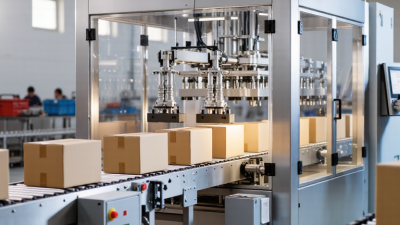
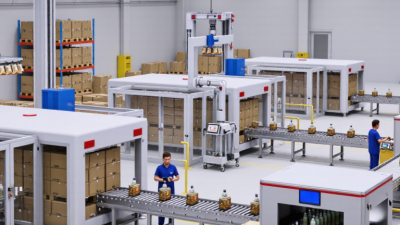
Choosing the right packaging equipment affects product protection, labor use, and daily production stability. A case packer machine can place bottles, cartons, pouches, or trays into shipping cases with controlled speed and repeatable movement. This matters when workers handle hundreds of units per hour, especially in demanding food, beverage, pharmaceutical, and consumer goods operations.
The machine’s value becomes clearer on the factory floor. Servo-driven movements can reduce rough handling, while sensors help detect missing products or misplaced cases. Automatic case forming, product loading, and sealing can also create a smoother packaging flow. Less manual lifting may improve operator comfort. Better consistency may reduce crushed cartons and shipment delays.
Still, automation is not a magic box. Poor case dimensions, unstable products, or weak line integration can create new problems. A reliable evaluation should examine product shape, case strength, changeover time, cleaning needs, and available floor space. Production trials are useful. So are maintenance records and operator feedback.
A suitable case packer machine should match the real line, not an imagined one. Manufacturers and packaging specialists can verify speed claims through documented tests and clear performance conditions. Teams should also review guarding, emergency stops, electrical requirements, and applicable safety standards before installation. These details often decide whether equipment performs well after the sales demonstration ends. Careful selection can support dependable output, lower handling demands, and more predictable packaging quality. The best choice remains practical. It must serve people, products, and production goals together.
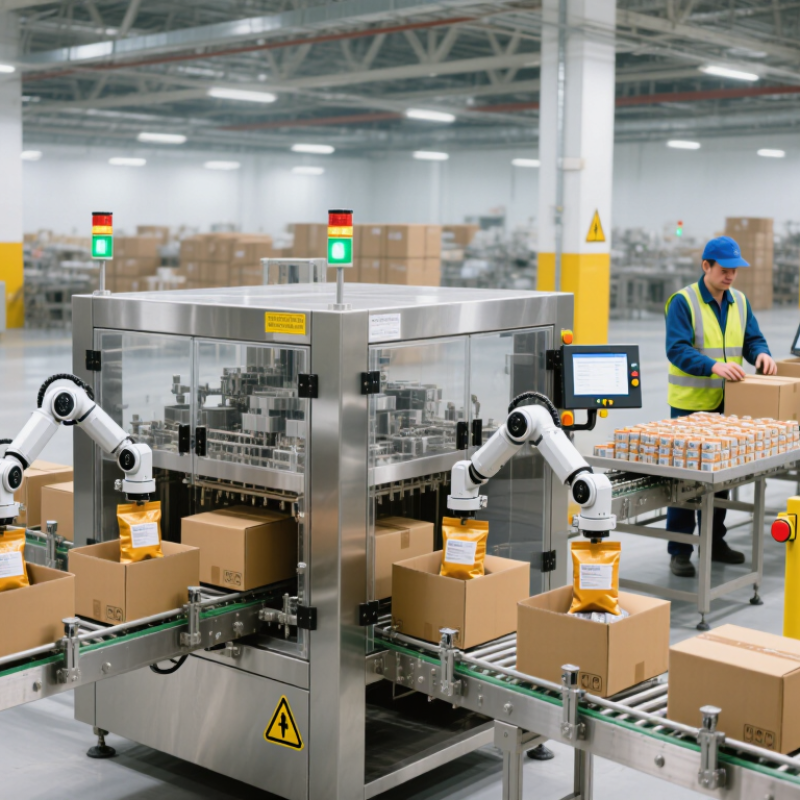
A case packer automates the final handling of retail packs before shipping. It receives products, groups them, and loads them into corrugated cases. Some systems also close, seal, label, and inspect each case. The difference is practical. A case packer reduces repetitive lifting and keeps packing patterns consistent. PMMI’s 2024 State of the Industry report valued U.S. packaging machinery shipments at more than $10 billion in 2023. Its outlook also points to continued investment in automation, partly because manufacturers face persistent labor shortages.
A reliable machine must match the product, case style, and required speed. Servo-controlled movements can manage fragile pouches or irregular containers more gently. Vision inspection can detect missing units before sealing. Yet automation is not automatically the right answer. Poor product spacing, unstable cases, or frequent size changes may create stoppages. Small detail. Large cost. Smithers’ packaging market research projects global packaging demand will continue expanding through 2028, increasing pressure for flexible, traceable packing operations. In real plant trials, changeover time often matters more than maximum speed.
Tips: Check the complete line, not only the case packer. Measure product dimensions, case compression strength, and actual changeover frequency. Request performance data using your own products. A machine that runs perfectly with test cartons may behave differently during a humid shift. Keep access panels, sensors, and sealing areas easy to clean. Also question optimistic capacity claims; a slower, stable process may deliver better usable output.
A case packer can handle roughly 10–60 cases per minute, depending on product shape, carton size, and loading method. That equals 600–3,600 cases per hour before stops, inspections, and changeovers. The upper range suits stable, high-volume lines. The lower range may fit mixed products or careful manual presentation.
A neat benchmark can still mislead. In real production, effective output often falls below the machine’s nameplate speed. Operators manage film scraps, carton variation, sensor checks, and occasional jams. Track overall equipment effectiveness, reject rates, and changeover time, not speed alone. PMMI’s 2023 packaging machinery research highlights labor availability and automation as major investment drivers. This supports the practical value of consistent case packing.
The MHI 2024 Annual Industry Report found that 55% of surveyed organizations planned to increase supply chain technology investment. A case packer can support that direction by reducing repetitive handling and creating predictable case flow. Confirm the result with a production trial. Test the smallest case, the fastest SKU change, and the least cooperative product. That is where attractive claims usually become less comfortable. A reliable specification should state sustained cases per minute, staffing needs, case dimensions, and acceptable quality limits.
Labor economics often makes the strongest case for automation. Manual packing may require several operators folding cartons, loading products, and checking seals. Output can vary after lunch, during staff shortages, or when product sizes change. A case packer machine delivers a steadier rhythm, often measured in cases per minute rather than personal speed. In a practical plant trial, managers should record hourly output, changeover time, reject rates, and unplanned stops. A machine may pack faster, but speed alone does not prove savings.
The real comparison includes wages, training, overtime, workplace fatigue, maintenance, and floor space. For example, replacing repetitive loading work can let one operator supervise feeding, inspections, and adjustments. However, the first cost spreadsheet may be too optimistic. Small products, irregular cartons, or frequent changeovers can reduce expected output. Reliable decisions come from testing the actual case dimensions and production schedule. A short pilot can reveal problems that a supplier demonstration cannot.
Tips: Compare total cost per packed case, not only hourly wages. Track performance across a full shift. Check whether operators can clear jams safely and quickly. Leave room for maintenance access. Review the data with production staff, because their daily experience often exposes hidden delays. Automation is powerful, but it still needs thoughtful setup and honest measurement.
A case packer can improve throughput, but speed must never lead the design. ISO 12100:2010 requires manufacturers to identify hazards, estimate risks, and reduce them through a defined hierarchy. That process starts with inherently safer design, followed by guarding and clear user information.
On a practical assessment, inspect the carton infeed, compression guides, transfer arms, and closing mechanisms. Fingers can reach pinch points during clearing or adjustment. A guarded access door should stop hazardous motion before an operator reaches the mechanism. Unexpected restart also deserves attention. A reset button alone is not enough.
Small details matter.
The International Labour Organization reported 2.78 million work-related deaths and about 374 million non-fatal injuries annually in its 2019 safety estimates. These figures show why machine safety cannot rely on operator memory. A compliant case packer should support lockout procedures, visible emergency stops, safe access, and documented validation. ISO 12100 also encourages risk reduction across the machine’s lifecycle, including cleaning and maintenance.
A weakness remains.
Risk assessments can become paperwork exercises. Operators may discover real hazards that designers missed, such as awkward carton removal or poor visibility near a sensor. Their feedback should update the assessment. ISO 12100 does not replace engineering judgment; it structures it. Manufacturers should retain hazard records, test safety functions, and explain residual risks in accessible language. Reliable packaging equipment protects production and the people standing beside it.
Choosing a case packer machine starts with the case format, not the machine catalog. Confirm whether production needs regular slotted cartons, wraparound cases, trays, or mixed formats. Measure carton length, width, height, flap clearance, and product orientation. A few millimeters can affect loading stability. Sample cases should run through a test machine before purchase.
Speed must match the real production rhythm. A stated maximum rate may not reflect changeovers, product variation, or operator pauses. Compare the required hourly output with the machine’s sustained rate. Leave practical capacity for seasonal peaks. Fast equipment is not useful when cartons jam every twenty minutes. Track reject rates, restart time, and changeover duration during trials.
ROI should include more than labor savings. Calculate reduced handling, lower damage, energy use, maintenance, spare parts, and floor-space requirements. Ask for documented performance data and service response terms. A three-year model often reveals whether automation creates value or only moves costs. On production floors, small details matter: tool-free adjustments, accessible sensors, and clear fault messages can save hours each month. A neat spreadsheet can still mislead if downtime is estimated too generously. Recheck the assumptions with operators and maintenance staff. Their objections may expose the weakest part of the investment.
| Case Packer Configuration | Best-Matched Case Format | Typical Speed (cases/min) |
Suitable Product Profile | Changeover Characteristics | Indicative Labor Requirement | Indicative Investment Level | Typical Payback Potential |
|---|---|---|---|---|---|---|---|
| Top-load robotic case packer | RSC, shelf-ready, tray, partitioned, and display-ready cases | 10–30 | Mixed SKUs, fragile products, irregular shapes, or products requiring controlled placement | Usually 15–45 minutes, depending on gripper tooling, recipe control, and case dimensions | Approximately 0.5–1 operator per shift for loading materials, quality checks, and replenishment | Medium to high | Approximately 2–5 years when replacing repetitive manual packing at two or more shifts per day |
| Continuous-motion horizontal case packer | RSC or wraparound cases with consistent product orientation | 20–60 | Stable, uniform products such as cartons, pouches, bottles, cans, or flow-wrapped packs | Usually 10–30 minutes for established pack patterns and standardized case sizes | Approximately 0.5–1 operator per shift | Medium to high | Approximately 1.5–4 years at high utilization and steady production volumes |
| Wraparound case packer | Wraparound cases and retail-ready trays | 15–50 | Products that can be grouped and loaded as a stable bundle, including cartons, cans, and bottles | Usually 15–40 minutes; tooling and carton blank dimensions affect setup time | Approximately 0.5–1 operator per shift | Medium | Approximately 2–4 years when case material reduction and labor savings are both achieved |
| Drop-style case packer | Open-top RSC cases, trays, and simple regular case patterns | 15–40 | Rigid products that tolerate vertical placement and have repeatable dimensions | Usually 10–25 minutes for limited SKU variation | Approximately 0.5–1 operator per shift | Low to medium | Approximately 1.5–3 years for repetitive, high-volume applications |
| Semi-automatic case packer | RSC cases, trays, and manually presented cartons or products | 5–15 | Small to medium production runs, frequent SKU changes, and growing operations | Typically 5–20 minutes, with manual adjustments often required | Approximately 1–2 operators per shift | Low to medium | Approximately 2–5 years, depending on labor rates and daily operating hours |
| Manual packing benchmark | Flexible case formats with operator-led loading and closing | 3–12 | Low-volume, highly variable, or temporary production requirements | Flexible, but dependent on operator skill and physical setup | Approximately 2–6 operators per shift, depending on case count and pack pattern | Low initial investment | No equipment payback calculation; labor, ergonomic, and consistency costs may be higher |
A&B has become the leader in fresh packing and cleaning equipment for fruits and vegetables worldwide. We have achieved this by relentlessly working to produce new and innovative ideas, along with the best customer service on Earth combined with hard working, dedicated, loyal employees and the latest industrial manufacturing techniques. We are now proud to say that we manufacture The Fulcrum Fresh Harvester, this is a one of a kind Berry Harvester that was specifically designed to handle fresh pick blueberries.
732 W. Saint Joseph Street
Lawrence, MI 49064
Phone: 269-539-4700 Fax: 269-539-4705
sale@industrialpackagingmachines.com