In 2026, choosing the best Fresh Harvester depends on the crop, field conditions, and support available after delivery. A machine suited to leafy greens may not handle root crops gently or efficiently. Buyers should compare harvesting method, working width, field capacity, power requirements, and crop loss under realistic conditions. Small details matter: wet soil, uneven rows, and limited turning space can change daily output.
Numbers can look convincing. Field results matter more. A demonstration using the buyer’s crop can reveal bruising, missed produce, cleaning time, and operator visibility. These observations are more useful than relying on brochure figures alone. Still, one trial cannot represent every season or farm. Results deserve careful interpretation.
This guide examines practical factors global buyers can use when assessing Fresh Harvester options. It considers purchase price alongside fuel or energy use, maintenance access, spare-parts availability, warranty terms, and local dealer support. Buyers should also confirm that the machine’s specifications and safety features suit their operating environment. Ask suppliers for clear test conditions and service references. A low-cost model may become expensive if key parts take weeks to arrive. Conversely, the most advanced machine may be unnecessary for a smaller operation. No comparison is perfect; crop varieties, labor skills, and field layouts differ. Use the criteria as a starting point, then verify claims with a hands-on inspection and a realistic cost estimate.
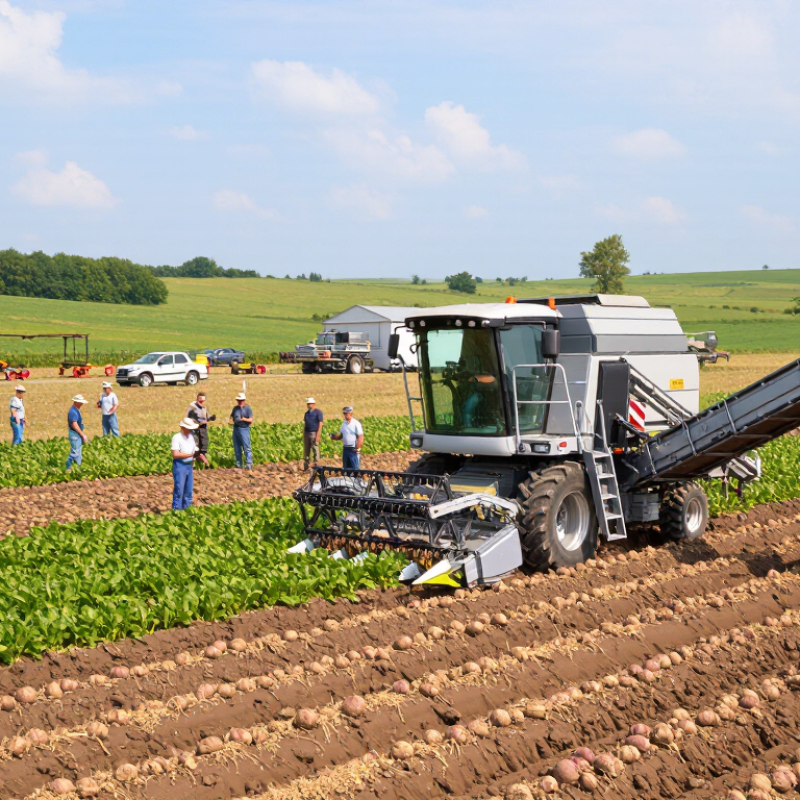
A fresh harvester is a machine designed to cut crops and collect them soon after they reach maturity. Depending on its configuration, it may gather produce into a bin, load it onto a conveyor, or leave harvested material in rows for later handling. The right setup depends on the crop, field conditions, and how quickly the produce must reach storage. Fresh does not mean damage-free.
Different harvesters handle different crops. Leafy greens and herbs often need gentle cutting and careful collection to limit bruising. Root crops, such as carrots and potatoes, require digging parts that loosen soil while lifting the crop. Some machines are built for fruiting crops, including tomatoes or berries, with adjustable picking or sorting systems. A harvester suited to one crop may perform poorly on another; crop shape, stem strength, and ripeness all matter.
When evaluating a machine, check its cutting height, crop-contact surfaces, cleaning access, and capacity in realistic field conditions. Wet soil can slow lifting, while uneven beds may leave produce behind. Ask for a demonstration using the intended crop and inspect the harvested material for cuts, bruises, and soil contamination. That test can reveal more than a specification sheet. Be cautious with claims about speed: faster harvesting may increase damage or sorting work, and the trade-off is easy to overlook.
A fresh harvester is not a one-size-fits-all machine. Crop structure, field conditions, and destination market all affect the right choice. Leafy greens need gentle cutting and rapid handling. Root crops require digging depth control and effective soil separation. Tree fruit often depends on selective picking, while grain crops use cutting, threshing, and cleaning systems. The method matters. A machine that works well in dry, even fields may struggle with wet soil, uneven rows, or delicate produce.
Capacity should match the farm’s harvest window, not just its peak output target. Compare tonnes per hour with crop yield, field size, transport availability, and time needed for cleaning and changeovers. FAO’s 2019 State of Food and Agriculture estimated that about 14 percent of food is lost between harvest and retail. That figure covers many causes, but it underlines why bruising, missed produce, and delays deserve attention alongside speed. Ask suppliers for crop-specific field trials, and record actual throughput under local conditions.
Look closely. Check cutting height, fruit damage, residue handling, operator visibility, and how quickly the machine can be adjusted between plots. For fresh produce, cooling and transfer logistics may limit usable capacity more than the harvester itself. A tidy specification sheet can still miss that. Test with the crop you actually grow, including a difficult field if possible. Sometimes the slower setting gives a better saleable yield.
Global buyers should judge a fresh harvester by saleable yield, not headline speed. FAO’s The State of Food and Agriculture 2019 estimated that 14% of food was lost between post-harvest and retail. That global figure is not a machine score, but it shows why gentle handling matters. Bruised produce, missed rows, and soil contamination can erase the gains of a fast pass. Inspect crop damage and field loss across representative plots. Then check throughput.
Compare fuel use, adjustment time, and uptime under your own crop and field conditions. Ask for trial records showing crop variety, moisture, terrain, and operator hours; otherwise, comparisons can mislead. Look closely at guards, cleaning access, spare-part availability, and routine service intervals. A machine that needs a specialist for every adjustment may sit idle during peak harvest. FAO’s estimate dates from 2019, so treat it as context, not a 2026 forecast. Real fields are messier. Do not overvalue automation before confirming local technician support and a dependable parts route. Assess operator visibility, safe access, and how quickly settings can be changed between blocks.
Which performance factors matter most to global buyers in 2026?
The chart presents practical reference targets commonly used when evaluating fresh-crop harvesting equipment: high field capacity, low product loss, low crop damage, efficient fuel use, and strong mechanical availability. Actual results vary by crop, field conditions, operator skill, machine configuration, and harvesting method.
Reference targets: approximately 30 t/h throughput, maximum 2% product loss, maximum 1.5% product damage, maximum 15 L/ha fuel consumption, and at least 90% mechanical availability.
A harvester that performs well on dry, level ground may struggle in sticky soil or narrow, sloping fields. Check turning space, tire pressure options, ground clearance, and how quickly the machine can be cleaned. For fresh crops, gentle handling matters: sharp drops and crowded conveyors can bruise produce before it reaches the cooling area.
Mud changes everything. A field visit during harvest can reveal bottlenecks that a specification sheet misses.
Labor availability also shapes the right machine size. ILOSTAT’s modeled estimates show agriculture represented roughly 26% of global employment in 2022, though the share varies widely by country. Buyers should compare the crew needed for feeding, sorting, and maintenance—not just the operator count.
FAO and UN-Water report that agriculture accounts for about 72% of global freshwater withdrawals, a useful reminder to consider local water access for cleaning and crop handling. Ask for operating requirements under conditions like yours. Then check whether local technicians can service the system.
A neat calculation can still mislead: seasonal labor, crop maturity, and wet weather rarely follow the plan.
2026 Best Fresh Harvester for Global Buyers?
Before buying a fresh harvester, inspect the machine with the same care as its sales documents. Check guards, emergency stops, access steps, visibility, and safe cleaning points. Ask operators to test controls while wearing normal work gloves. Small details matter. The ILO’s 2011 safety review estimated about 170,000 fatal occupational accidents in agriculture each year; the figure is dated, but the risk deserves attention.
Request a risk assessment, operator manual, maintenance schedule, and conformity records for the destination market. For combine-type machines, ask whether design and testing address ISO 4254-7, which covers combine, forage, and cotton harvesters. Do not treat a certificate as proof that every configuration complies locally. Confirm the serial number, attachments, and safety features match the paperwork. I would still question any supplier who cannot explain a test result plainly.
Service readiness affects both uptime and harvested quality. FAO reported that 13.2% of food was lost between post-harvest and retail in 2021. During a field trial, record crop damage, uncollected produce, fuel use, and cleaning time. Ask how quickly technicians can reach your site, which wear parts are stocked nearby, and what response times are written into the service agreement. Keep it specific. A promised spare part is not the same as one on the shelf.
A&B has become the leader in fresh packing and cleaning equipment for fruits and vegetables worldwide. We have achieved this by relentlessly working to produce new and innovative ideas, along with the best customer service on Earth combined with hard working, dedicated, loyal employees and the latest industrial manufacturing techniques. We are now proud to say that we manufacture The Fulcrum Fresh Harvester, this is a one of a kind Berry Harvester that was specifically designed to handle fresh pick blueberries.
732 W. Saint Joseph Street
Lawrence, MI 49064
Phone: 269-539-4700 Fax: 269-539-4705
sale@industrialpackagingmachines.com